23.4km
I wake at 6am and can’t go back to sleep although I only had five hours in. So I get ready instead, and depart in the dark at about 7am.
After a short walk, the town cobblestones lead to an unlit road surrounded by farmland, so I turn on my headlamp. Thank God I have it, because the first thing I enjoy this morning is the fragrance of cow dung. I point the light down at my feet to make sure I don’t step on any.
Gear I’m grateful for: Headlamp
Turns out today’s route has quite some walking on roads which you’ll be sharing with vehicles. The red light setting is useful if you plan to walk before dawn and after dusk—I faced my headlamp backwards with the red light setting to warn cars of my presence, like a rear bicycle light. I did wonder if a small clip-on bicycle light would come in handy next time because I wanted to scan the floor in front of me for cow dung as well. Probably excess weight though.
The headlamp I got is the “Forclaz Bivoac 500” from Decathlon. It only weighs 45g, which is great. I’ve also heard good things about Nitecore’s “NU25” which weighs the same: it has more settings and charges by USB-C but is more expensive. The Decathlon one is sufficient for my needs now.
There’s two routes to Roncesvalles, the Napoléon Route, which goes through The Pyrenees, and the Varlcarlos Route, going through the town of Varlcarlos. The Napoléon route is closed in winter, so if you want to scale some mountains during your Camino, you’ll have to come from April to October. The fork in the road comes pretty early, and I take the Varlcarlos Route.
The indigo sky gives way to pink as the sun starts rising close to 8.30am. It is perfect T-shirt hiking weather. What happened to winter? No hace frío demasiado hoy.
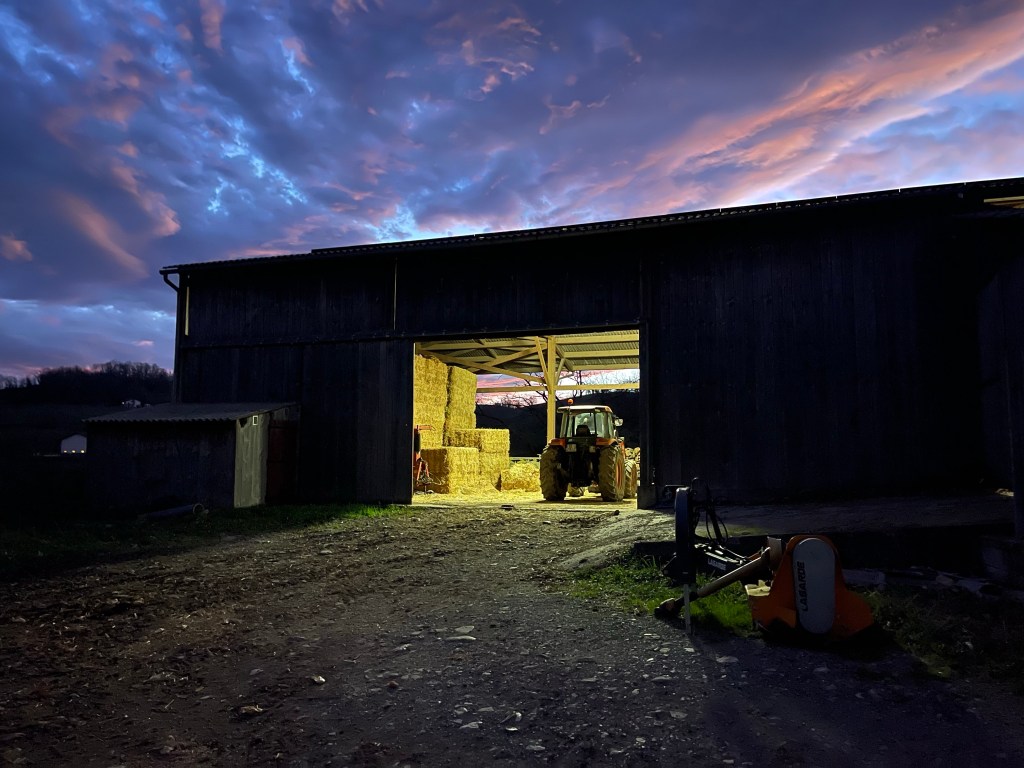
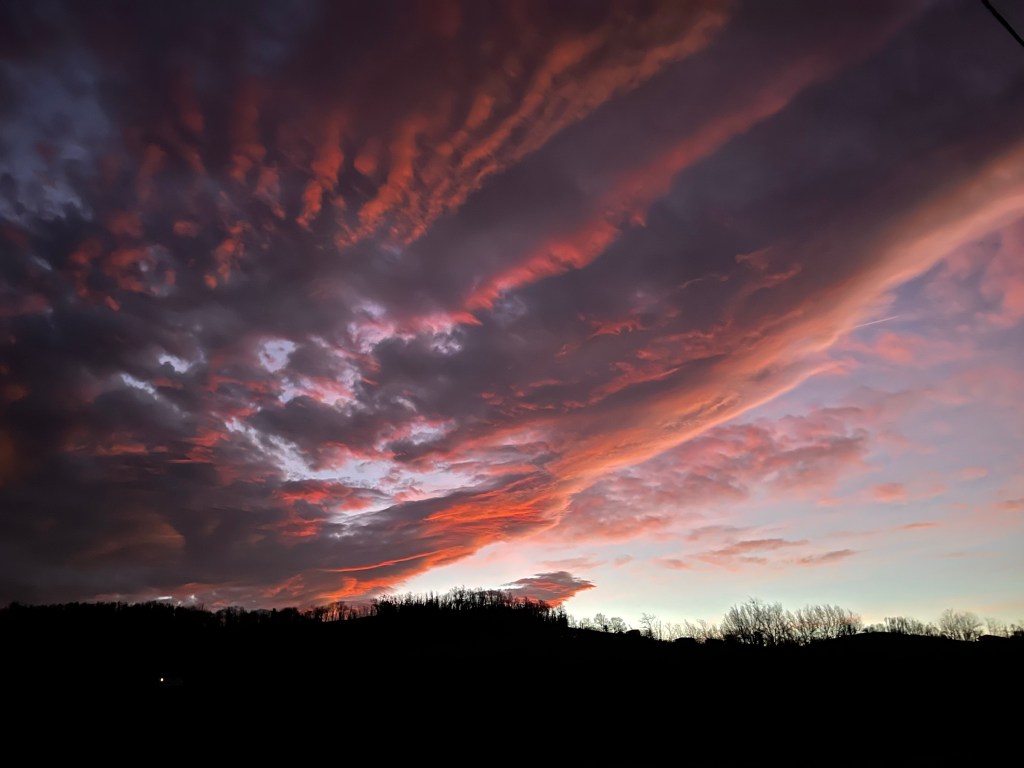
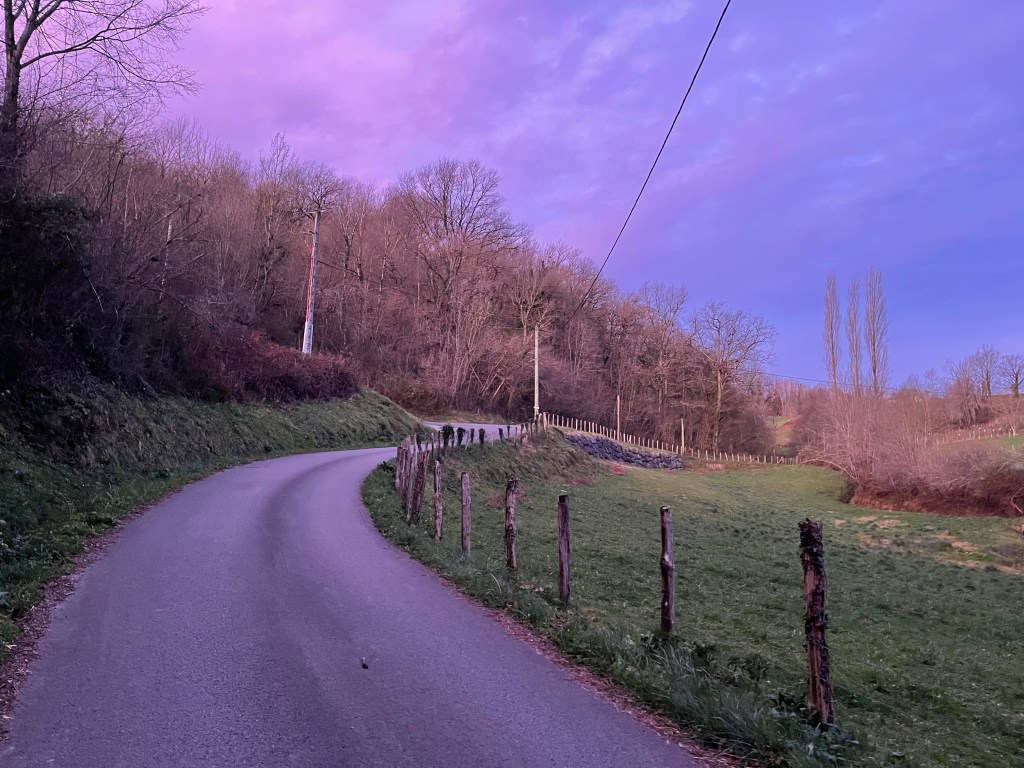
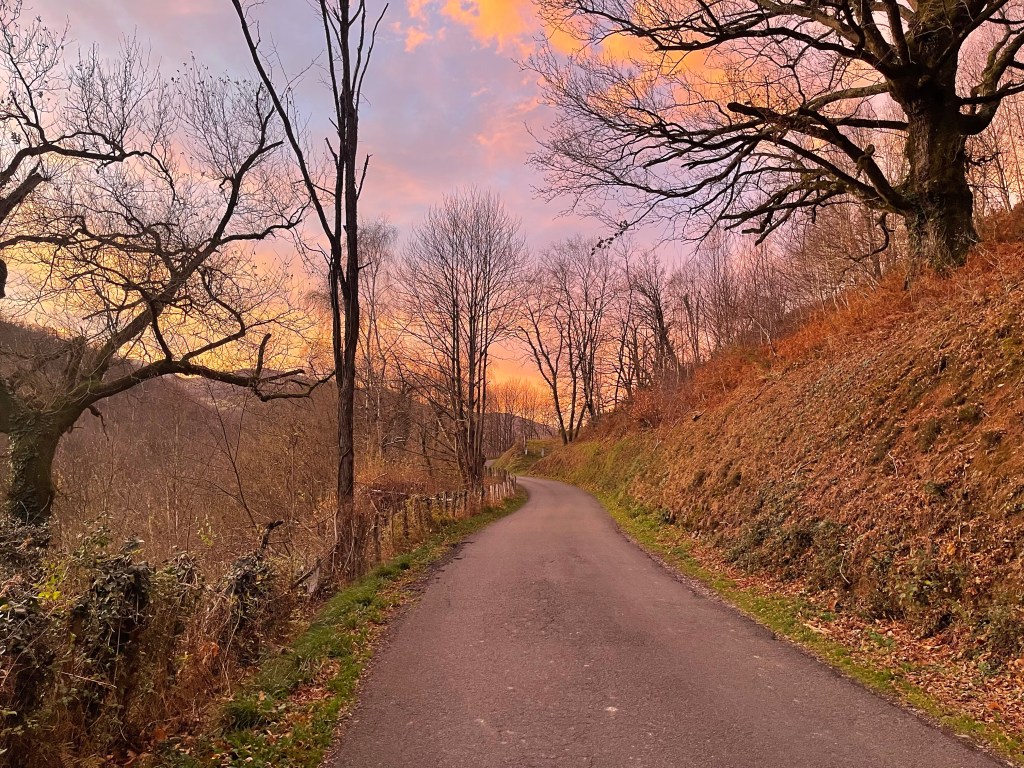

I find at this stage that apps are not needed, although good to have. The trail is generally well-marked, and the instructions the pilgrim’s office gave for the route today turn out really useful. Not forgetting the kindness of strangers. At one point I turn towards the wrong road as the path was obscured by a truck at the gas station, but a kind man in a car winds his window down to guide me back the right way.
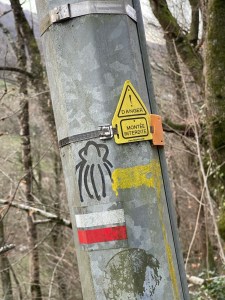
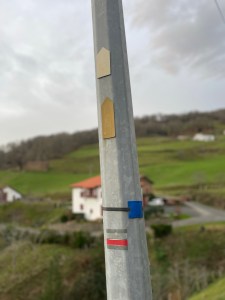

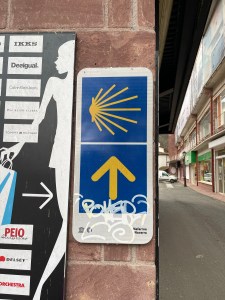
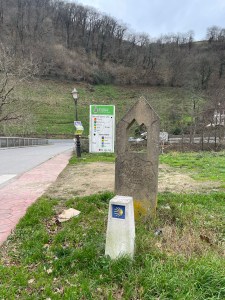
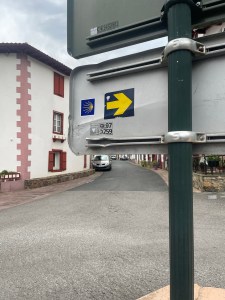
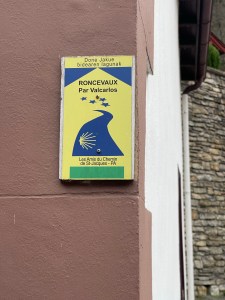
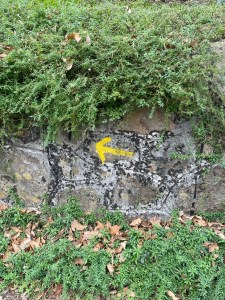
If you think about it, smartphones with sophisticated wayfinding maps have only been around for a decade, and the Camino de Santiago started in the 9th century, and as you may know, was inspired from even further back when some dude called James Zebedee somehow went all the way to Galicia to preach the gospel of Christ after his death. It is amazing to realise you’re walking the same path he did all those years ago, and after many others who have done so also; and that means most have walked without smartphones (and backpacking materials technology!). Did he also see the same landscapes and feel the same things? Did he get blisters without the proper footwear?
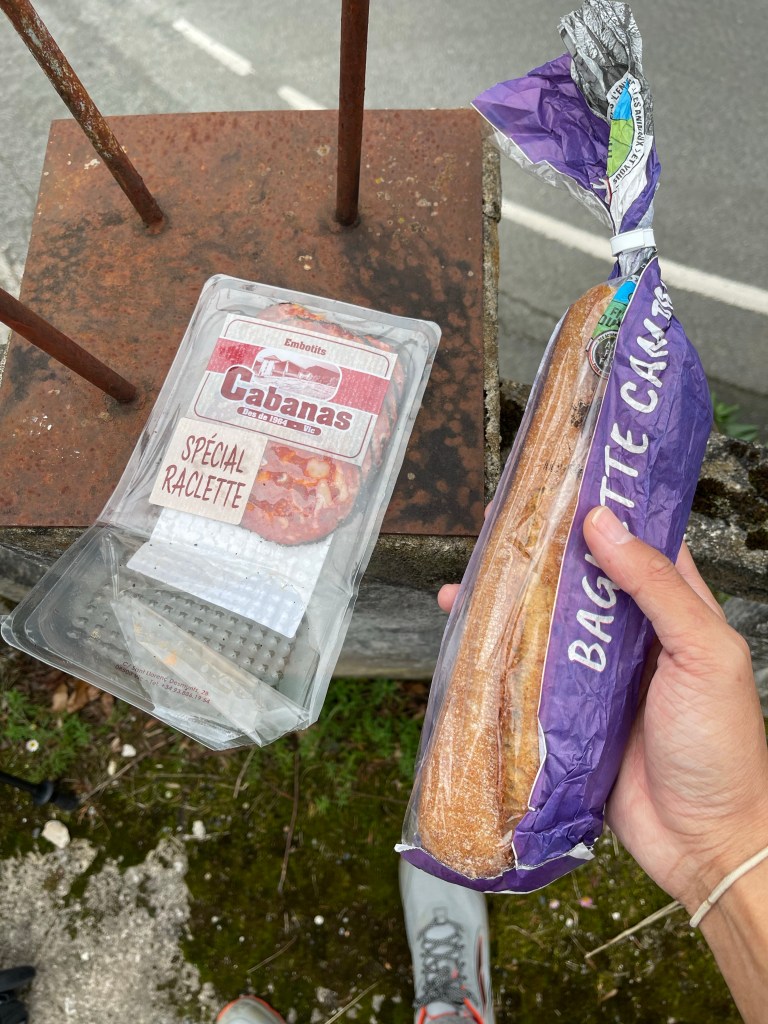
At Arnéguy, I stop for a quick snack, finishing the remaining chorizo from Ji Sung. Continuing on, I follow a highway, but it feels off even though it has Camino symbols on the road signs. Consulting the instructions from the office, I realise I should have turned to cross the bridge over the river back to the French side.
A fun part of today’s route is that quite a bit of this walk is along the border, with your path crossing back and forth. Signboards change language, but I hear locals use both languages. Sometimes I think I hear something else, which is probably euskara (Basque language).
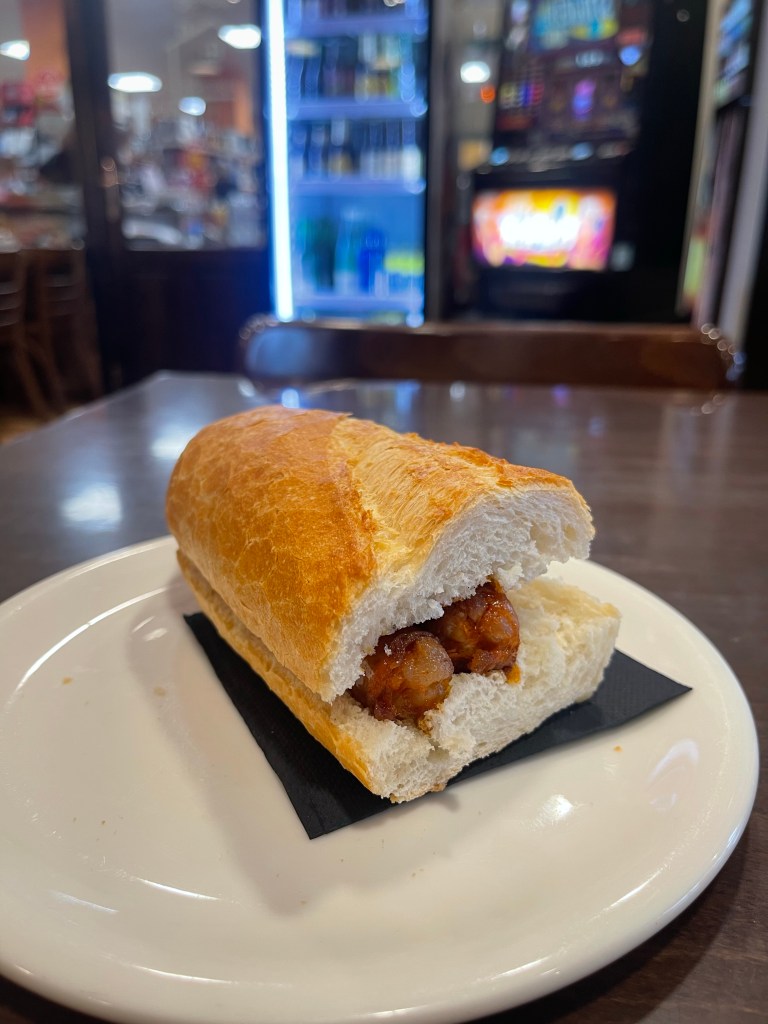
At Varlcarlos, there’s a bar next to the supermarket and I decide that I need a café con leche (coffee with milk). Feeling hungry and remembering I’m in Basque Country and should sample the local food, a sign for €2 pintxos (small snacks) catches my eye. I recognise jamón (cured ham), tortilla (potato omelette), and bacon, but not txistorra (“x” is pronounced like “ch”). Turns out it’s unique to Basque Country! I order it, and it is revealed to be a cured sausage, a chorizo of sorts. I’m pleasantly surprised that it comes in a baguette sandwich that’s not that small. The txistorra is thinner, but fattier and chewier than a normal chorizo, which tallies with what I find on Wikipedia: it’s 70-80% fat. Thank goodness I’m walking.
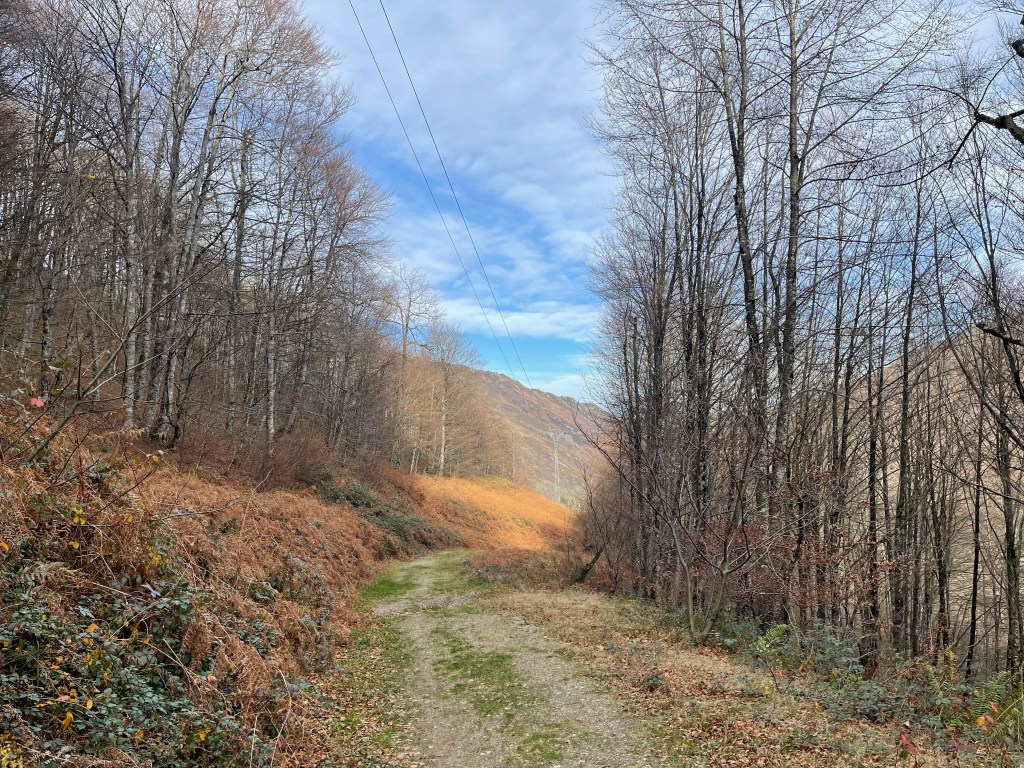
Quite a bit of the walk is on the N-135, the highway between Roncesvalles and Saint-Jean-Pied-de-Port that my taxi driver probably took yesterday. Exiting the highway signals the start of the incline up towards Roncesvalles, which turns out to be more taxing than expected, although the pathways are beautiful. So much for the “easier” Varlcarlos route. It’s not so fun at first, but as I push myself, and the sun angles lower in the sky, the land glows, and it starts to feel rewarding.
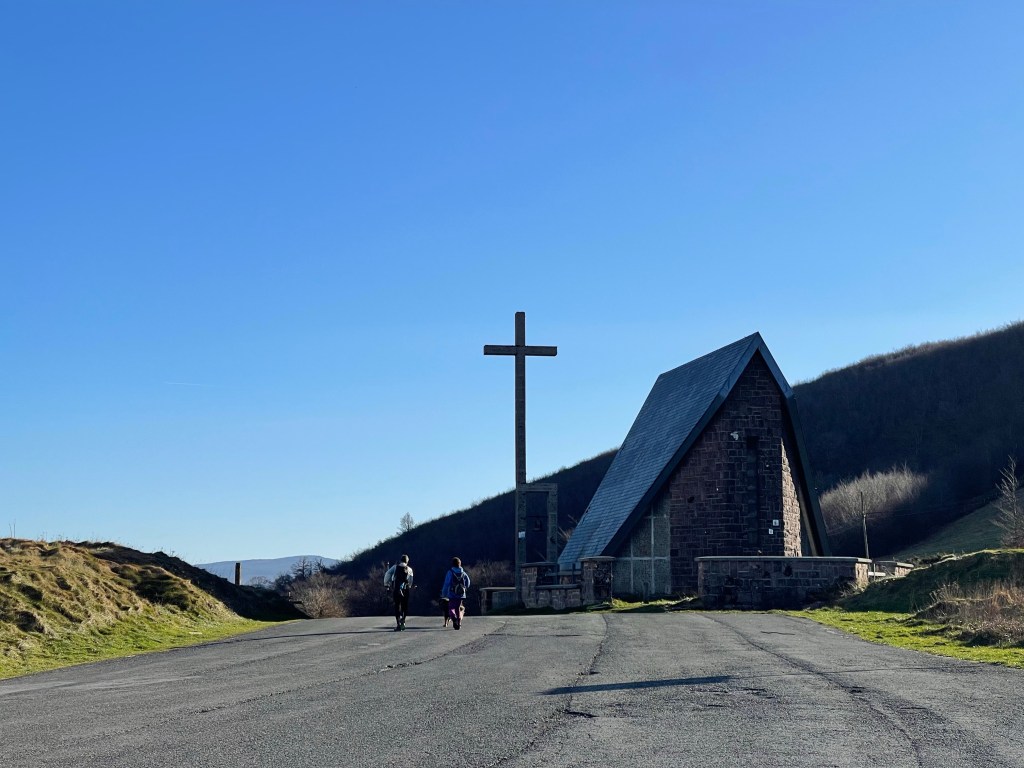
I eventually reach the top and a church comes into view. Suddenly an epic unending wind hits me (probably because there is finally nothing blocking it) so I wear my rain jacket for the first time on this trip. It’s then all literally downhill from here for less than two kilometres, and I feel a skip in my step. Roncesvalles is close!
I reach Roncesvalles close to 4pm and go to the pilgrim’s office. They tell me to quickly go to the only restaurant in town (the one I was at yesterday) to get dinner because it’s about to close for New Year’s Eve. Close it did, before I reach, as I say hello to Ji Sung and Areum exiting it.
Later when I walk around during sunset, I try to make small talk with the family I presume owns the establishment hanging outside the restaurant. I ask, “está cerrado?”, say, “tengo hambre” and rub my tummy, but they reply that it is closed and just smile back. I start to think of calorie sources…my remaining corn tortilla chips? Turns out I was too subtle because when we circle back later, the other two Koreans I met yesterday (who I’ve yet to get their names, and they’re staying in a hotel tonight) went and begged for food, and the owners took pity, and passed them a bag of bocadillos de jamón serrano (cured ham baguette sandwiches). They start handing it out to us and we bow to receive it, kamsahamnida.
Max arrives later, and he has grapes! I was hoping to celebrate the Spanish New Year tradition my Spanish teacher Pablo told me about, las campanadas y las doce uvas. They eat twelve grapes for the twelve clock strikes at midnight for luck. So although there’s no market to buy grapes here, we can still have a lucky new year.
Notes on a walk
- A baguette fits perfectly next to a bottle in my backpack, and most hiking backpacks probably.
- A chocolate bar however, might fall out without you realising when you pull out your water bottle. It made me a sad boy, especially without its encouragement right before the final push up an incline.
- Apps not necessary, but Gaia GPS with Camino GPX maps gave assurance I was en route, and helped me anticipate elevation and distance. The Buen Camino app is useful to look up accommodation that might not be in the list from the Saint-Jean-Pied-de-Port office. Good if the main albergues are full or closed (which is the New Year’s Day situation at Zubiri, our next stop).


 Jeremy Walks the Camino in Winter
Leave a comment