21.6km
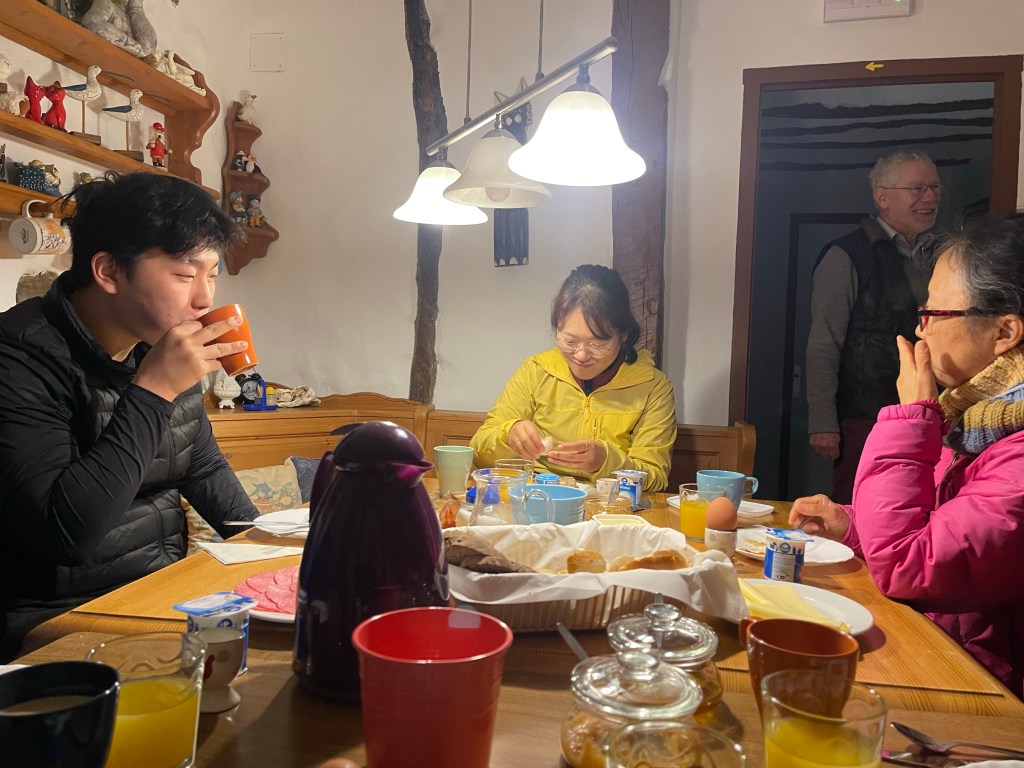
We wake to a healthy German breakfast of tasty homemade marmalade, ham, egg, bread, and yoghurt, today’s pilgrim fuel. Ingrid leaves together with us, and we walk out of the town at sunrise.
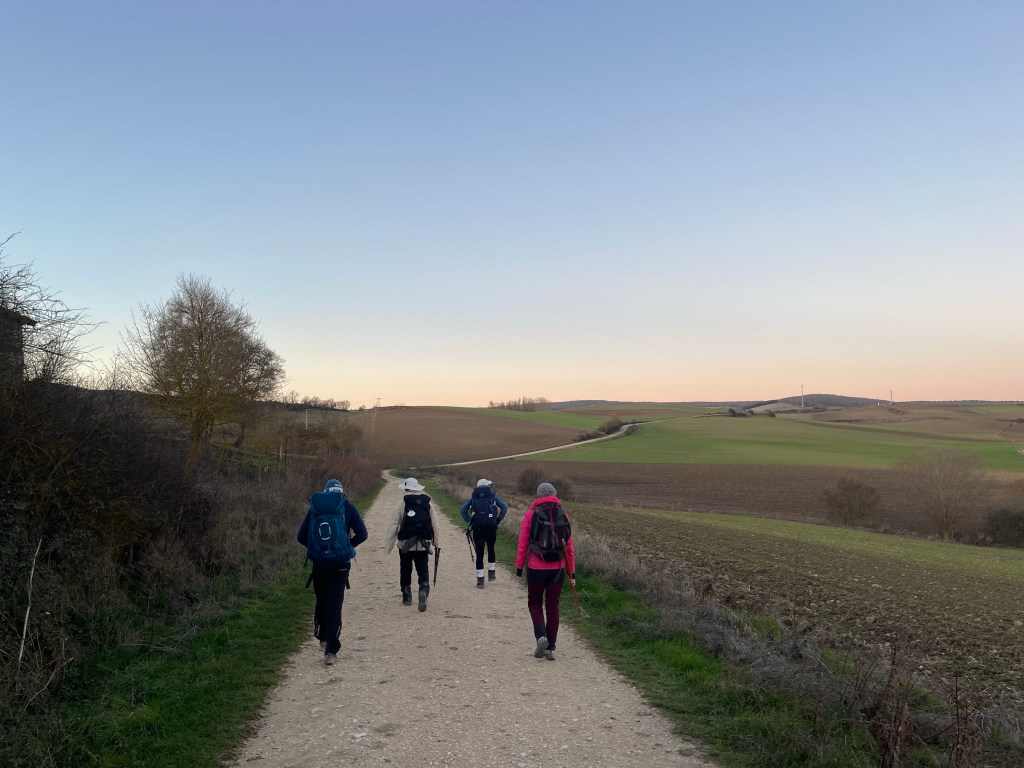

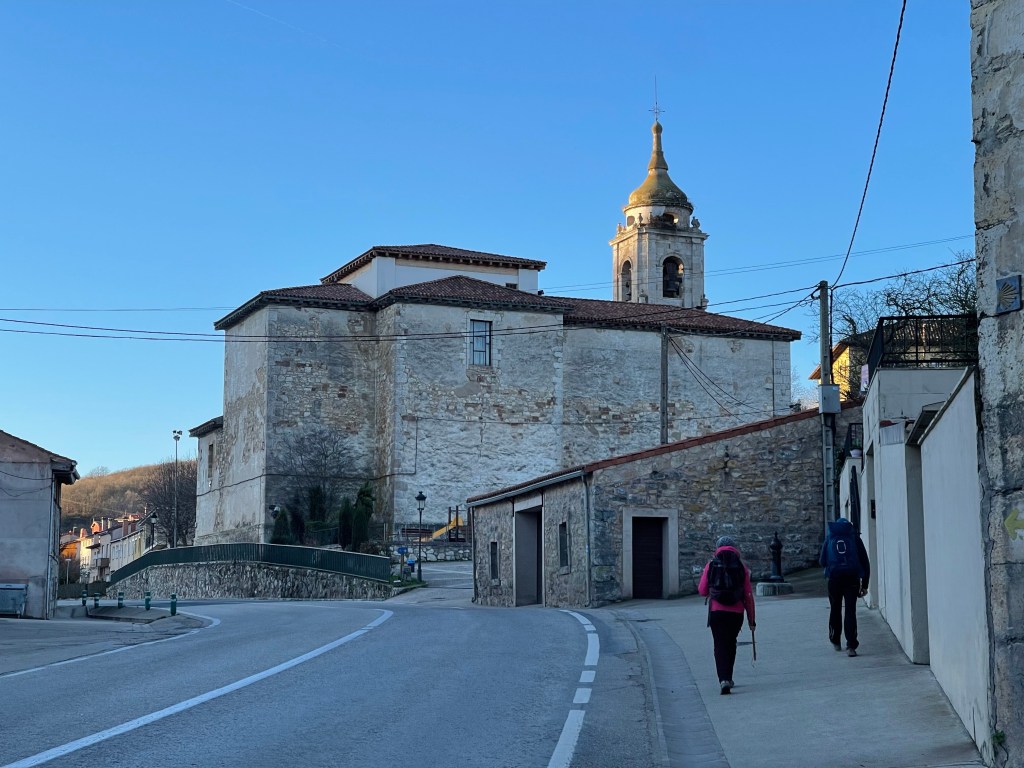
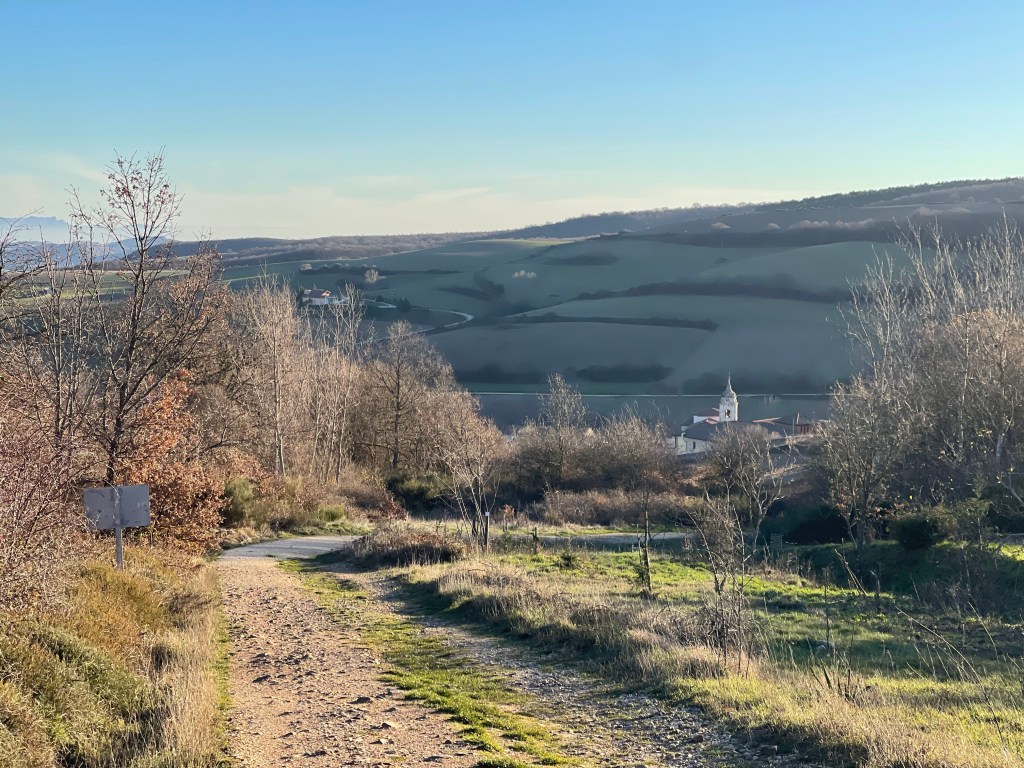
After a dirt path along a highway, we reach Villafranca Montes de Oca, a charming small town. It signals the start of a 12km walk to the next town, San Juan de Ortega—a walk which the app Buen Camino sent a notification to make sure I have enough water. It’s probably more of a summer concern though.
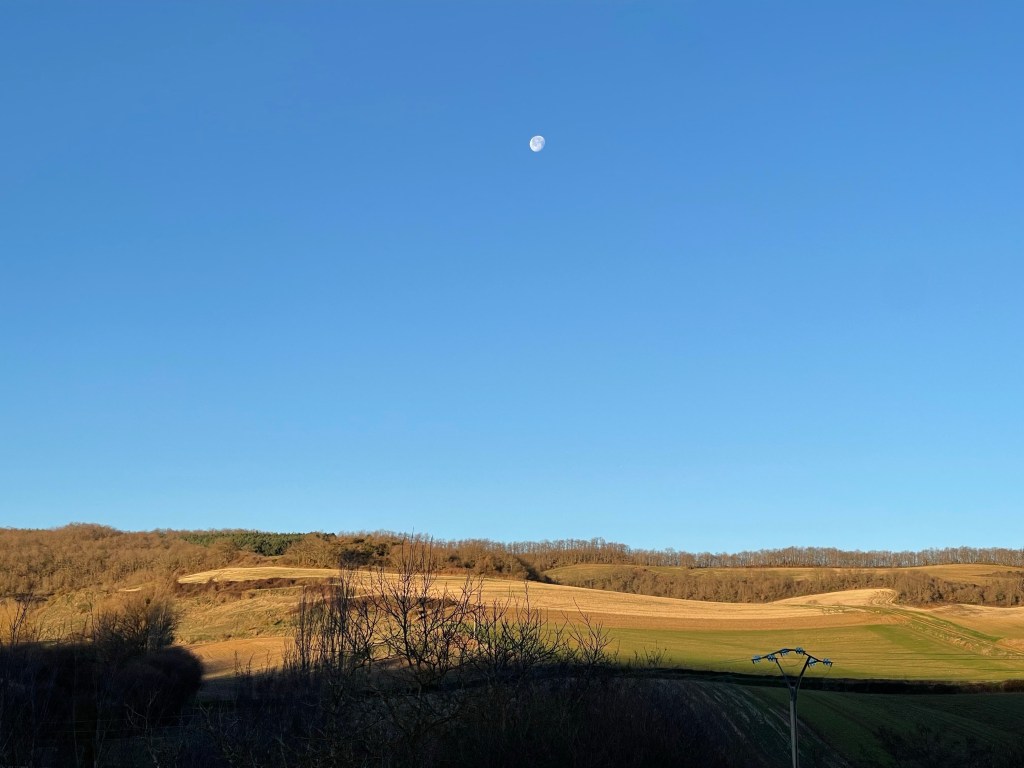
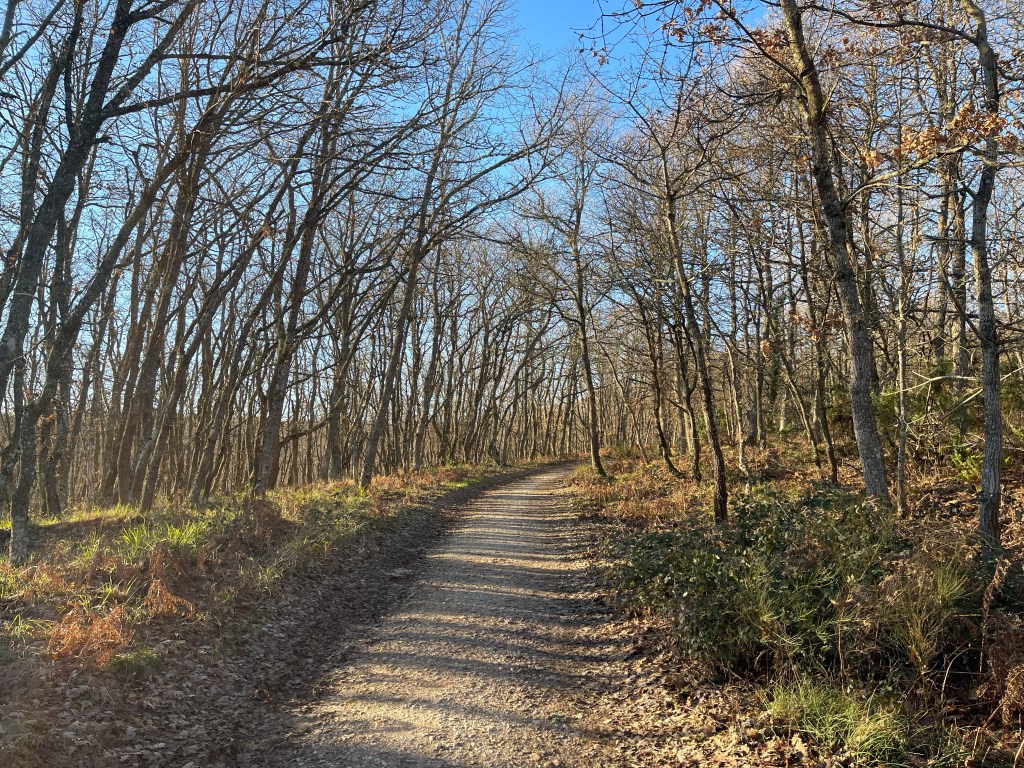
We leave the town and go up a hill along a quiet forest path. It’s a vibrant morning and the moon hangs big in the clear blue sky. I take a break at a shelter while the rest go ahead.
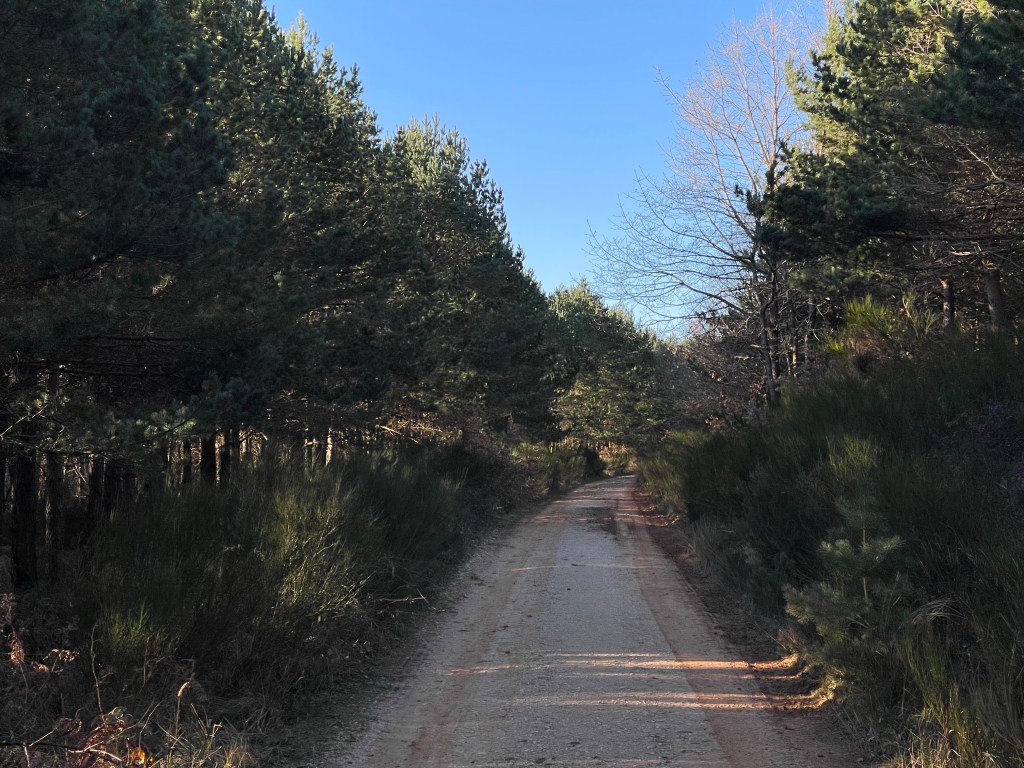
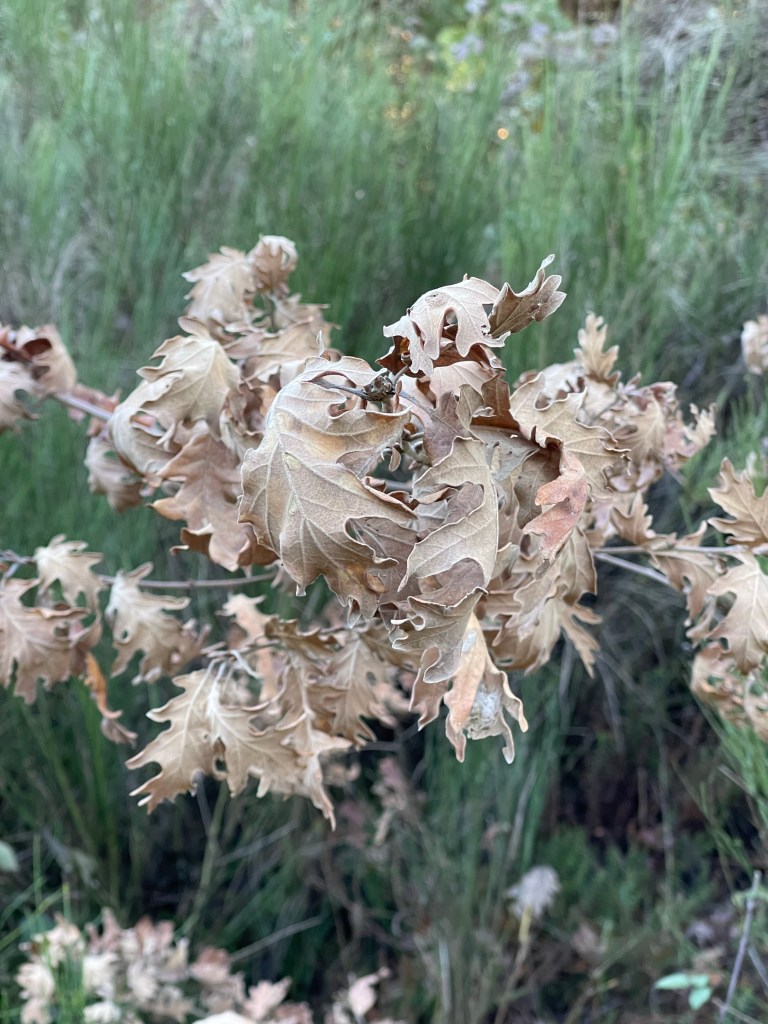
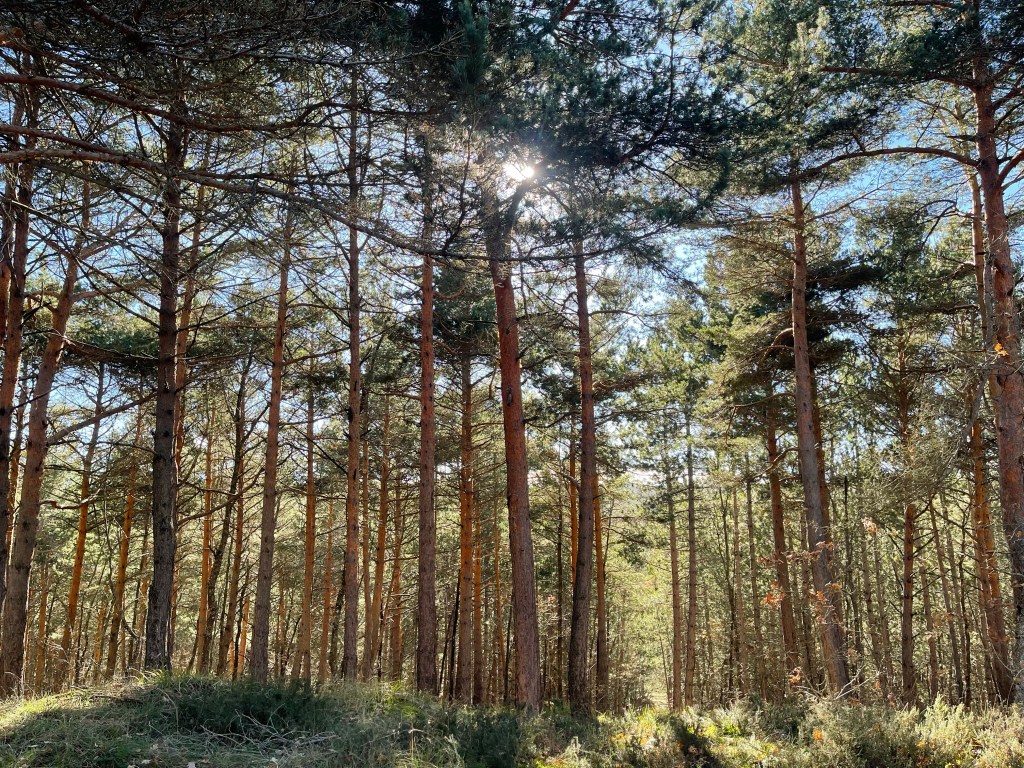
I continue on my own with a pleasant forest walk, sunlight on my left peeking in and out of trees as I go. As I near the top, the forest turns to rows of conifers, their branches swaying in the wind. I recall the line from a song from “Over the Garden Wall”—How the gentle wind, beckons through the leaves, as autumn colours fall.
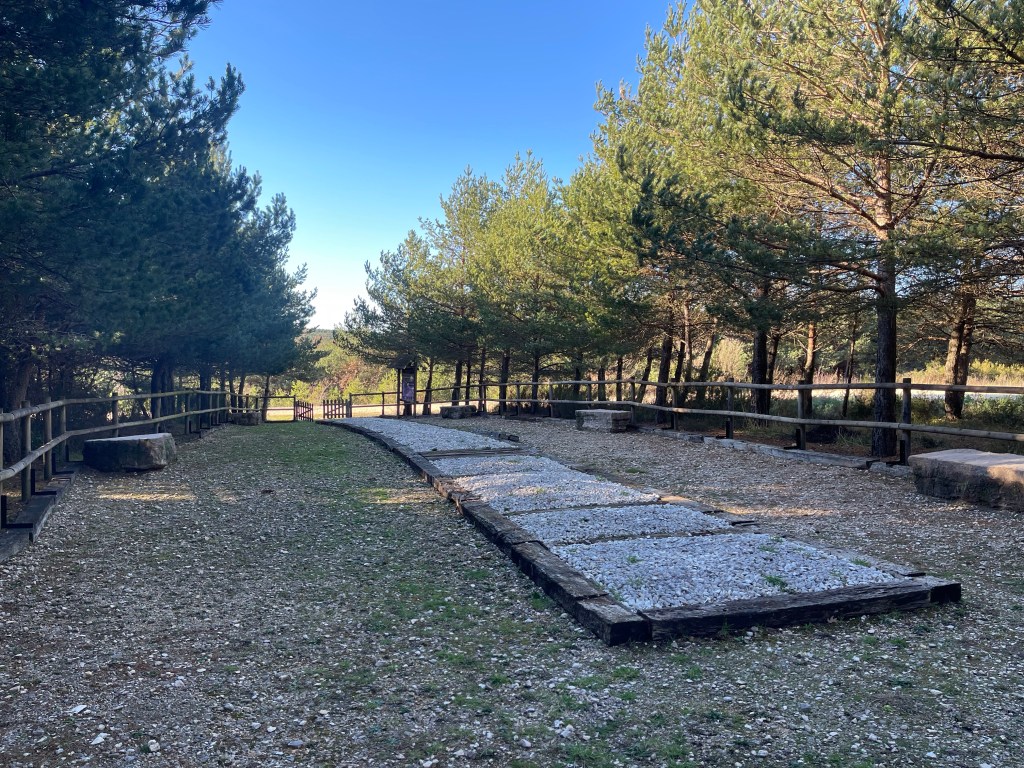
At the top, I reach a monument, the Monument a los Caídos, dedicated to people who were shot during the Spanish Civil War. It’s a short walk to the mass grave which contains 104 bodies.
There are benches there too, and after paying my respects, I have a small second breakfast with my remaining bread and crema de jamón curado.
It’s a pleasant wide trail through the hilltop forest. I’m still alone, and being solitary in an autumnal forest is tranquil. I’m sometimes accompanied by the twittering of birds. Some puddles in the shade have their surface frozen to ice, the first time I’ve seen this. I have some fun stepping on them and hearing the ice crunch.
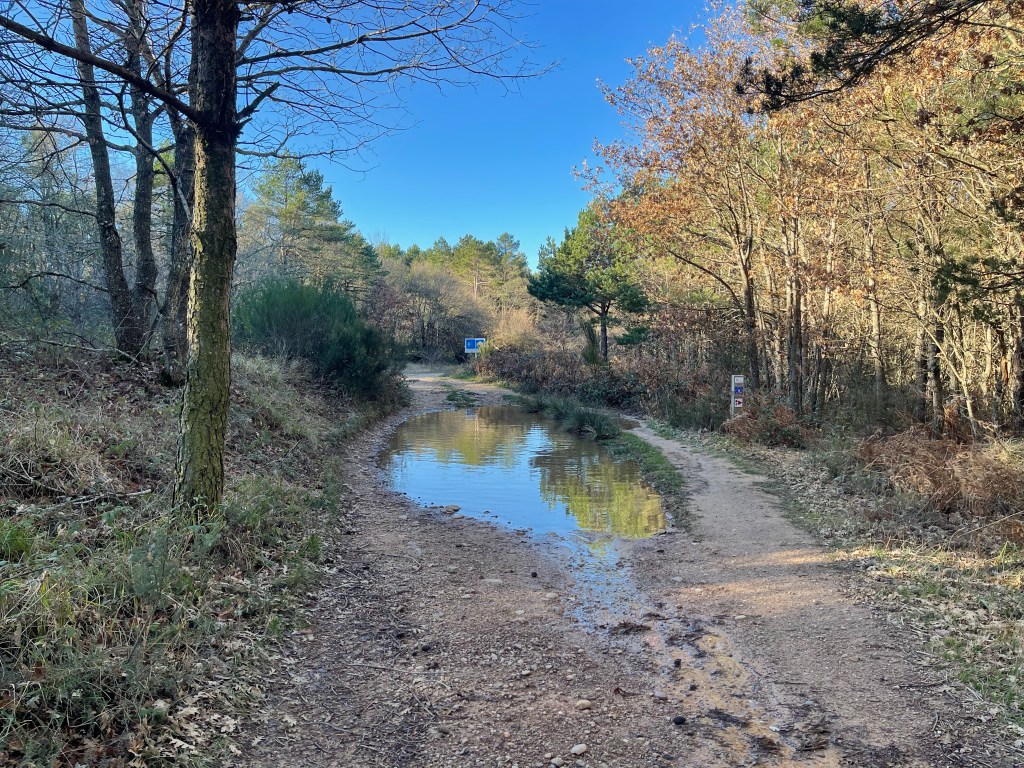
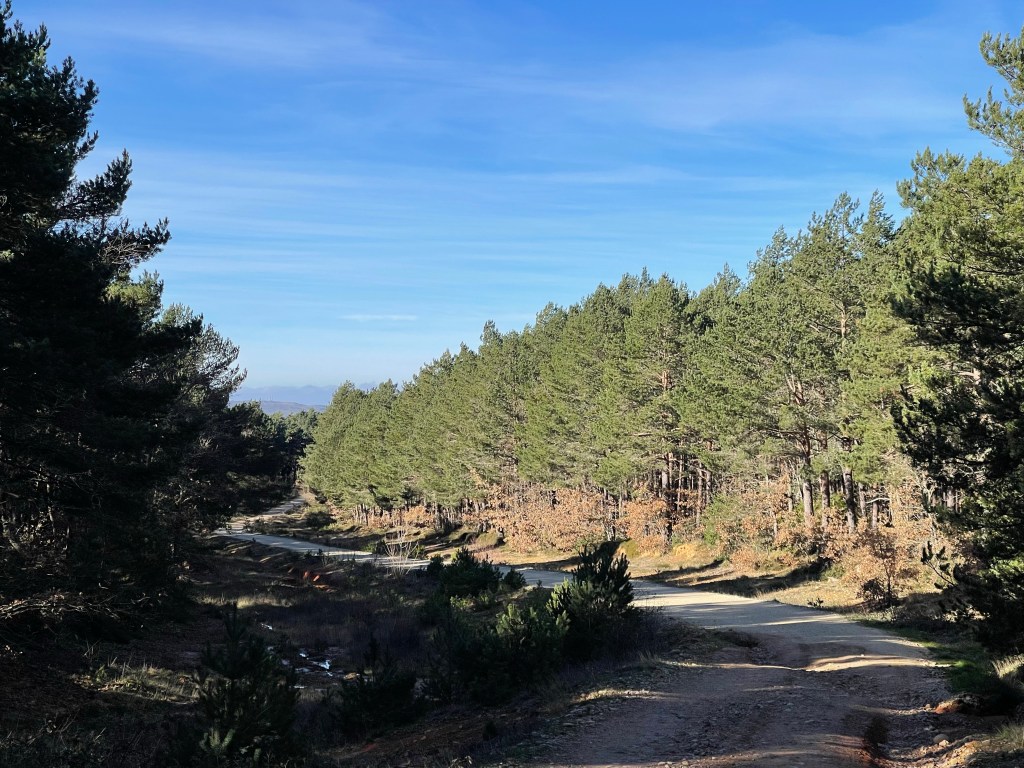
The forest ends to open fields, then a bit more to the town. San Juan de Ortega is quiet, with nothing open. At the end of the town, I catch up with Samuel and Ingrid who are ending a picnic at some benches.
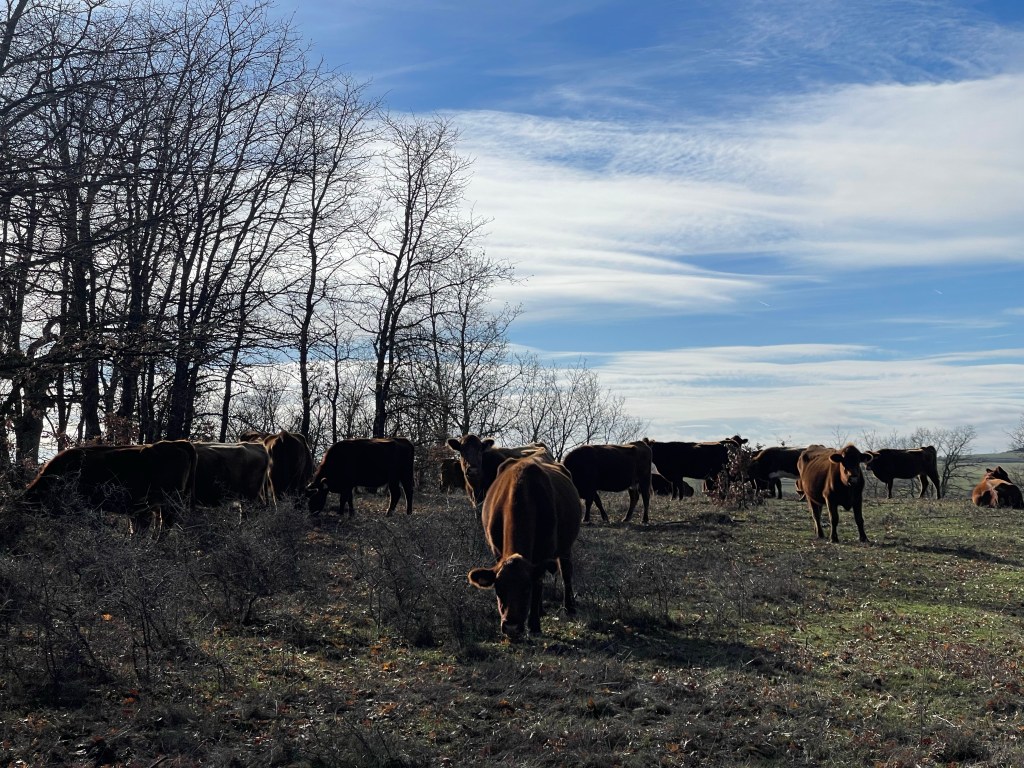
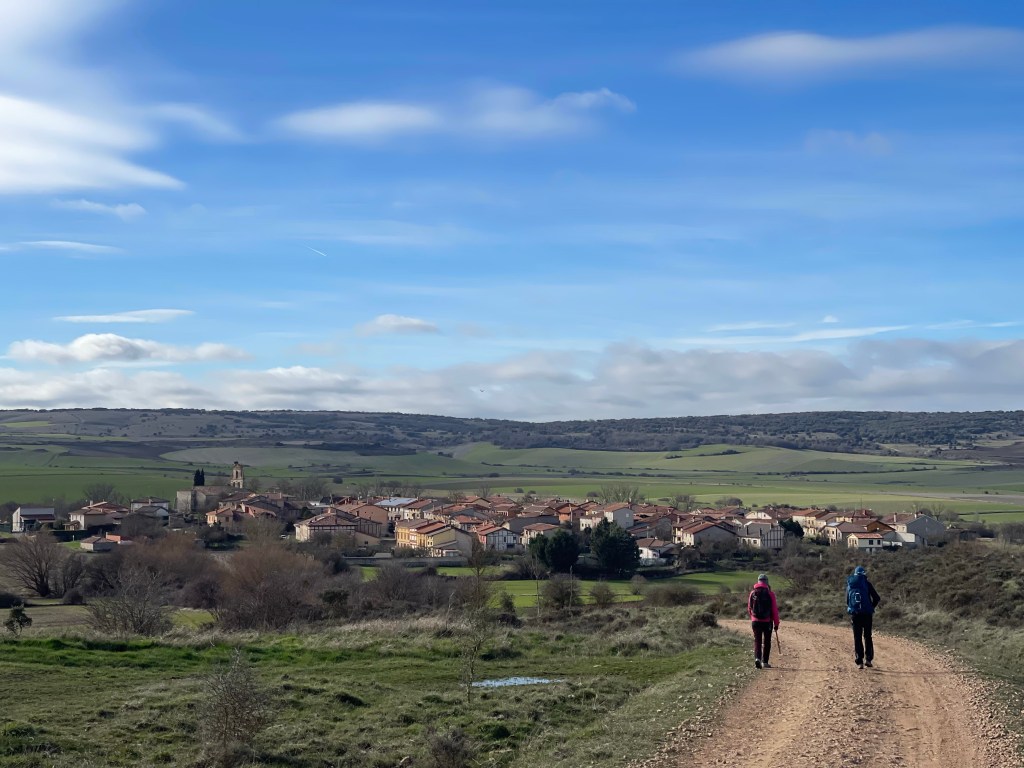
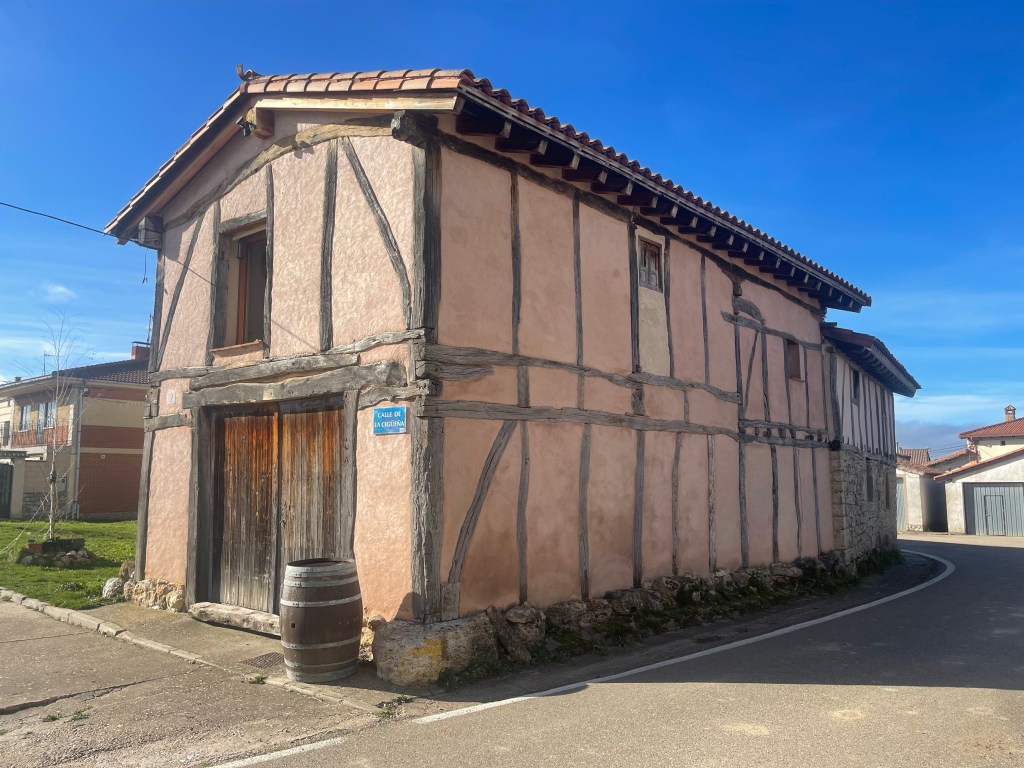
There’s some forest, then fields, at one point we pass by some brown cows. After some time, we see Agés, with Atapuerca visible just a bit away. The village is quiet, but we meet a friendly local and his dog. He converses with us (in Spanish with Ingrid, to be exact) and shares about the architecture of the old houses, his life there, and about the Camino.
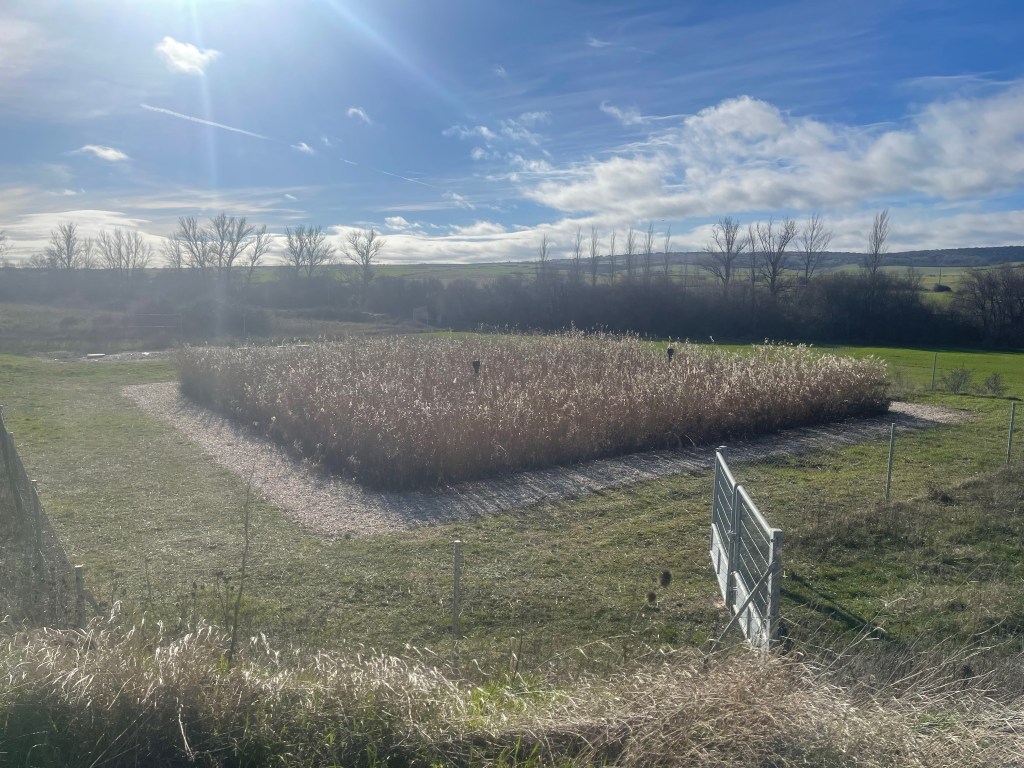
Atapuerca is known to be the site where fossils of early humans were found. On the way close to the town there is a museum in the brutalist style on this subject, the Centro de Arqueología Experimental (CAREX), which is unfortunately closed for visiting.
We reach Atapuerca at 3pm. It is a quiet town, and there’s only groceries at the shop run by the hostel. The hostel, Plazuela Verde, is really pleasant though—a well designed interior with organic lines and lots of wood. There’s also a kitchen, so we can cook.
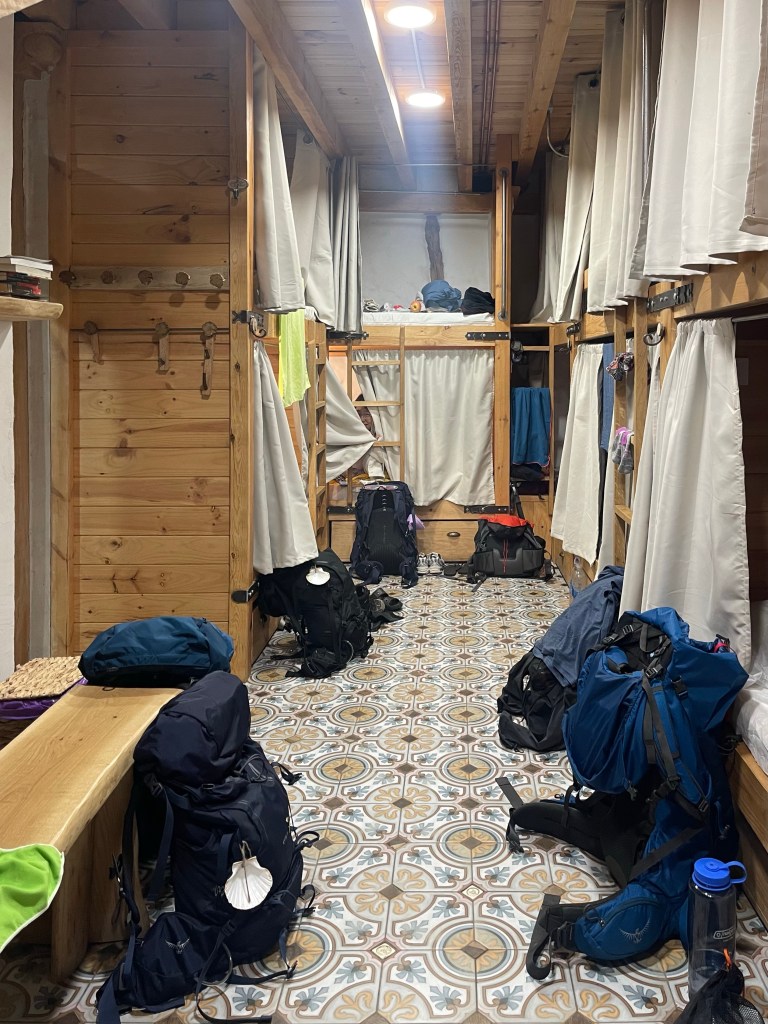
The hostel/shop owner talks to Ingrid as we buy ingredients for dinner. He shares that the Camino is older than Christianity—which makes sense, St. James was probably not a bushwhacker, but following paths that already existed. Churches were especially planted in places with pagan presence, similar to how holidays like Christmas were used to replace pagan festivals.
Dinner today is olives to start, a main of self-cooked tuna tomato fusilli, ending with hot chocolate. It’s simple yet satisfying.
 Jeremy Walks the Camino in Winter
Leave a comment