24.5km
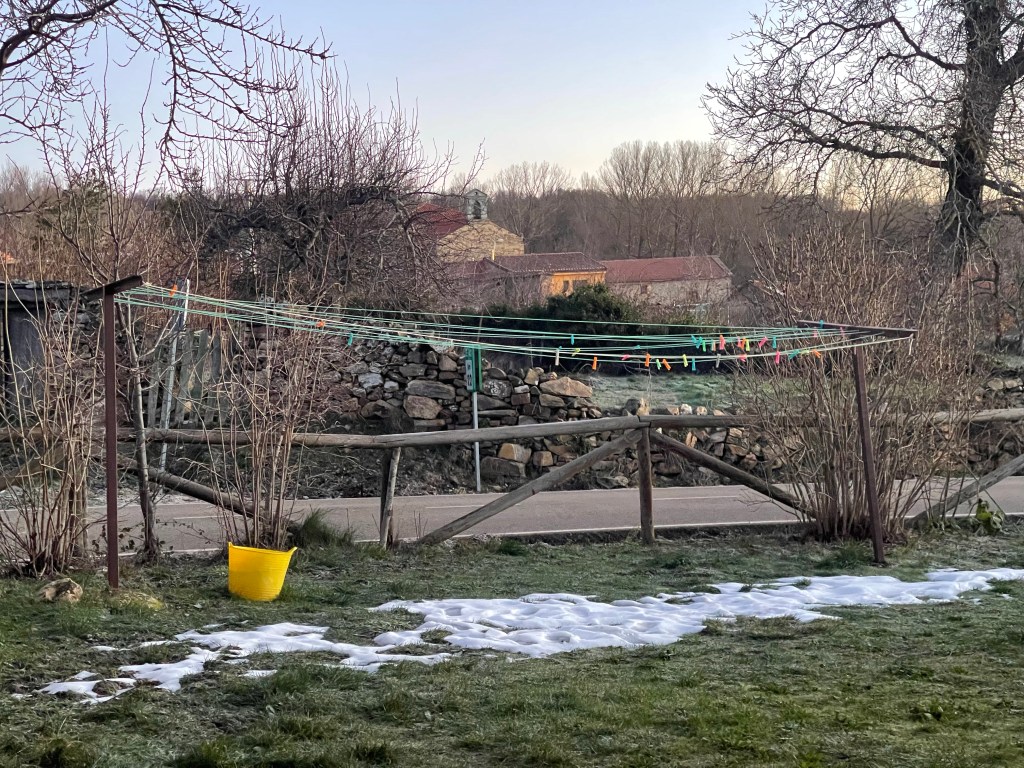
We wake up to a morning below zero degrees Celsius. It’s good we brought our clothes and shoes indoors. The perennial streak of snow below the clothesline was a good reminder.
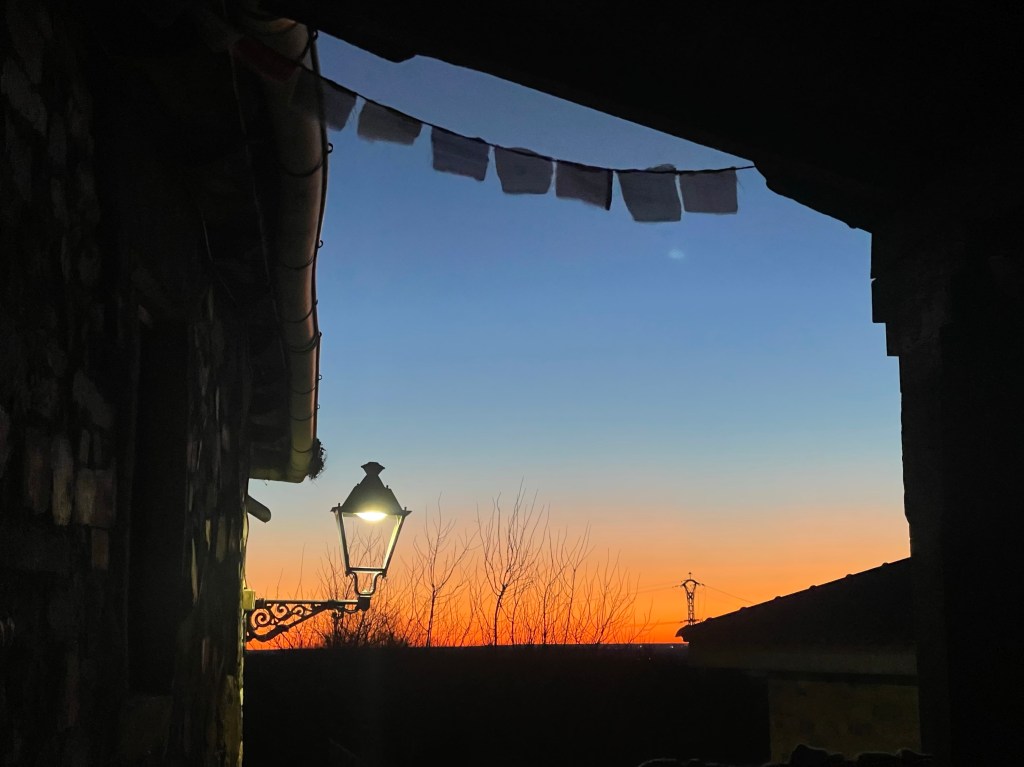
Edoardo brewed more coffee in the morning from the powder we got. It’s good and strong, and helps to kickstart the day.
I leave the albergue at 8.30am. The Moon family, James, Boom, and Ethan have already gone on ahead. The rest of us, Roman, Ingrid, Edoardo, and Alberto, go to the same restaurant we went for dinner yesterday for a quick breakfast. I get an orange juice which comes with a small cake, and we wait out the cold.
At around 9.10am, we leave to sunlit path surrounded by shrubs, which are glistening like jewels because of frost. There’s a mountain on our left peeking over a hill. It -3°C, but it feels fresh, not chilly.

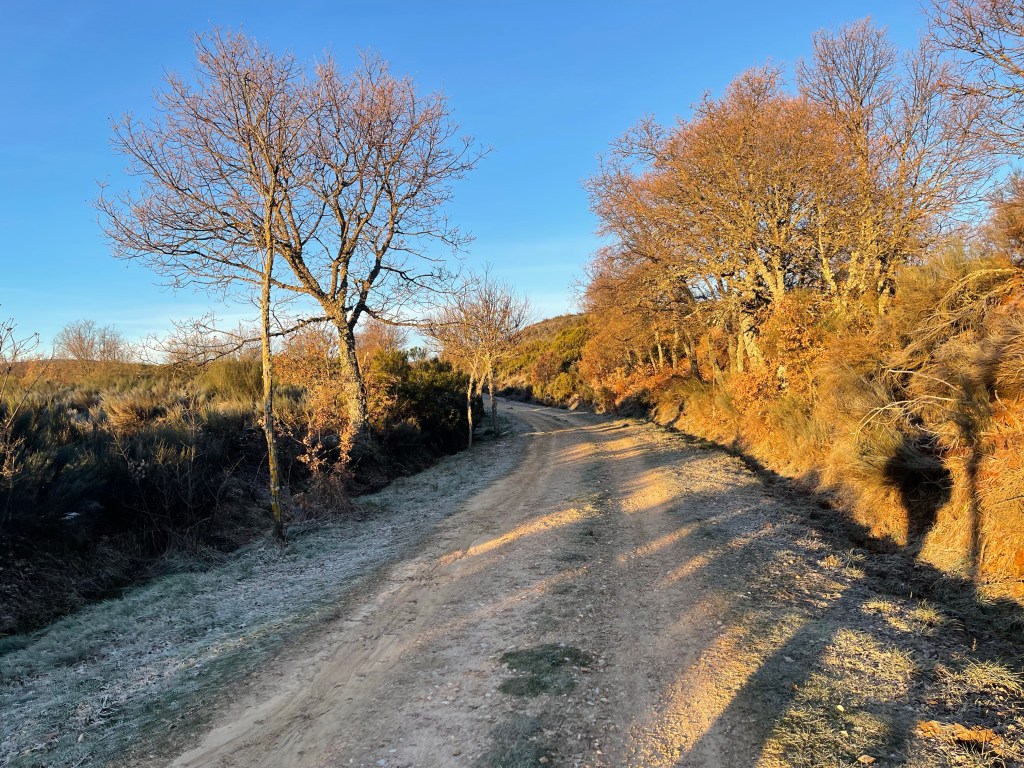
We’re going up a steady incline which reaches a road crossing, which brings us up a craggy rock path. Further up at a shelter, we take a layer off as we are getting warm from the exercise. It’s a beautiful morning, and the rest go ahead as I make photos.
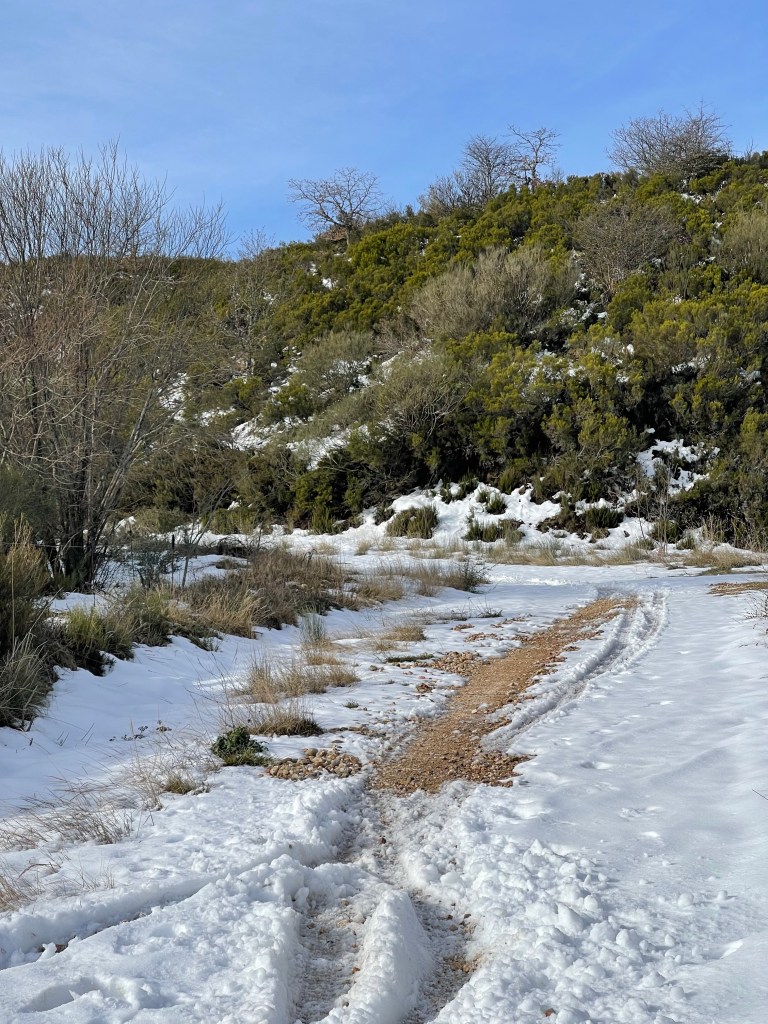
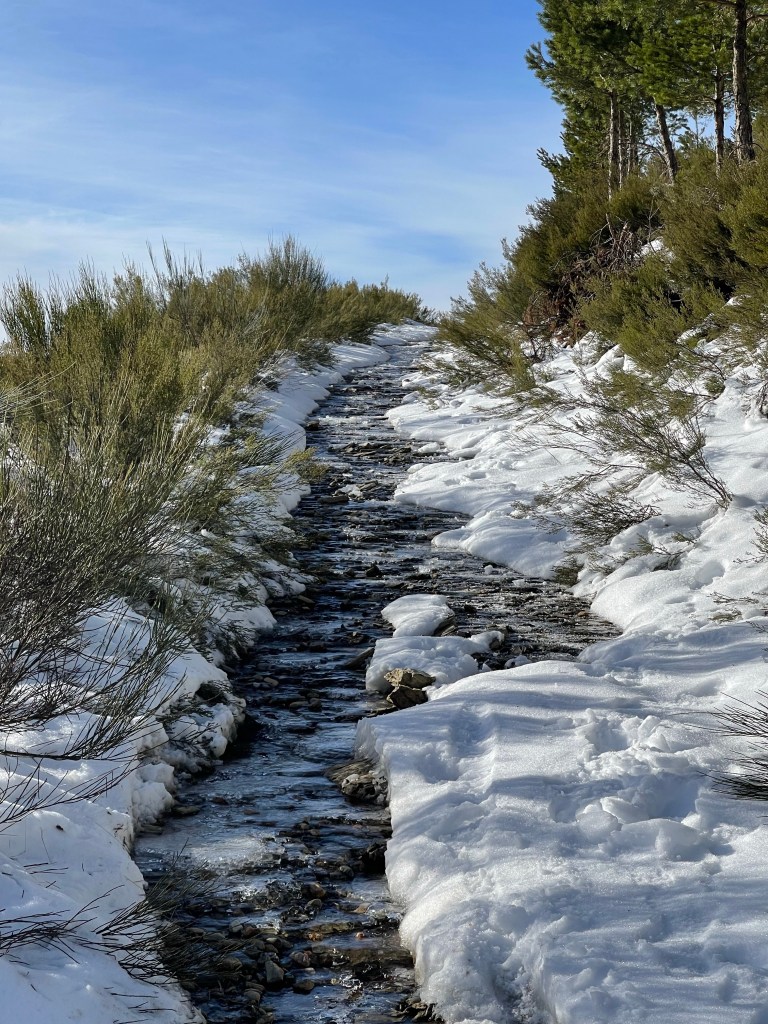
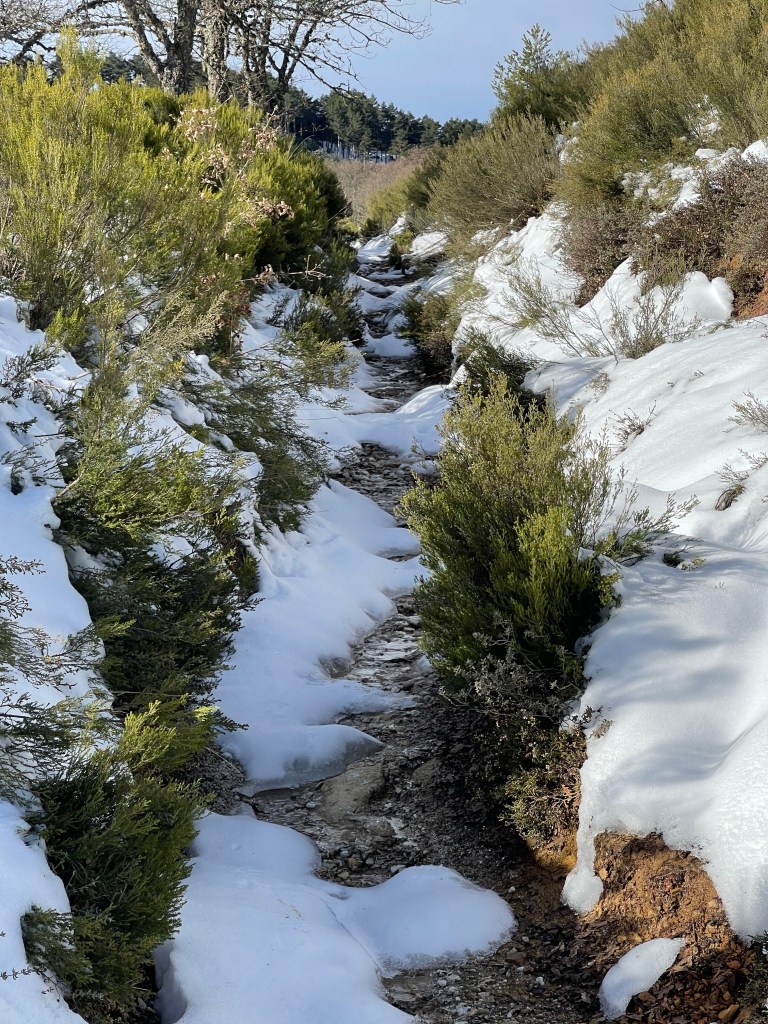
The terrain is getting interesting. I’m starting to see snow. I’m also trying not to step on iced-over areas, while some parts of the path have become a flowing stream. Finding dry spots for my feet, it feels like I’m playing “the floor is lava”. I get my feet wet anyway.
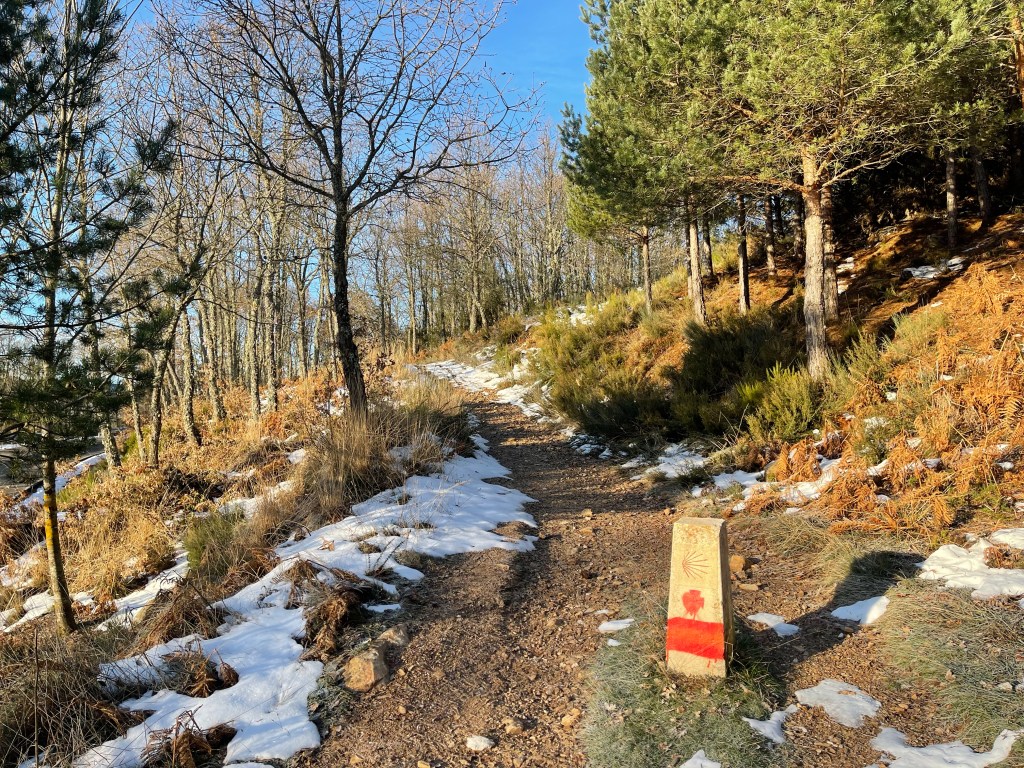
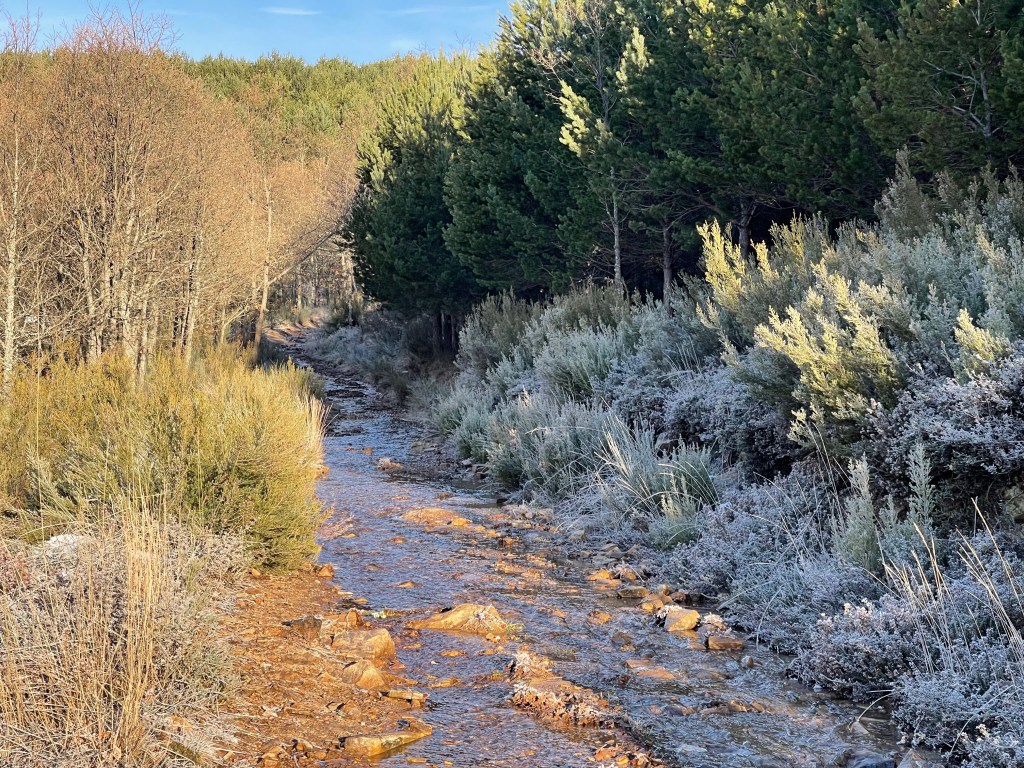
At a clearing, I find Roman sitting on the grass and enjoying the view. I stop to sit with him to change my wet socks and put bread bags on my feet (note: this technique did not work this time). He leaves after a bit. I take my puffy off as well as it is getting warmer.
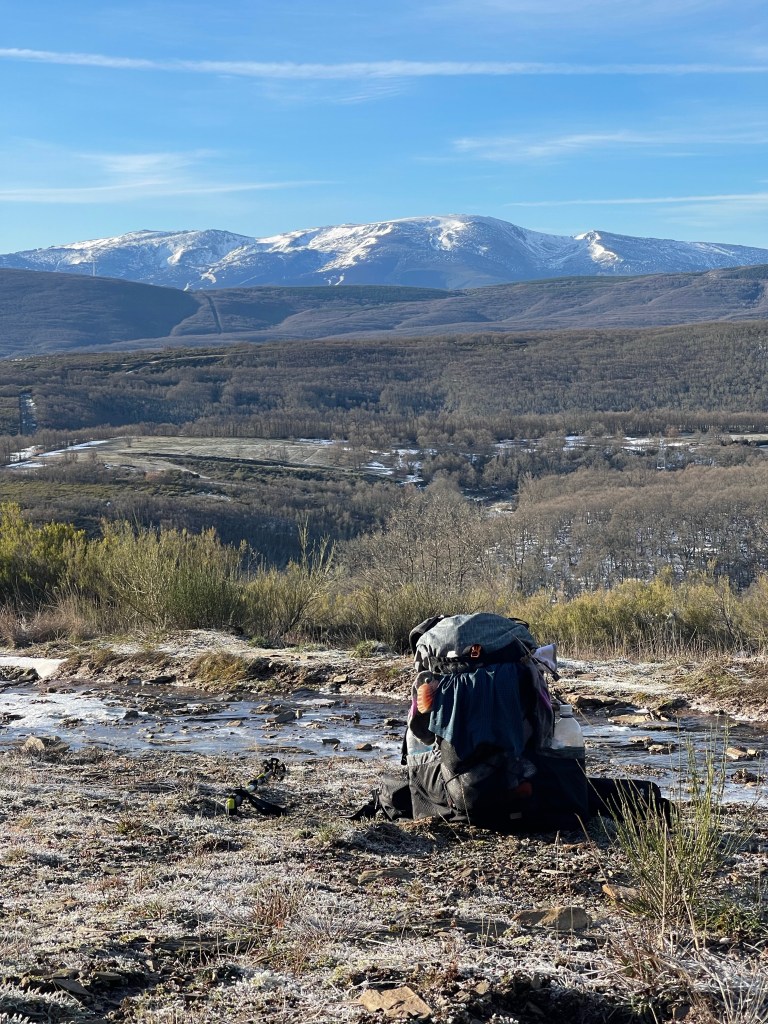
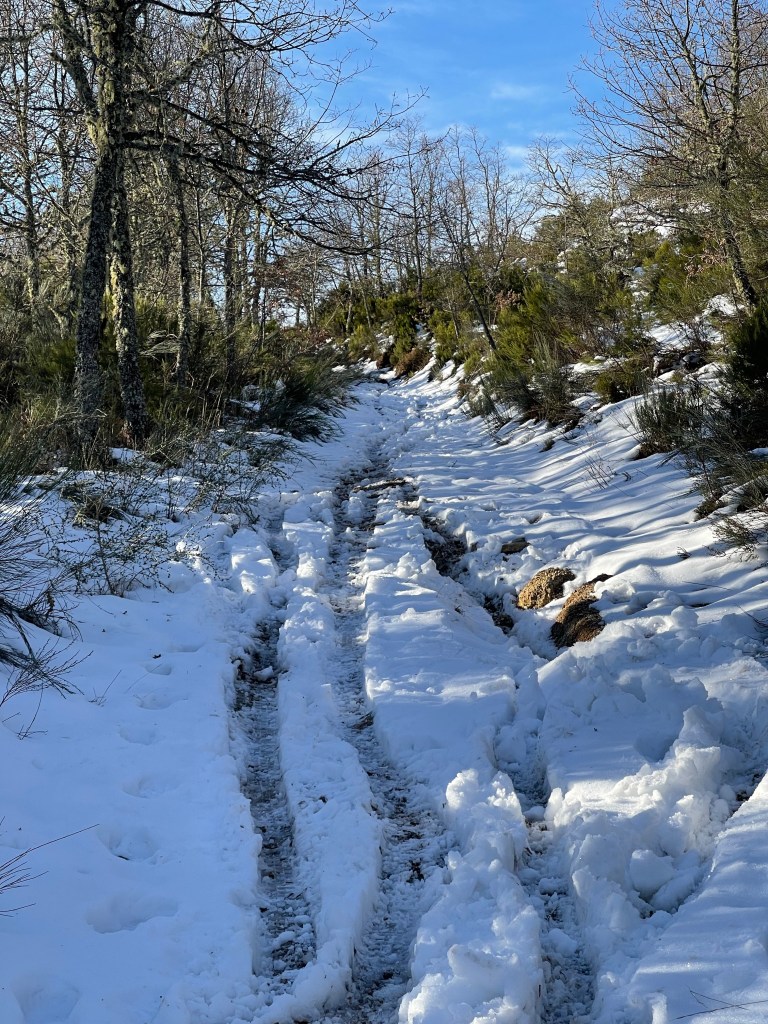

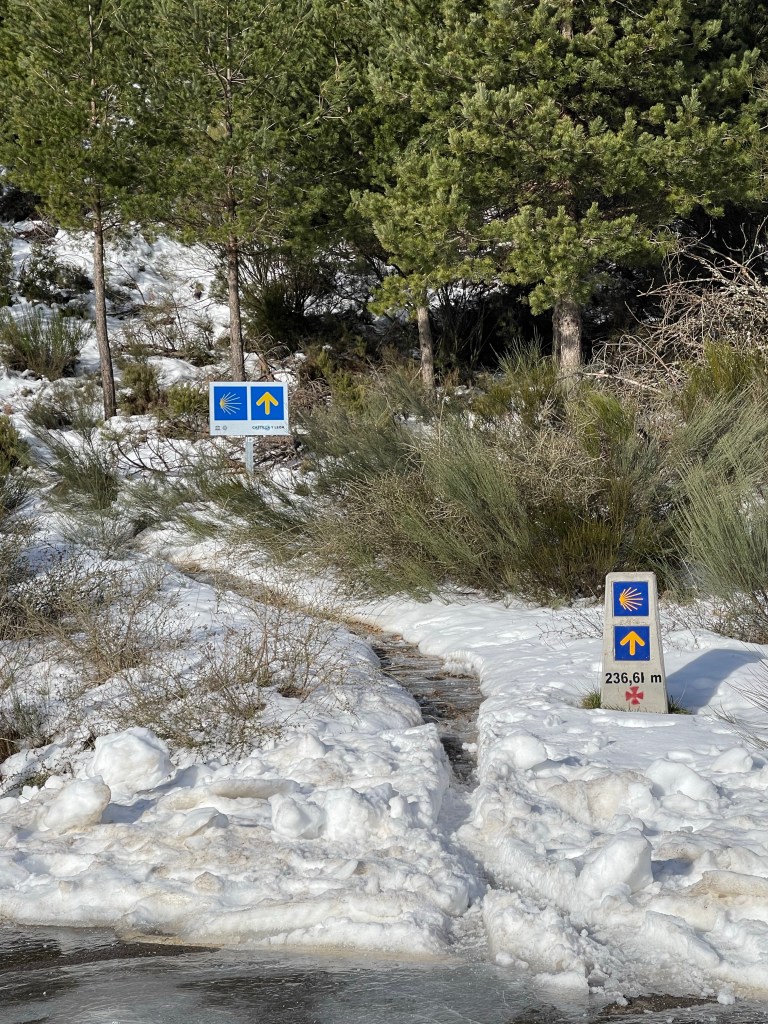
I’m ascending to snowy paths, with the occasional flowing stream and iced-over surfaces. I tell myself, “snow: good, water: good, ice: bad”, programming my steps.
The streamy path eventually changes to a snowy one instead, and I reach a beautiful mountain town, Foncebadón, which would have been a nice place to stay if there were open albergues. I do my best not to step on ice on the pavement, which sometimes just looks like wet floor.
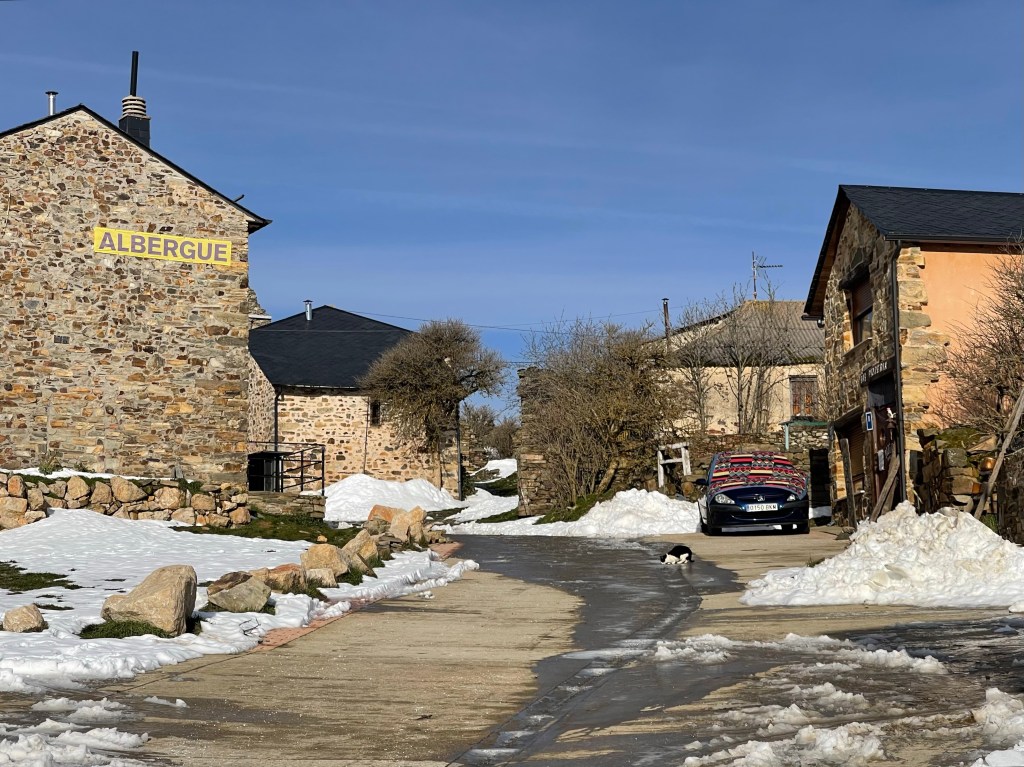
Going up further, ponds are frozen over. I avoid most of the main path area which has a layer of ice, walking by the side on the snow instead. The snow is quite tightly packed, so my legs don’t sink in. At a sharper incline, the ice on the path disappears, which is good.
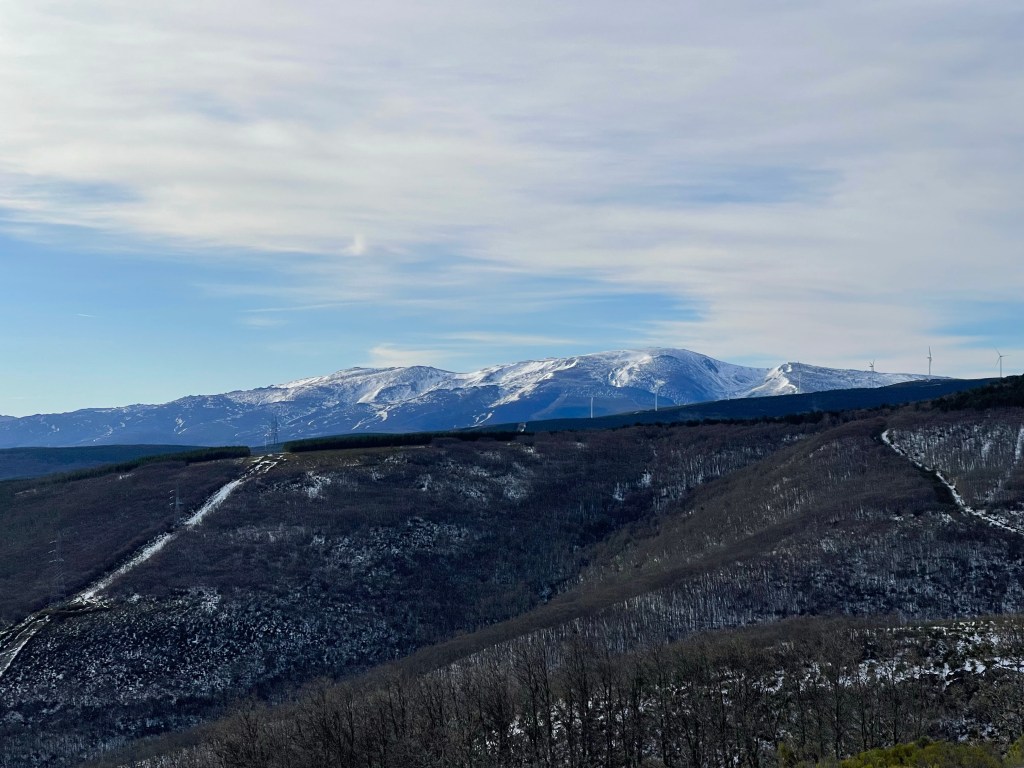
As I go up, I get a better view of the whole valley. The mountain on my left is majestic. I cross the road to an icy river path. I take it real slow. There are some near slips, but no falls, thankfully.
Cruz de Ferro comes into view. It’s a tower with a modest iron cross on top, rather than a large cross I imagined it would be for the highest point on the Camino de Santiago. I place my stone from Saint-Jean-Pied-de-Port down, and it just disappears among the others. I’m not sure which it is anymore. The metaphor takes on a new significance for me—what is my burden together with all the others?
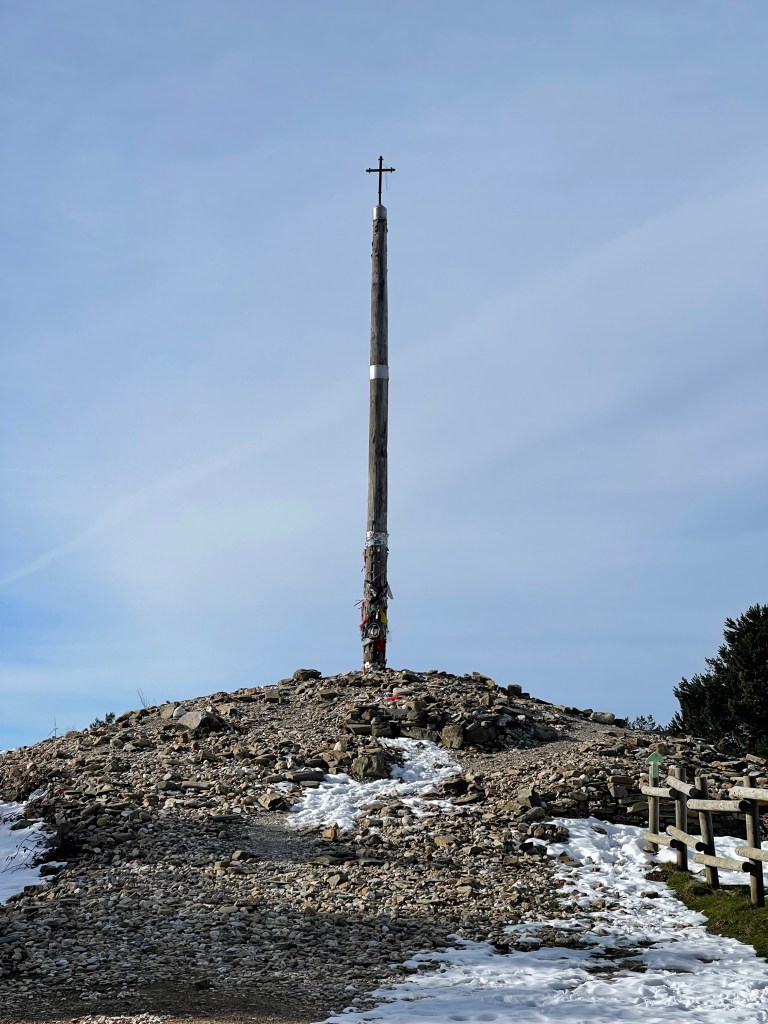

Ingrid, Edoardo, and Alberto are at some stone benches away from the monument having food, and they call out to me. Around me, there are families playing in the snow, cyclists posing for photos, and other tourists. It is Sunday after all. I have some of my turrón and Takis, and the rest share some chorizo, cheese, bread, and mandarina with me. Alberto leaves a bit earlier.
We depart to a snowy path next to a road, actively avoiding ice. I ask Edoardo how it was on his previous Camino, and he says there was no snow during this stage for him. Things will keep changing.
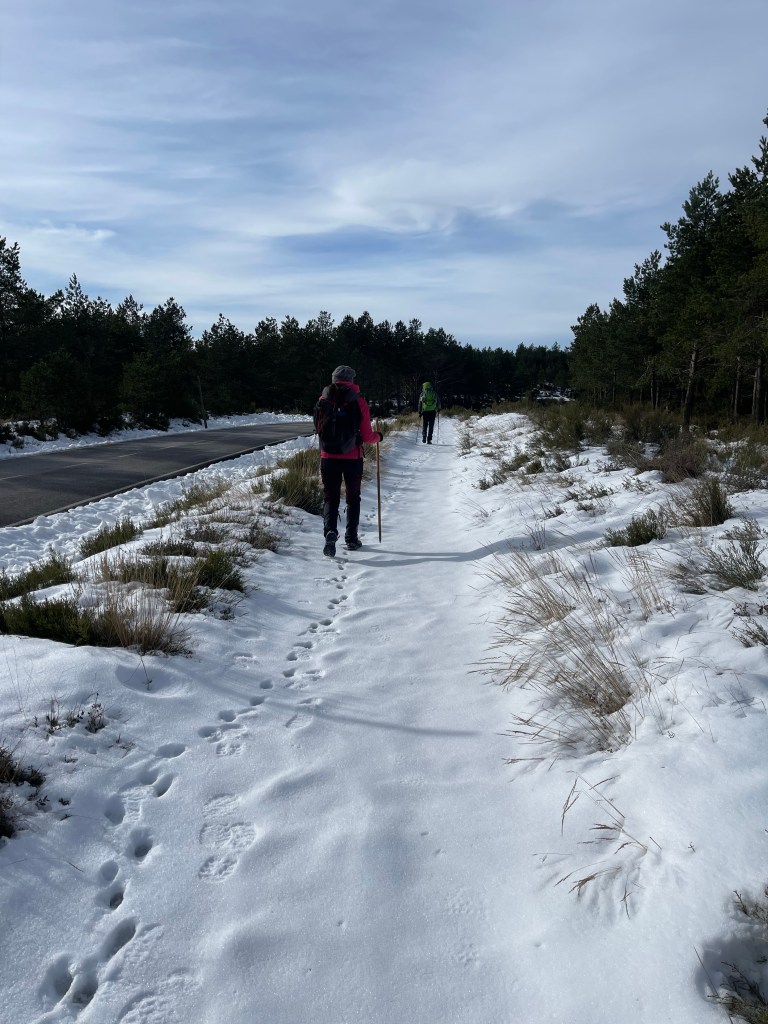
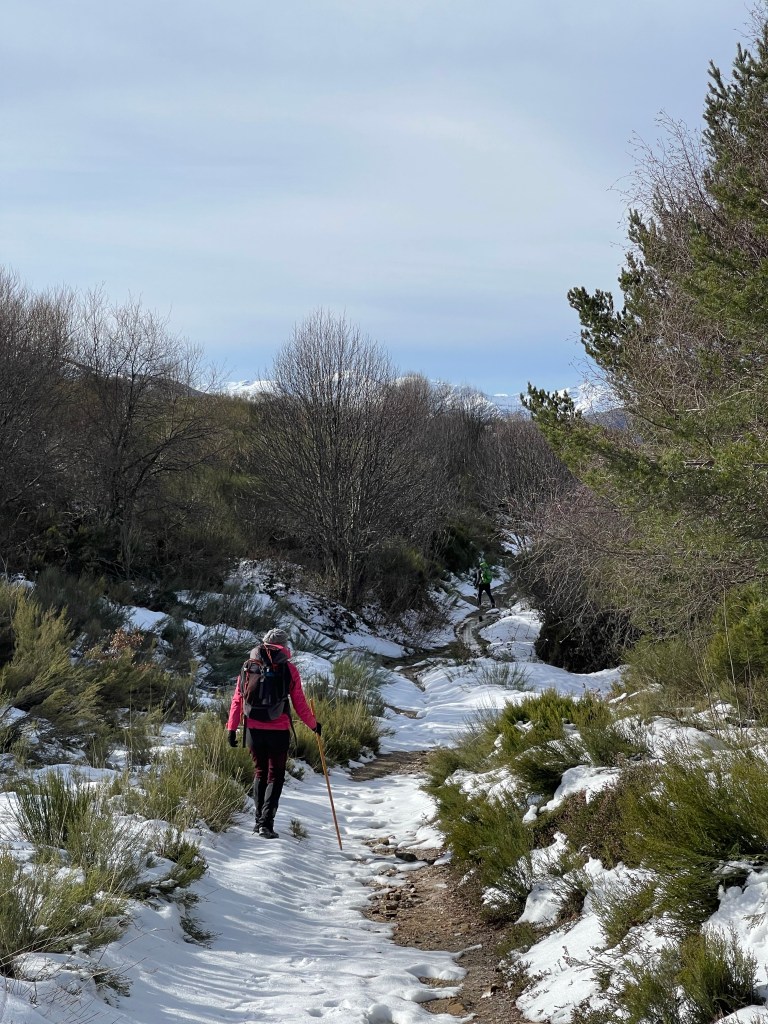
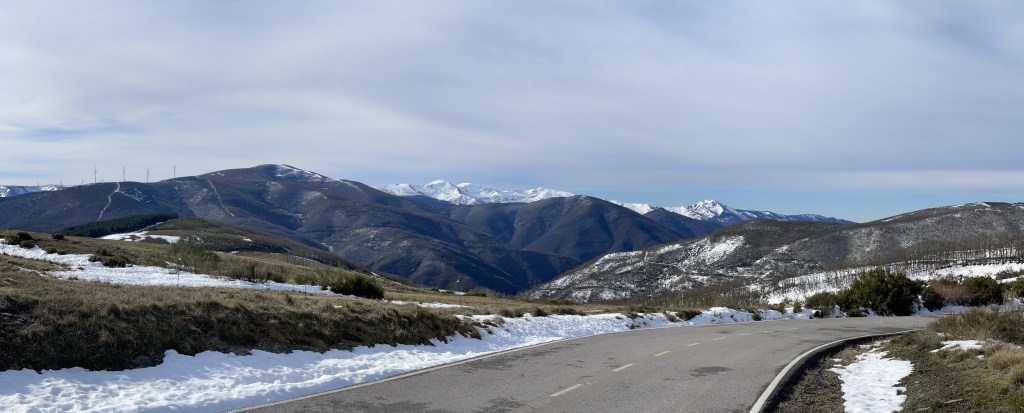
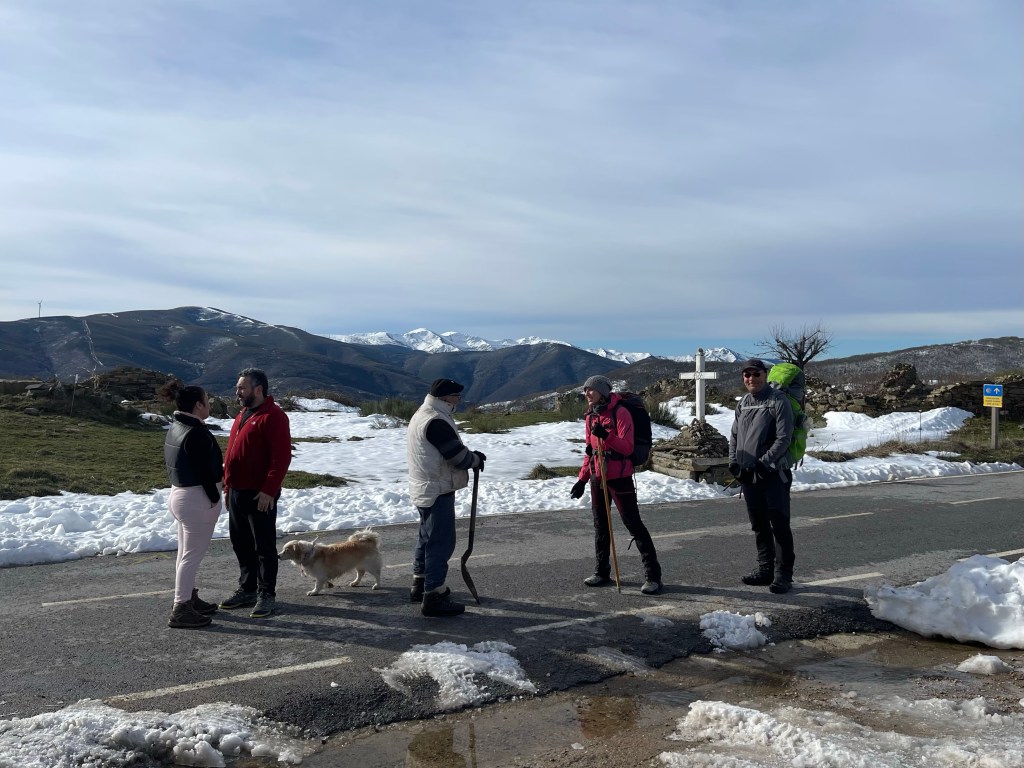
At Manjarín, a small village that feels more like a rest stop, a man tells us to take the road for safety. They had to save some pilgrims a few days ago. So after some of the original Camino path covered in snow and streams, we continue on the road for an easier time.
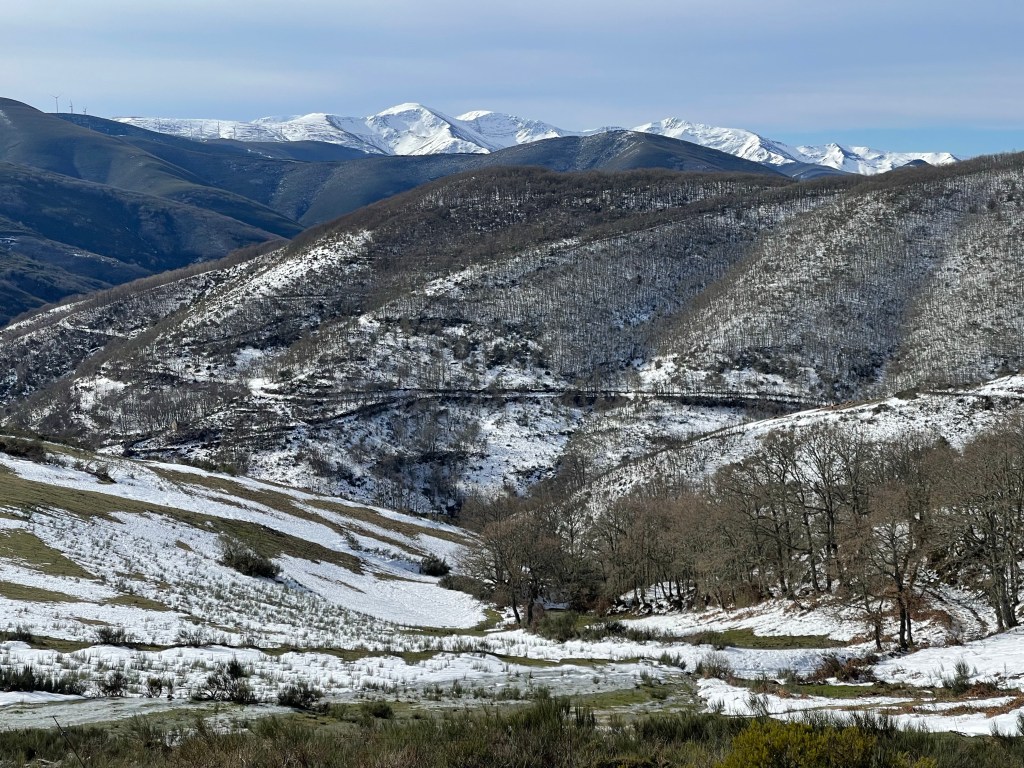
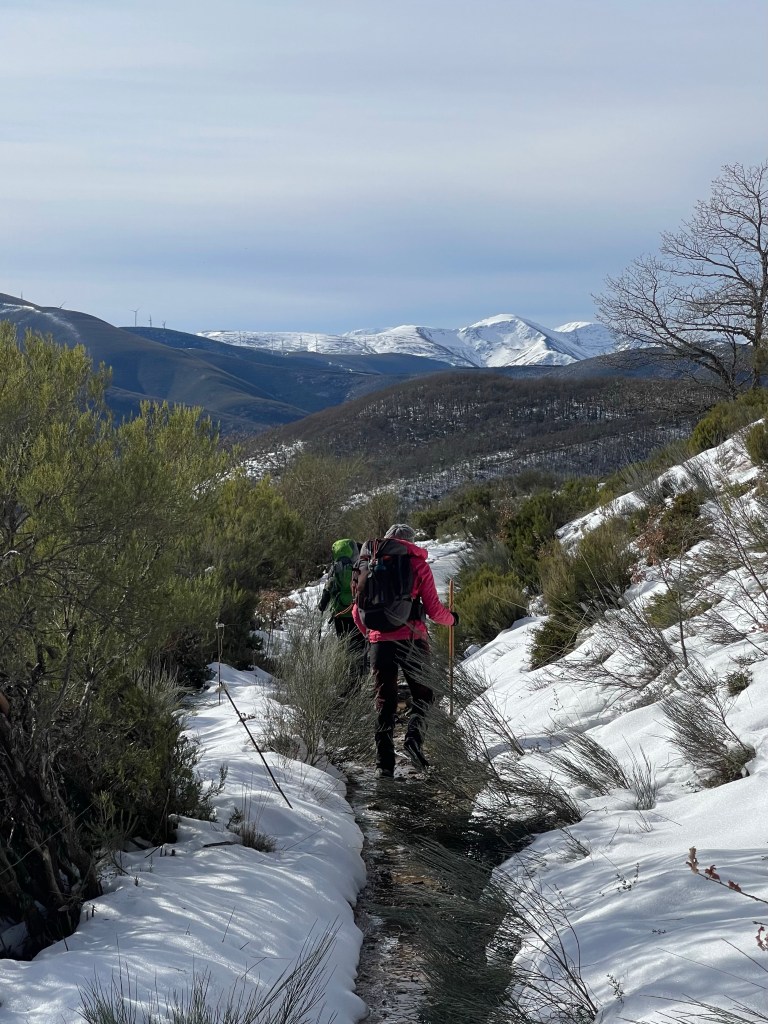
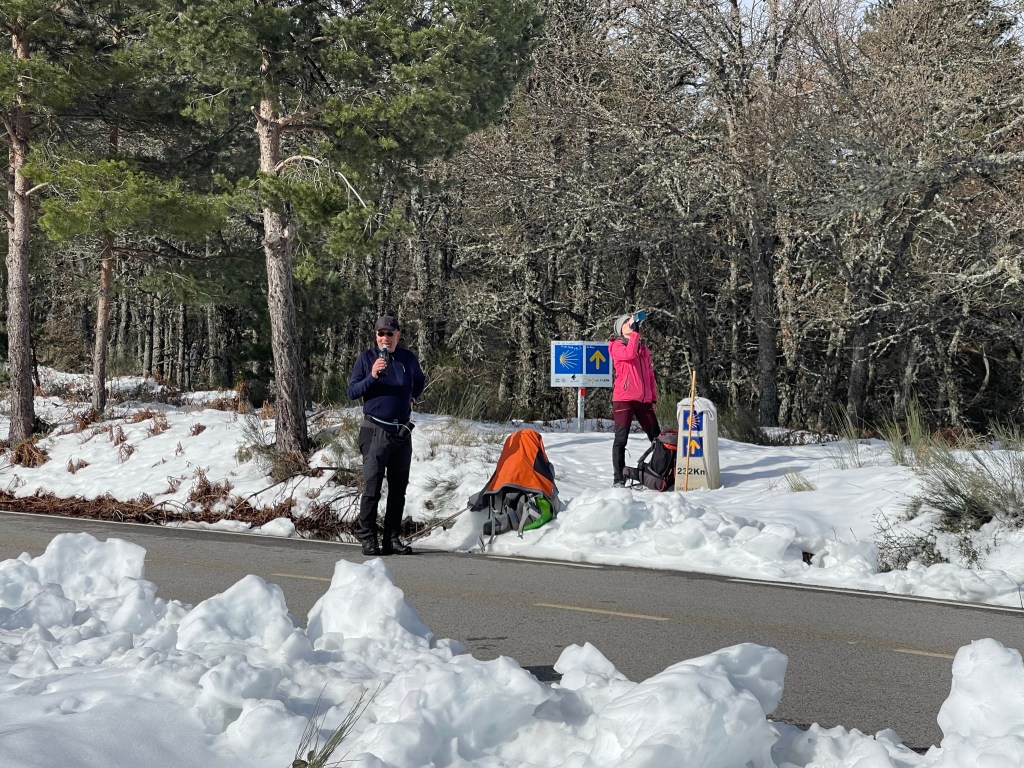
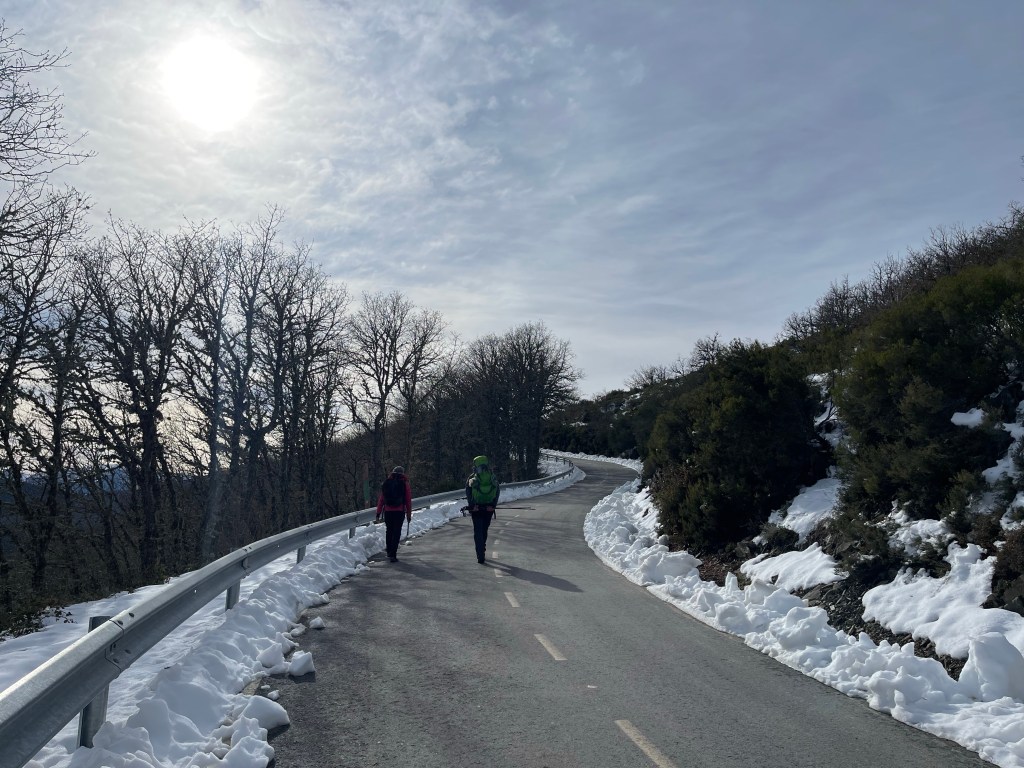
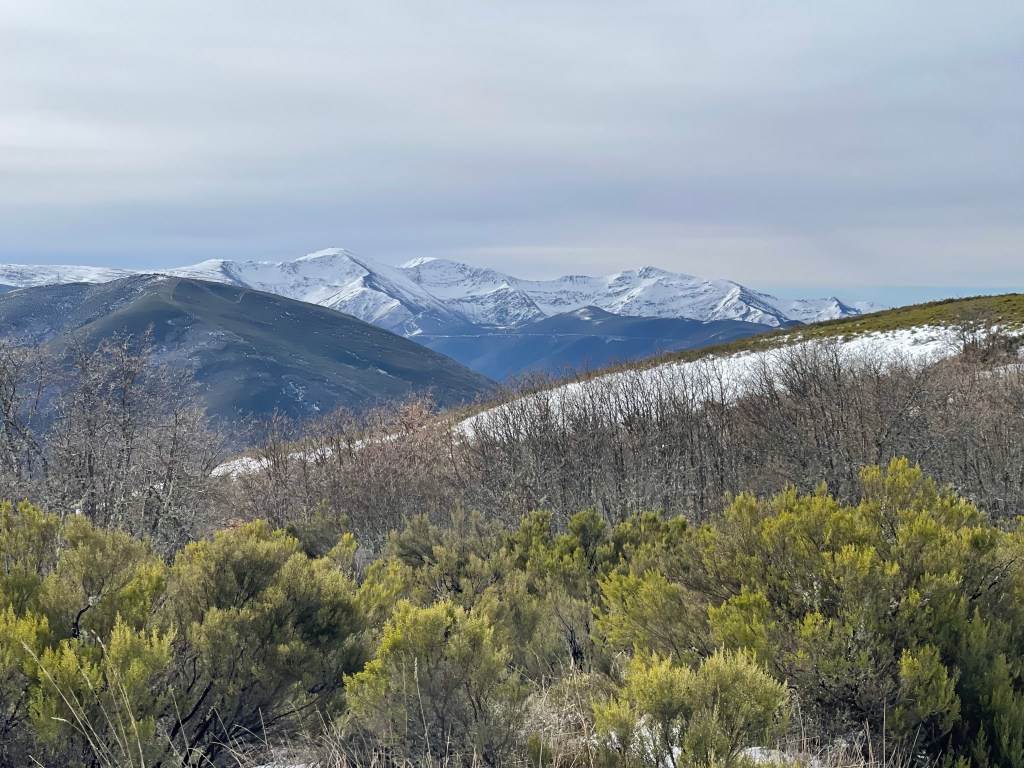
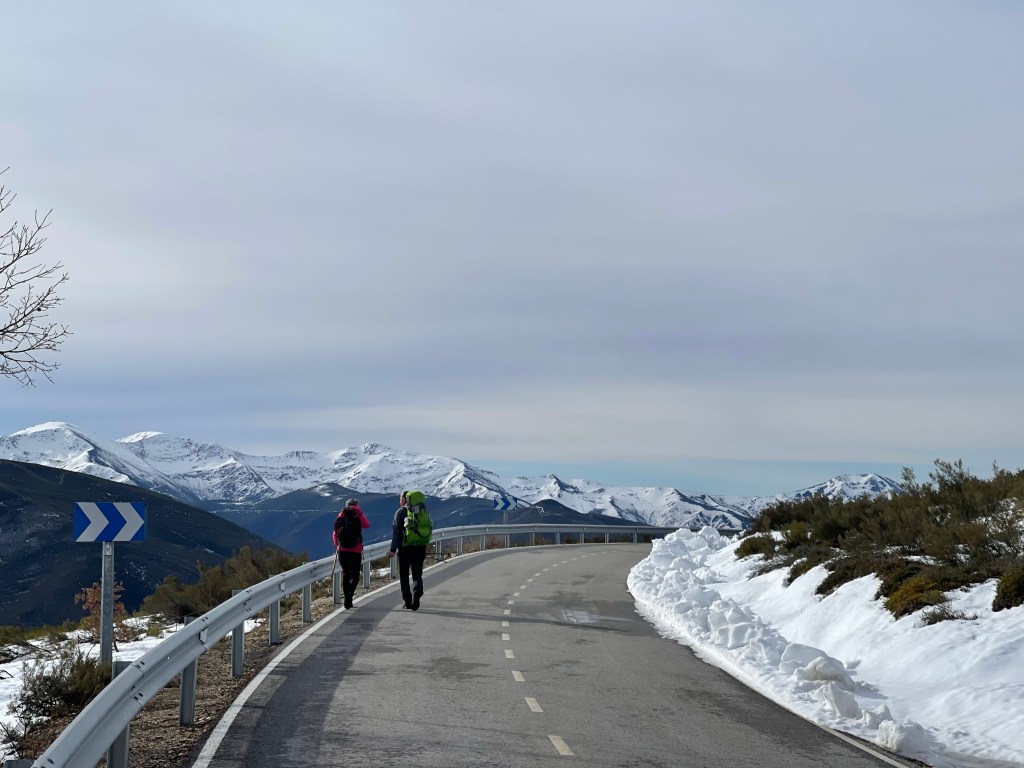
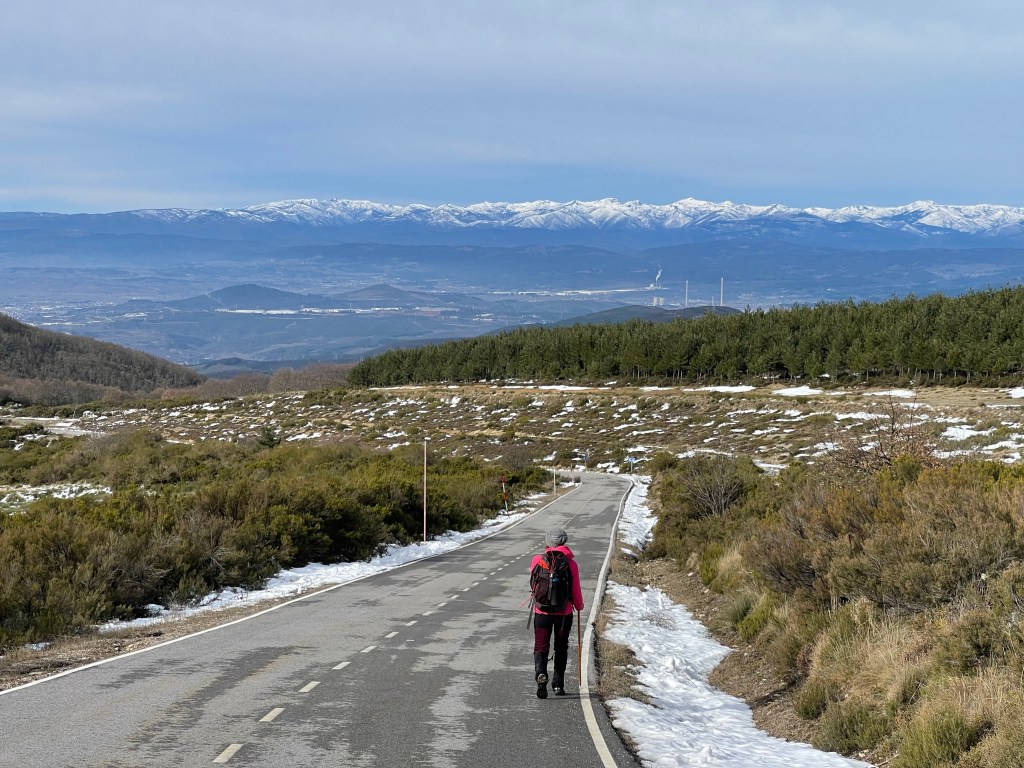
We’re going downslope, surrounded by a mountain range. The valley of Bierzo opens up to us, and I think the buildings I see in the distance below is the city of Ponferrada, although we are still 17km away from it.
We’re now returning to Camino paths at an altitude when the ground is no longer wet and snowy. El Acebo appears below us and we trot down to see if there’s anything open. It’s quiet, with nothing open, so we take a break near a fountain. As we are sitting, a pilgrim walks up to us whose face I’ve never seen. We introduce ourselves. He’s Bertalan from Hungary. He started at Saint-Jean-Pied-de-Port on January 4, so he’s really fast.
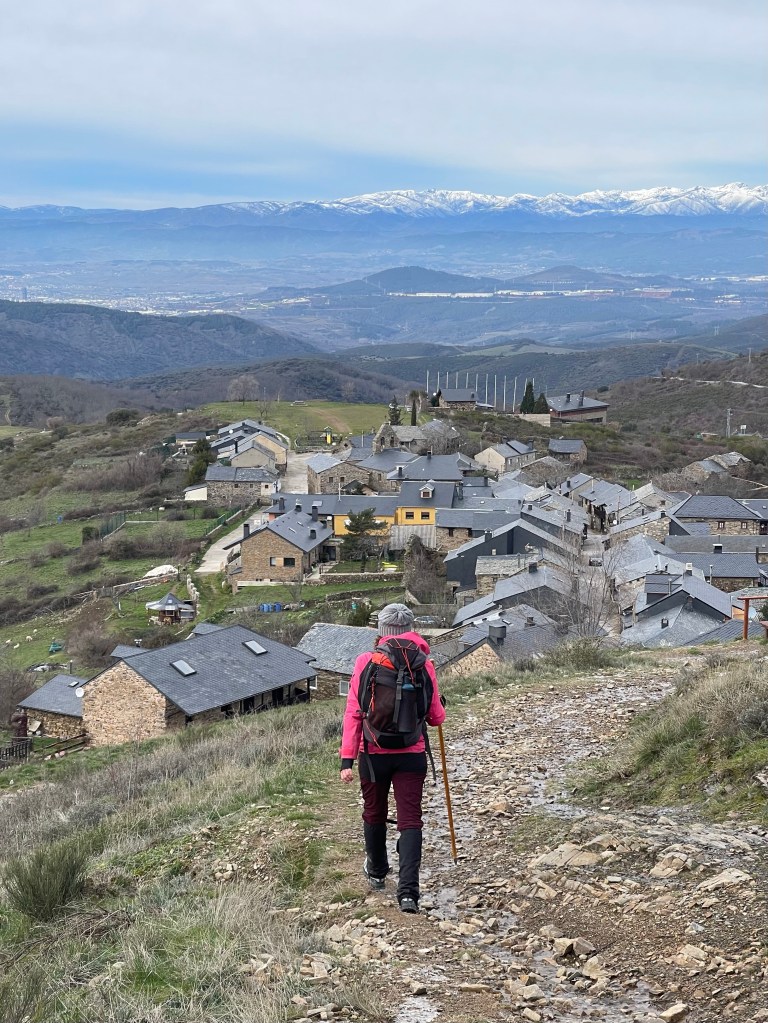
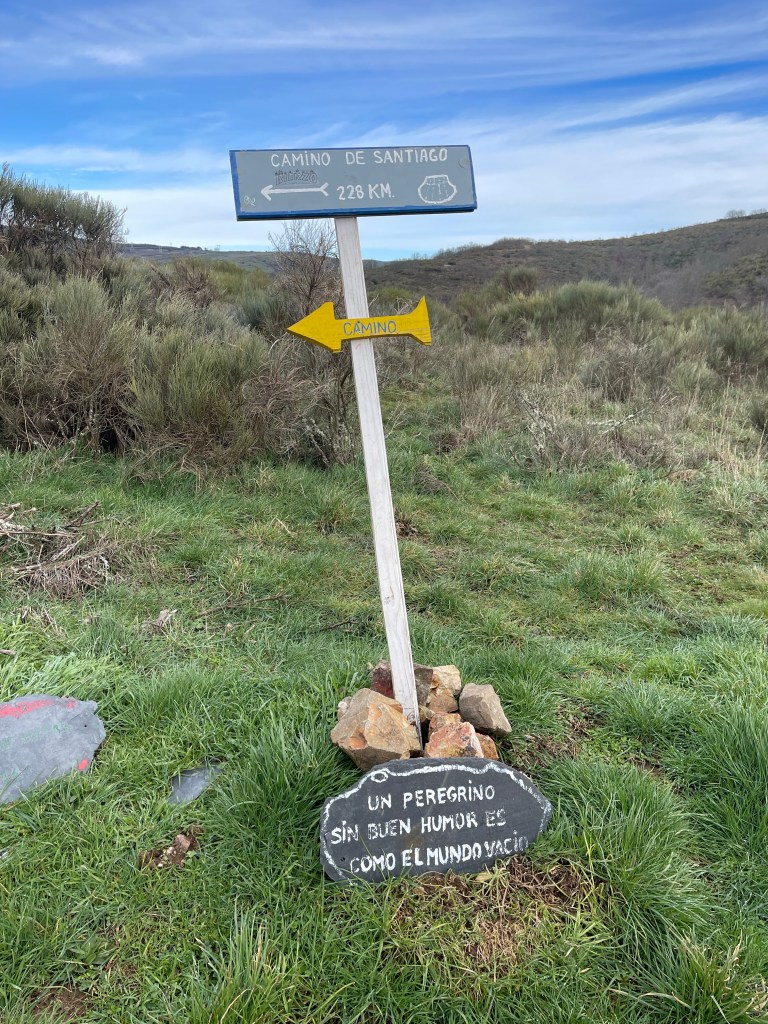
Riego de Ambrós is a charming town with old buildings, but everything is closed. Continuing on, we go on a nature trail (this has been one of the first parts of the Camino that feels like other treks in nature), accompanied by a mountain range on our left. At some parts, we walk among forested hills.
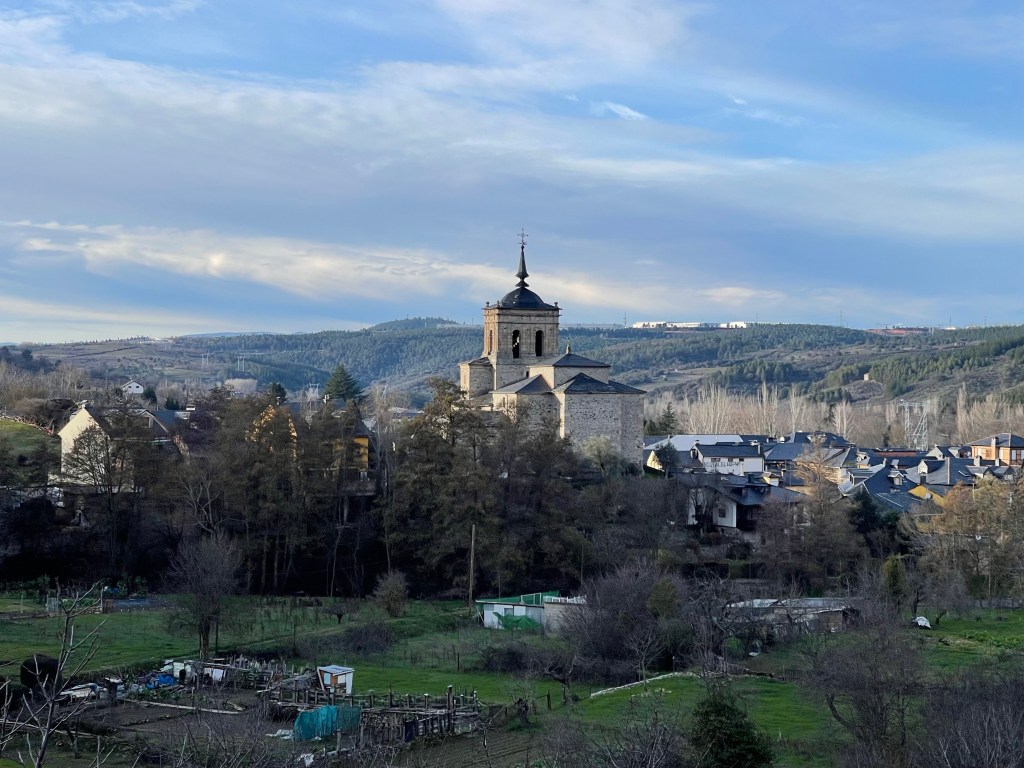
The descent to the town of Molinaseca is beautiful. We had intended to end in Ponferrada today, but Ingrid’s leg is not doing too well, so we decide to stay here instead.
After a coffee at the restaurant, we go to a hostel, the only accommodation available here now. The hostel facilities are nice but the owner is rough around the edges, so it doesn’t leave a good feeling. You do meet all sorts of characters on the Camino. And we know it’s just for the night. Bertalan’s Hungarian friend, David, who was slower behind him, arrives to the hostel later.
We go to a nearby restaurant, excited to try botillo (meat-stuffed pork intestine), a specialty of the Bierzo area. The man there had earlier kindly promised to do dinner for us. He does come back saying there is only one serving of botillo and he only has entrecot steak left for the three other portions. It’s all well-prepared, for sure, but it ends up being one of our more expensive meals, and we pay for wine we didn’t know would be €12 and bread we didn’t order that was €2.40, of which we only took a couple of pieces (bread has been served free all this while in the rest of Spain). All together with the hostel experience, Molinaseca feels more like a beautiful tourist destination (it is picturesque on the outside) than a pilgrim stop.
 Jeremy Walks the Camino in Winter
Leave a comment