27km
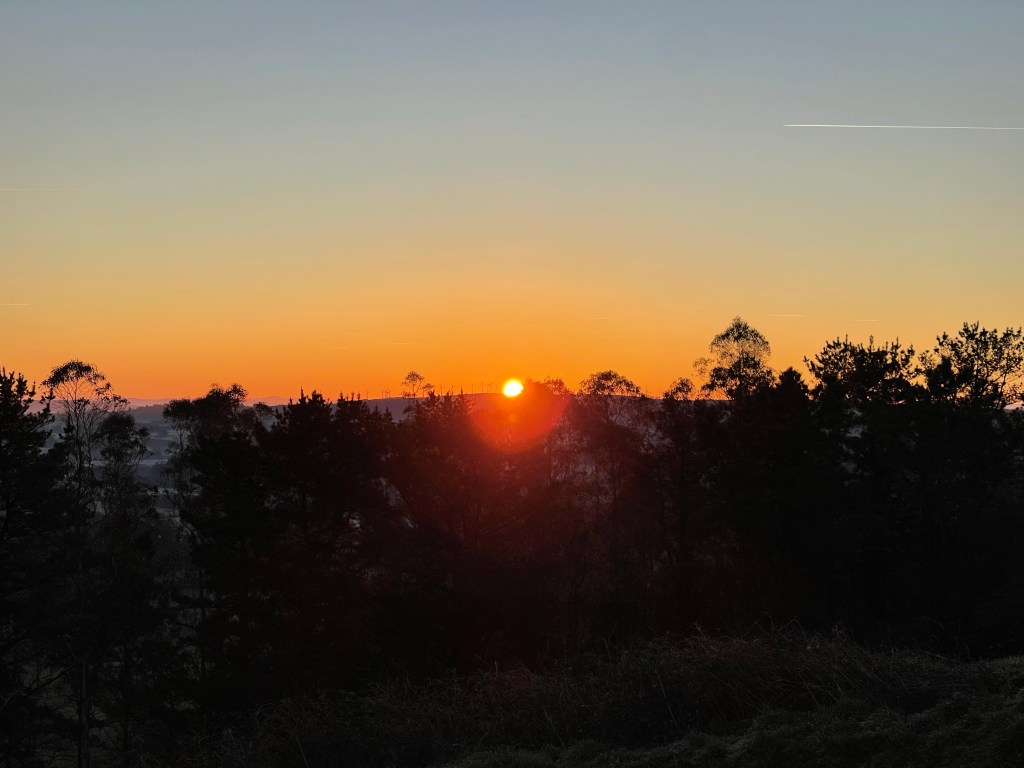
We wake up to an orange horizon. It was a bit cold and the ground was hard last night, but somehow I feel so happy. As we pack up, the sun rises over the mountains, and we pause to enjoy it.
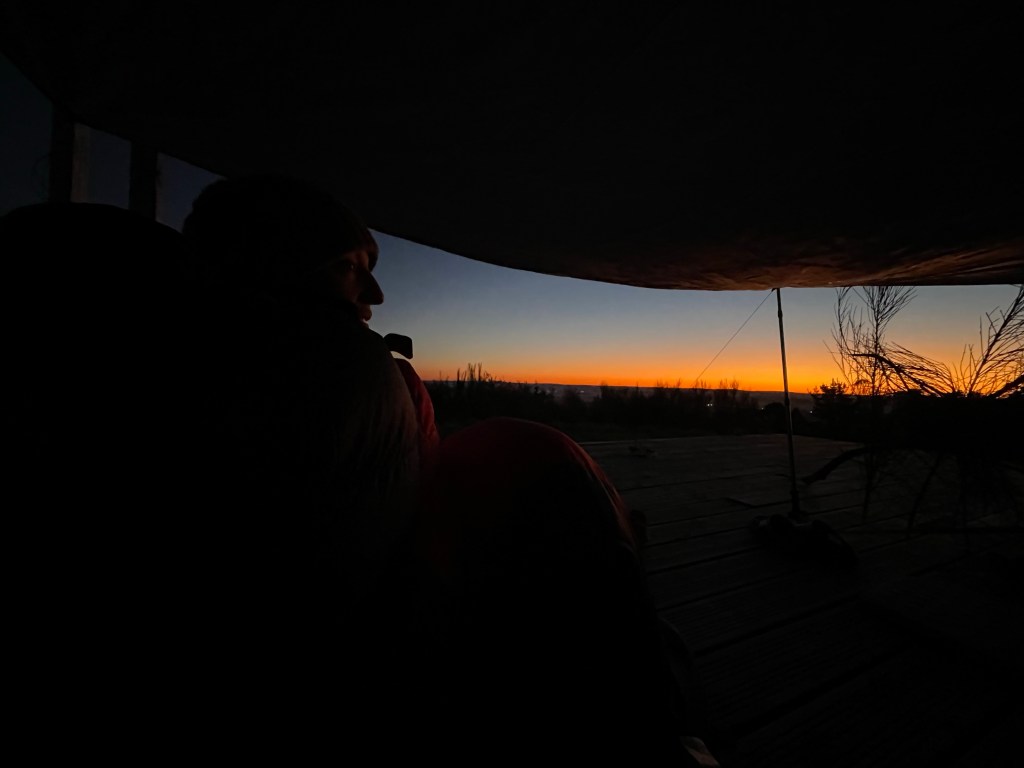
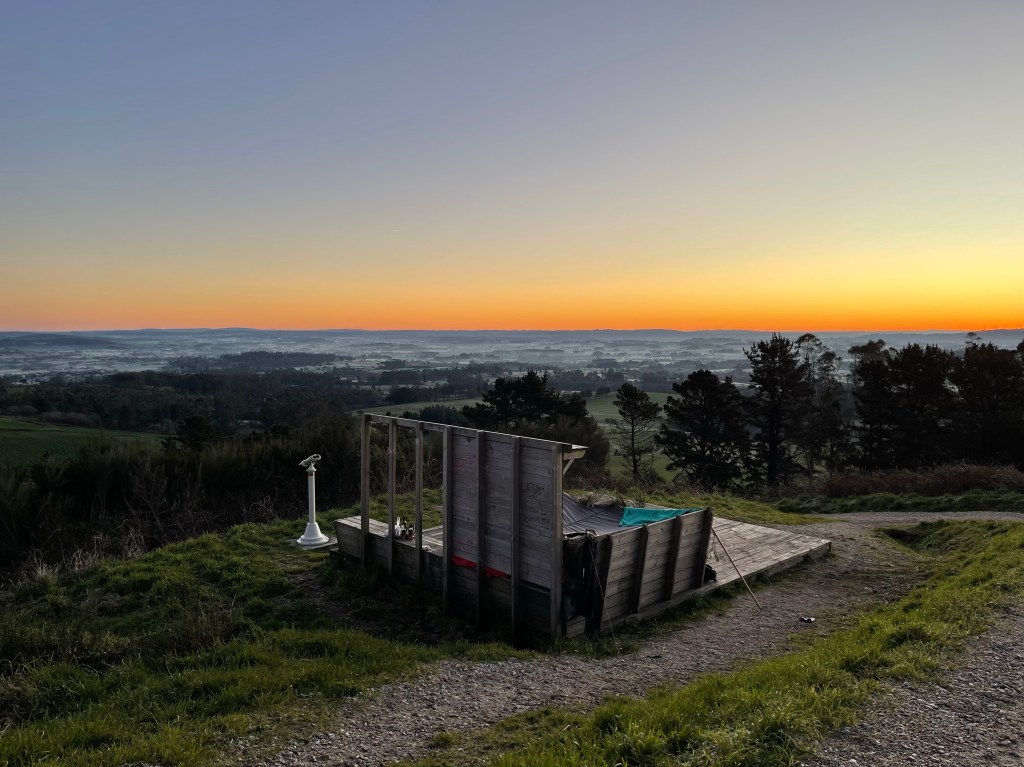
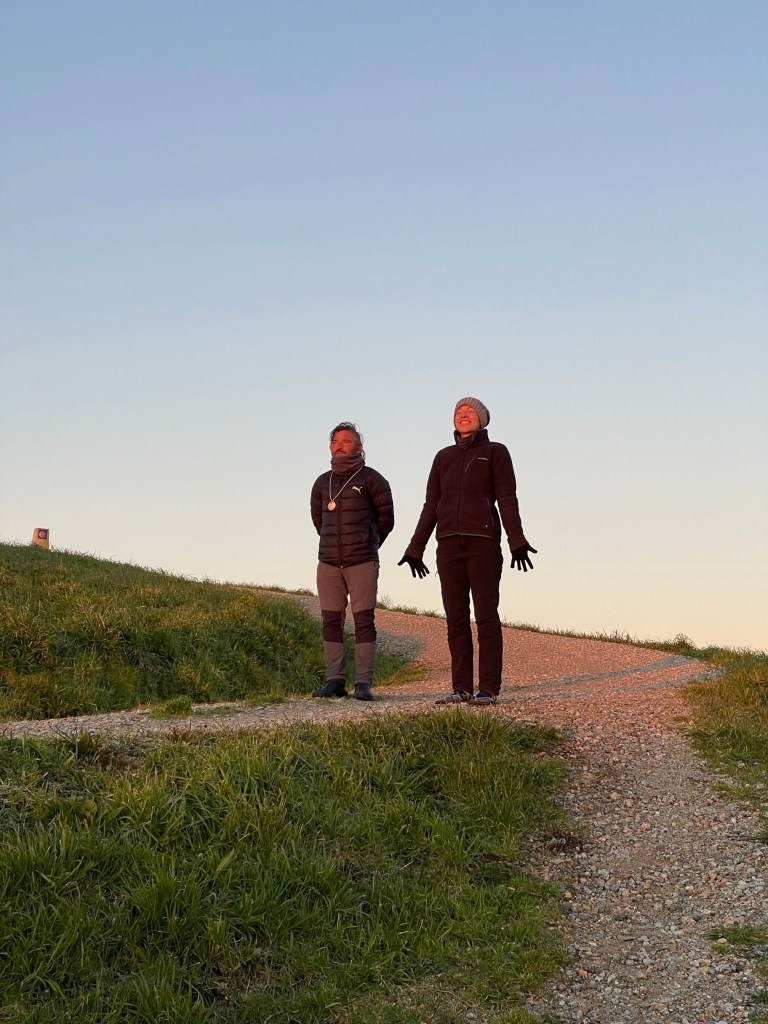
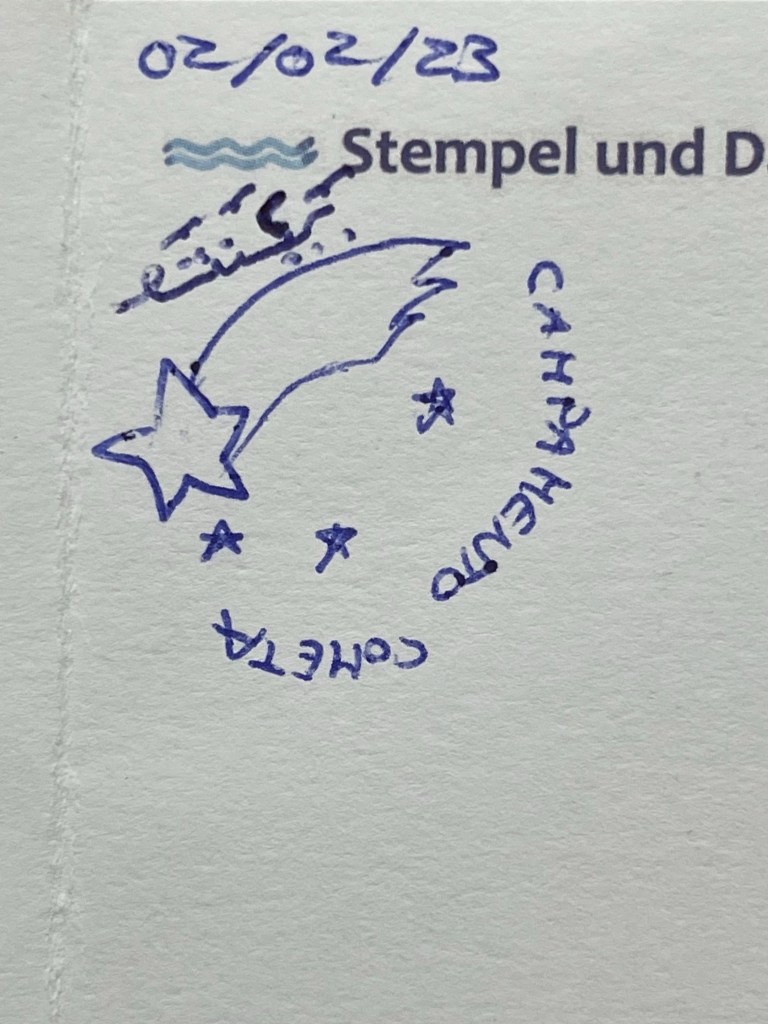
Breakfast is napolitana chocolate we bought last night. Before we go, Antonio says we should draw a sello (stamp) on each other’s credencial. I draw the three of us looking at a comet in the night sky.
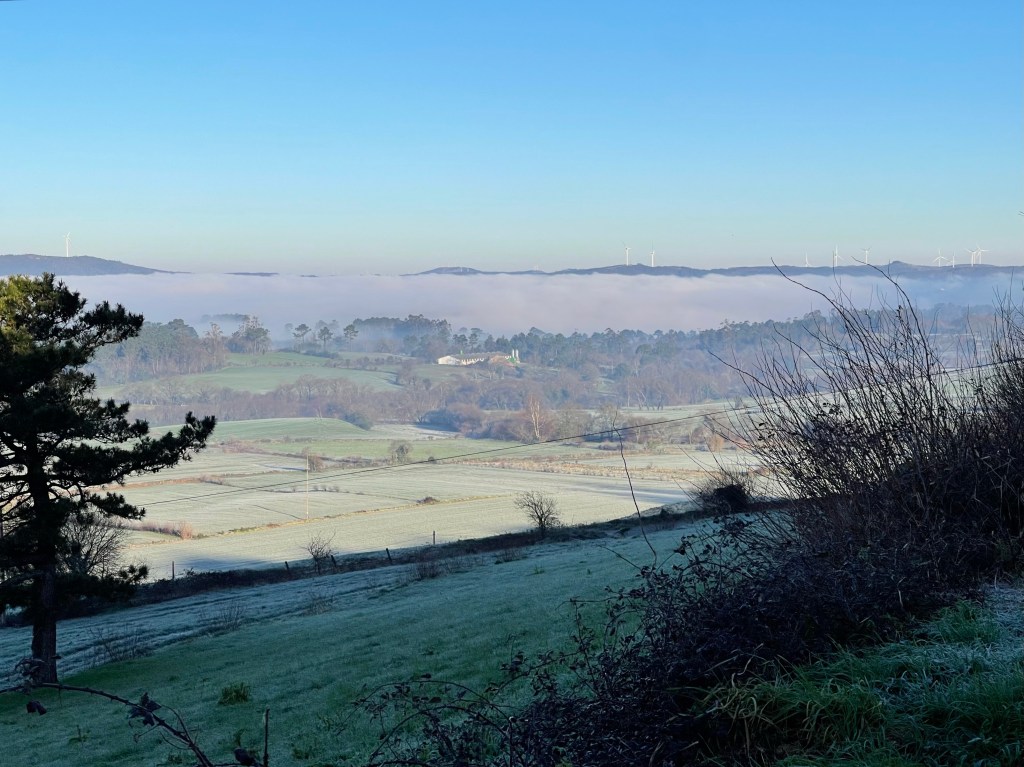
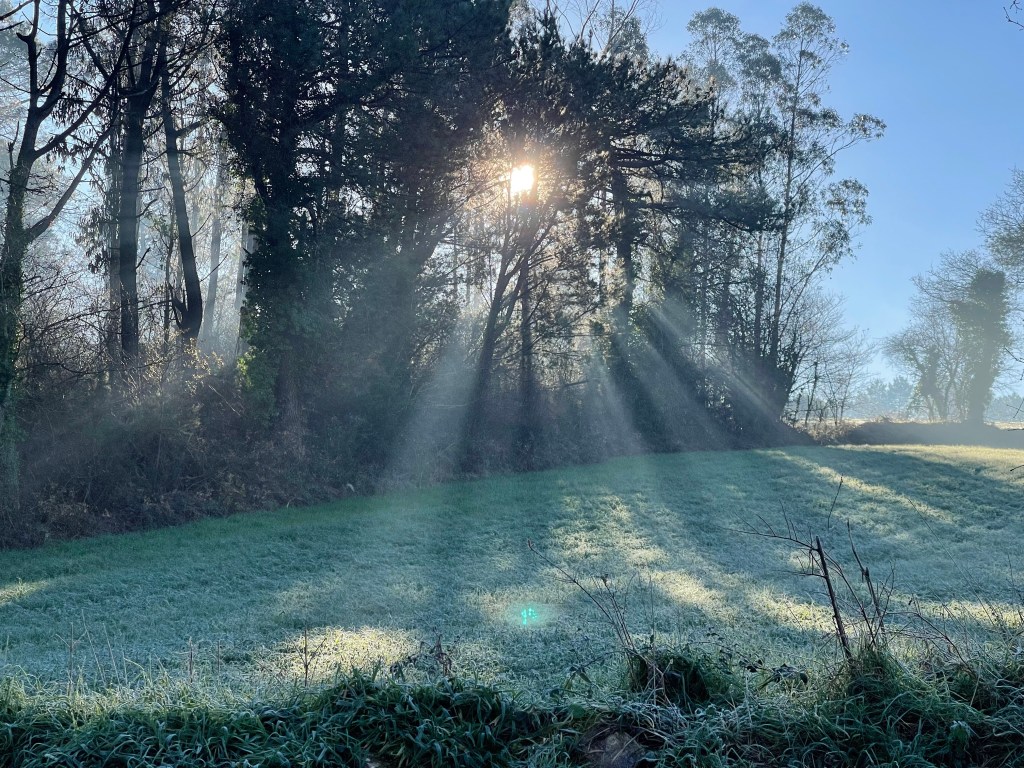
We take a downhill path, low clouds hanging in the valley ahead of us. The first town we reach, Lago, has nothing open, so we continue. My fingertips are numb through my gloves, and plants shine with layer of frost. Some trees drip as the frost melts. I walk past a variety of shrubs I’ve never seen on the Camino.

At the entrance of Corzón, We find an open bar. It’s great relief to have coffee, food, and a toilet. I use the toilet and find out that…of my diarrhoea I am cured! I get a cortado which comes with a bizcocho. The man makes for us a special bocadillo I’ve never seen, bocadillo de zorza con queso (a sort of braised pork sandwich with cheese). It’s so great to eat. We get one more café con leche each. I’m happy and satisfied.
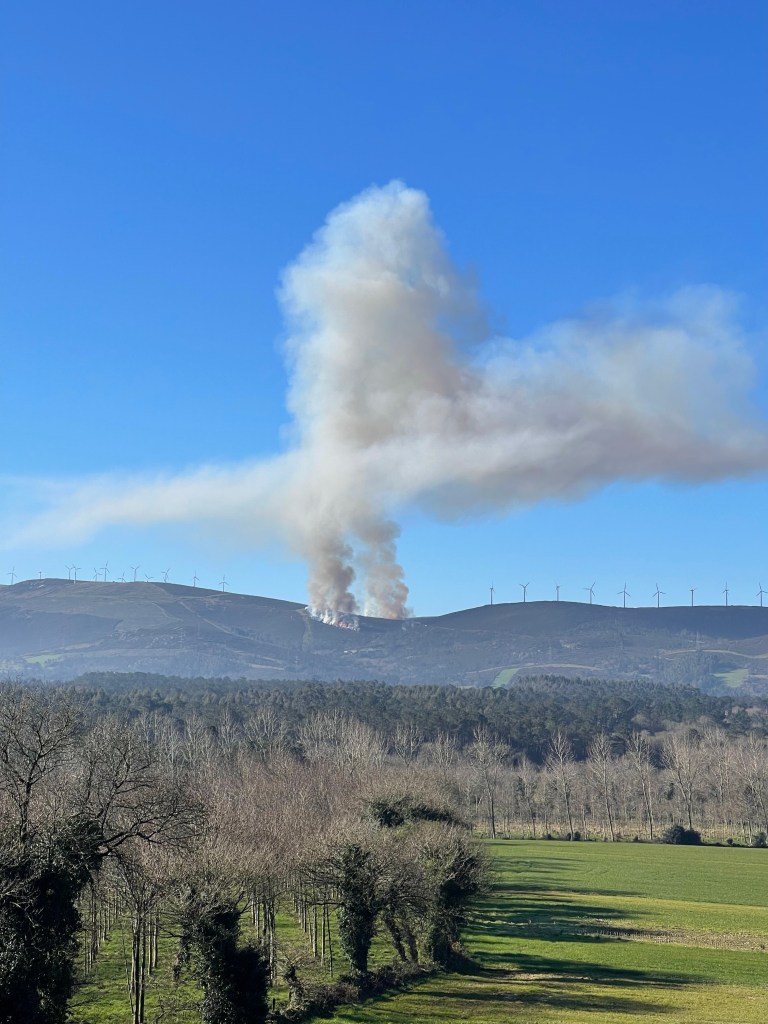
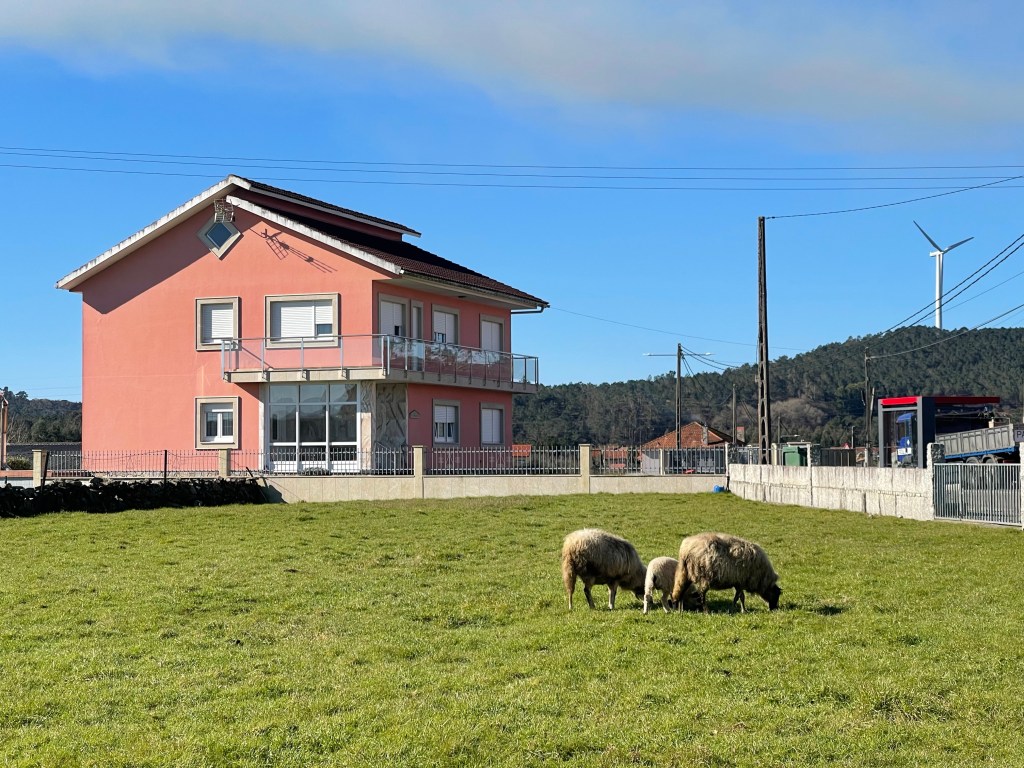
It’s sunny and comfortably cool at 12°C when we leave the bar at midday. We take a road between fields of farm. Some tractors are at work.
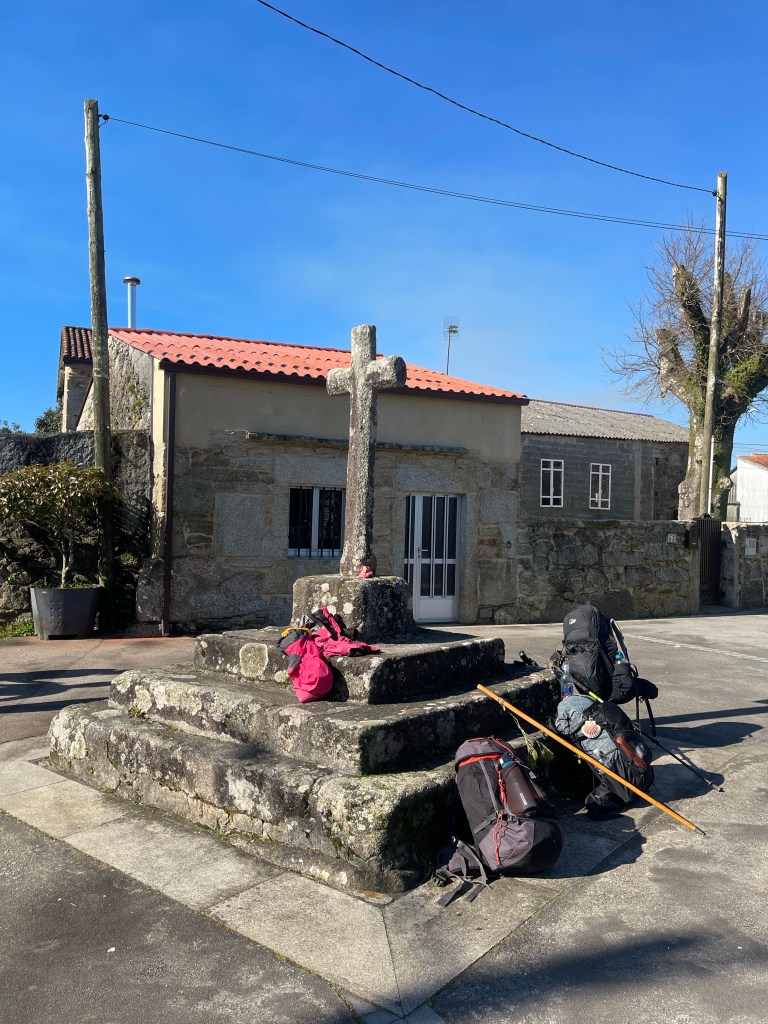
At Olveiroa, we take a break at a cross monument to take off more layers as it is getting sunny. There are six horreos in the garden in front of us. Antonio asks a local lady about it and they chat for a while.
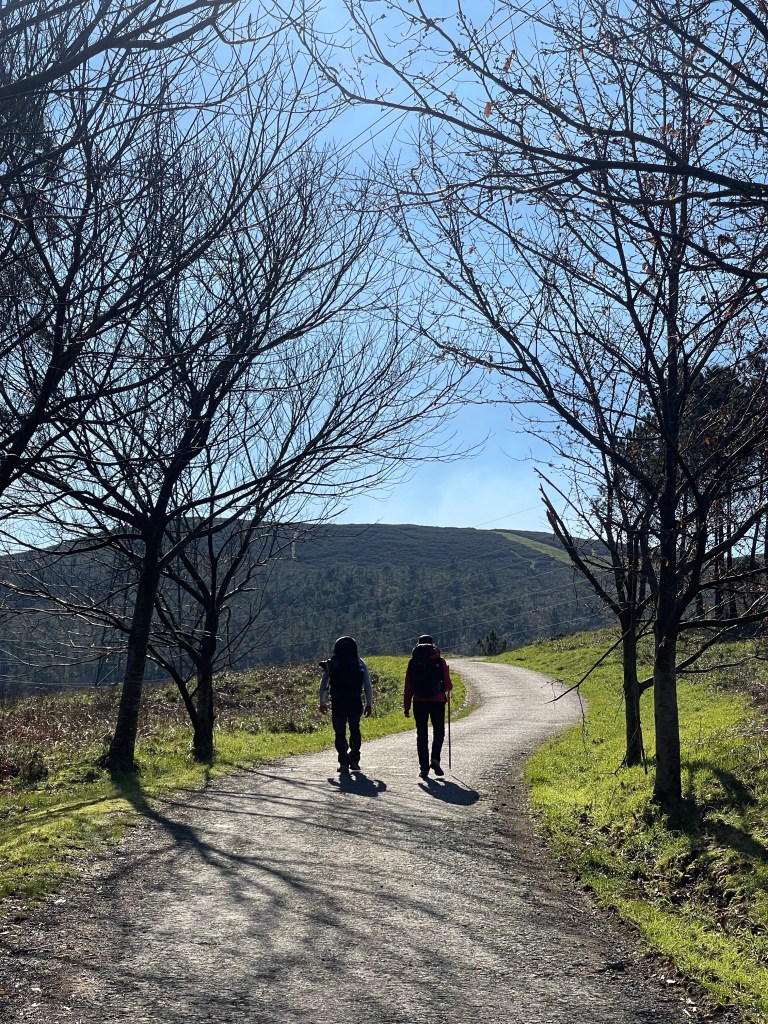
We leave on idyllic winding sunlit paths, typical of Galicia. Small hover flies float and catch the sunlight. We pass young pines and yellow flowers. The route then leads to a loose gravel path with rolling hills and valleys around us. We hear the sound of a large river below before we see it.
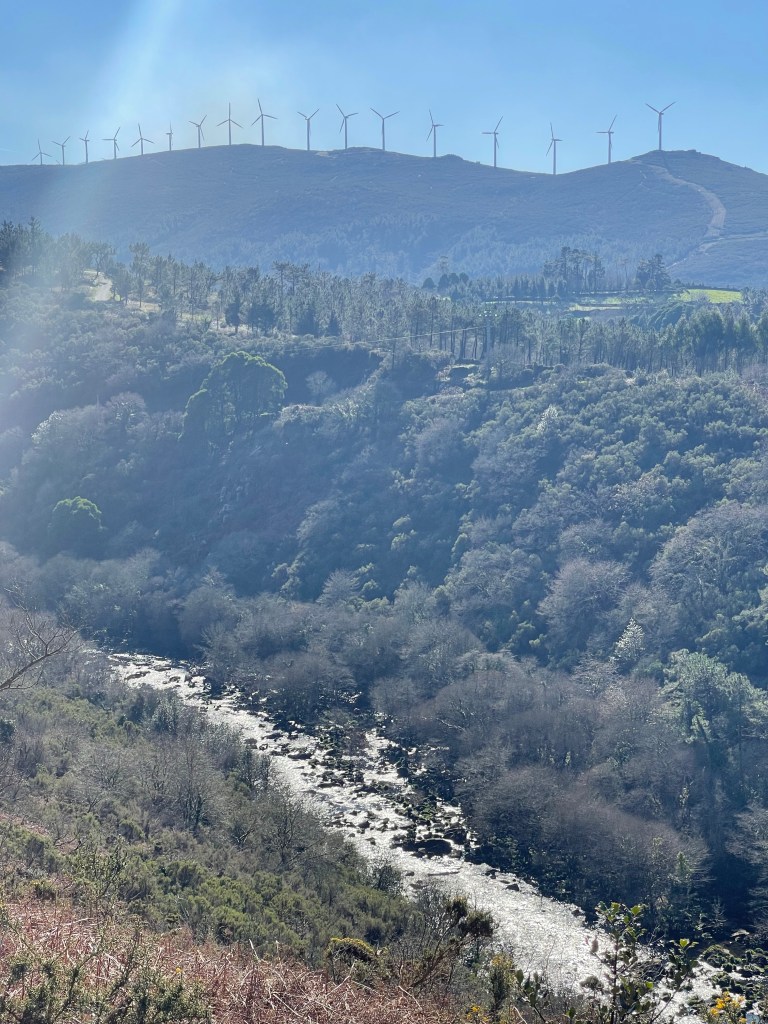
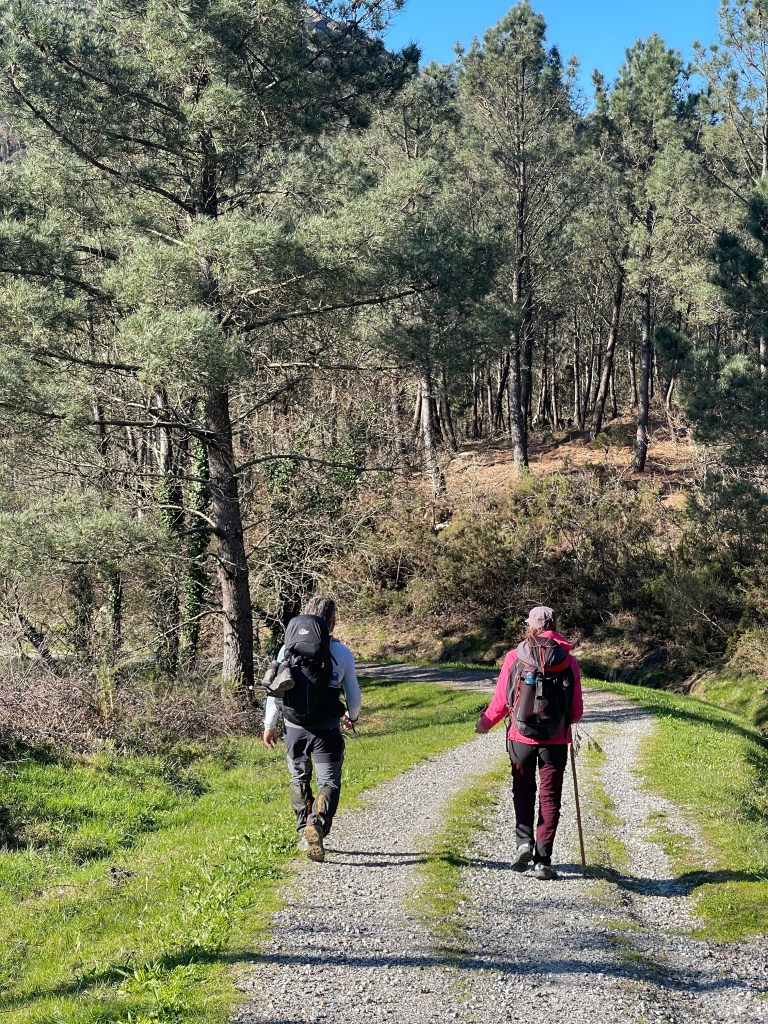
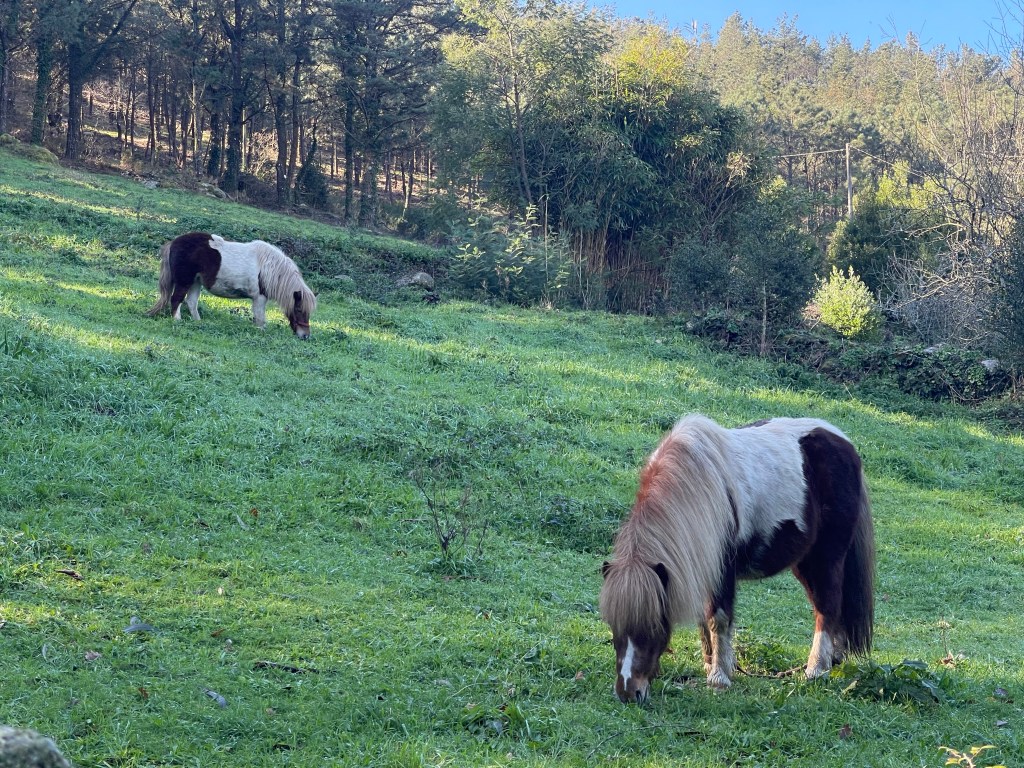
Hospital appears over a crest. It’s the last stop for 14km until we reach Cee, and there’s only one place open. I get a tortilla francesca con chorizo picante (omelette with spicy chorizo) and a café con leche grande.
We reach the bifurcación (fork) where the route splits between Fisterra and Muxia. It’s also where the roundabout is for cars to choose either direction. Ingrid and I say goodbye to Antonio, who moves off to Muxía, while we take the road to Fisterra.
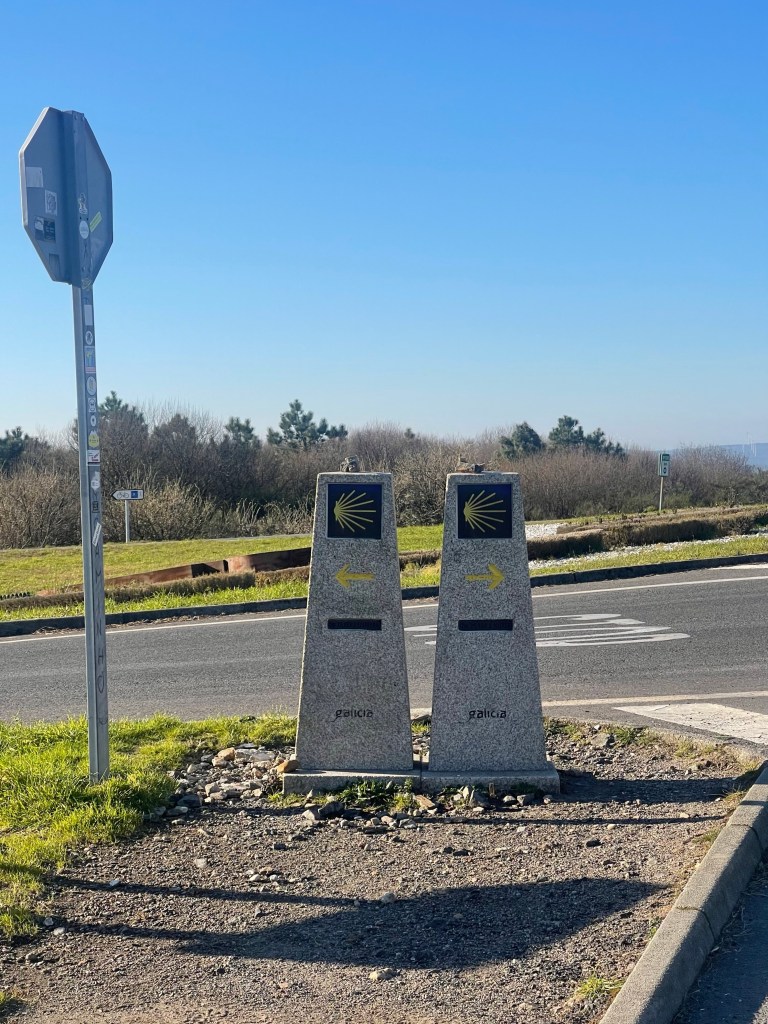
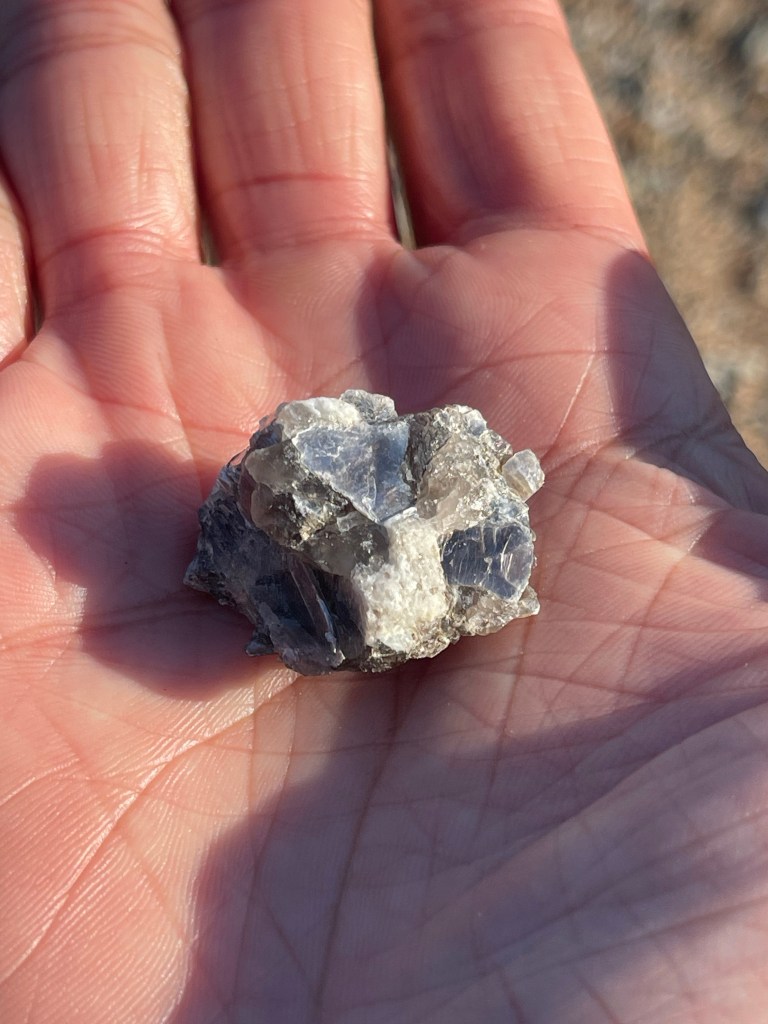
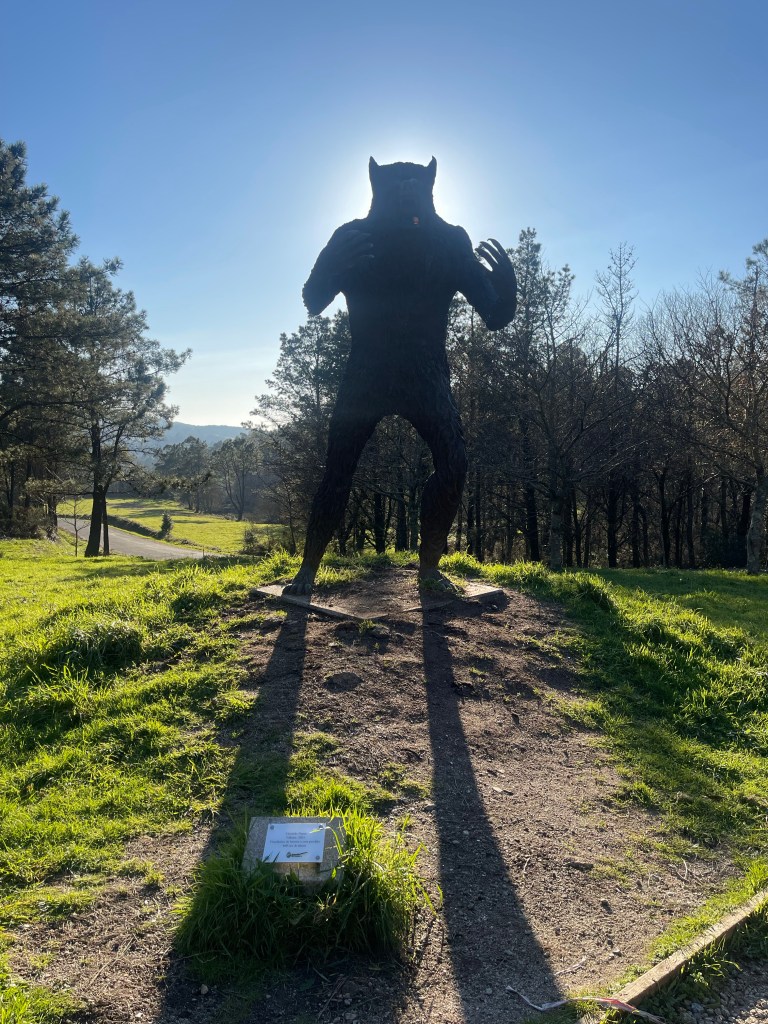
Someway after the fork towards Fisterra, there’s a horrendous sculpture of Vákner, a legend of a wolf-man that a pilgrim met centuries ago. This sculpture was made relatively recently in 2022. I wouldn’t want to encounter it at night. This point also marks the original bifurcación between Fisterra and Muxía.
We continue on a path through fields and forest. I really enjoy the sound of footsteps on gravel.
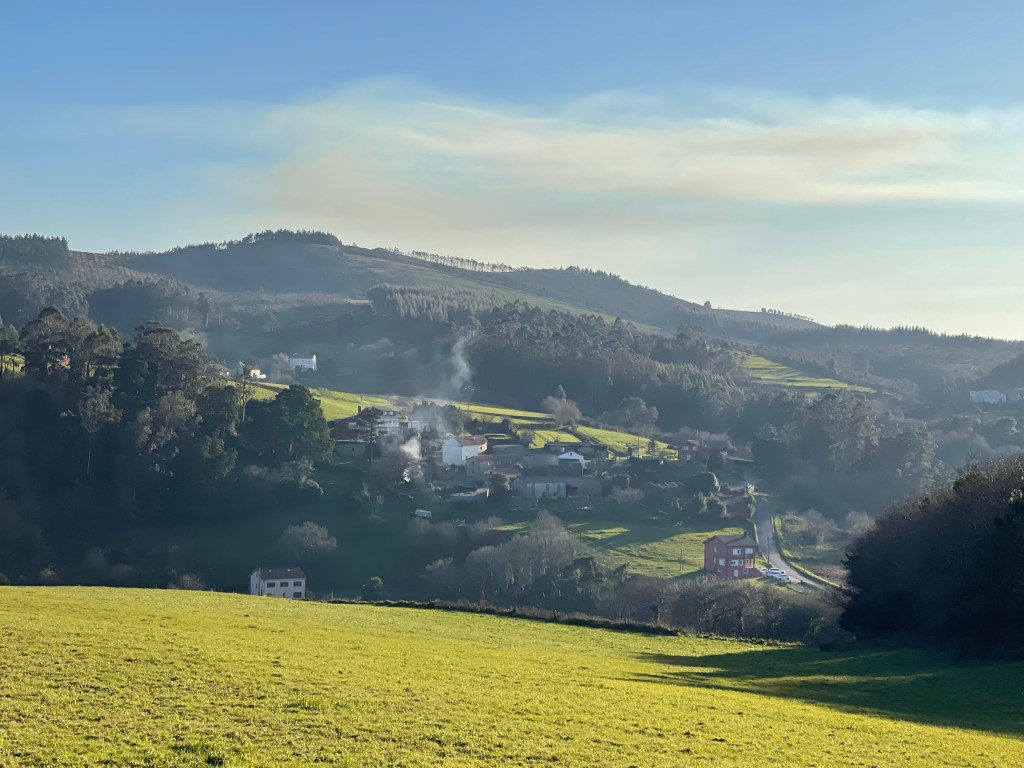
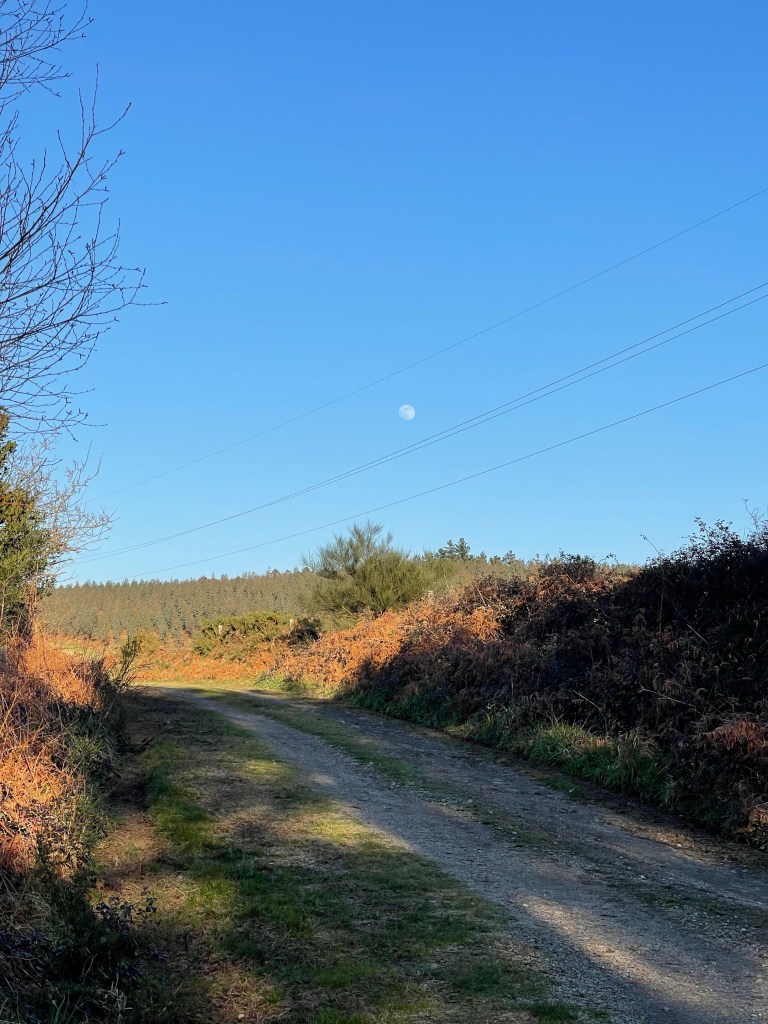
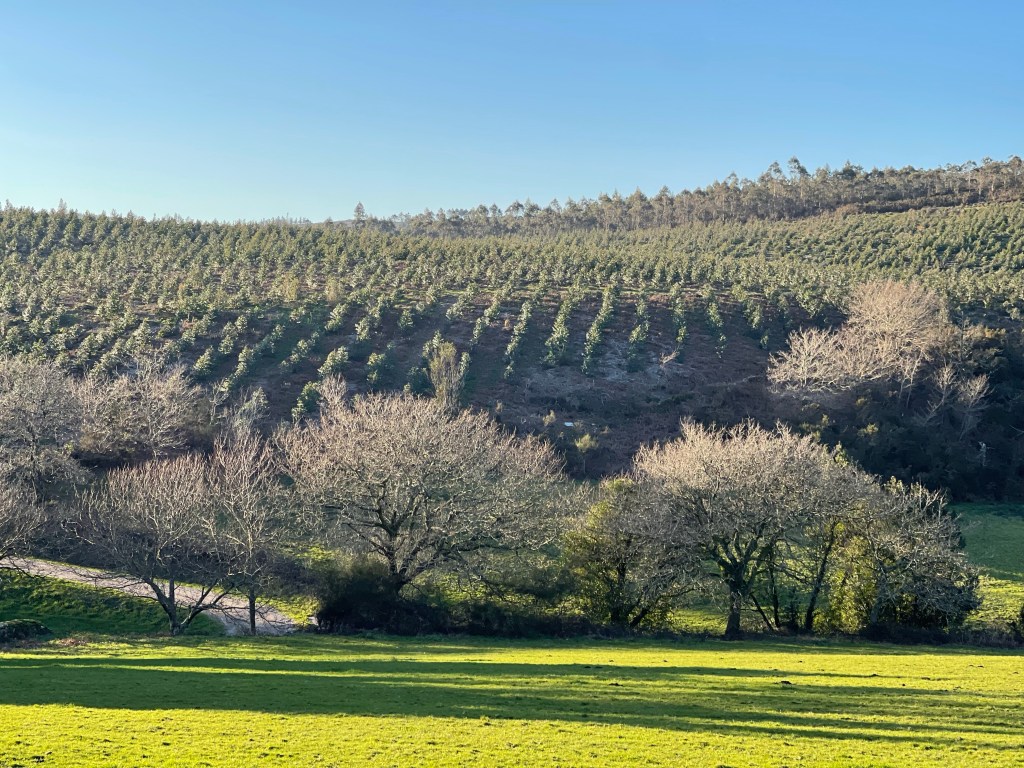
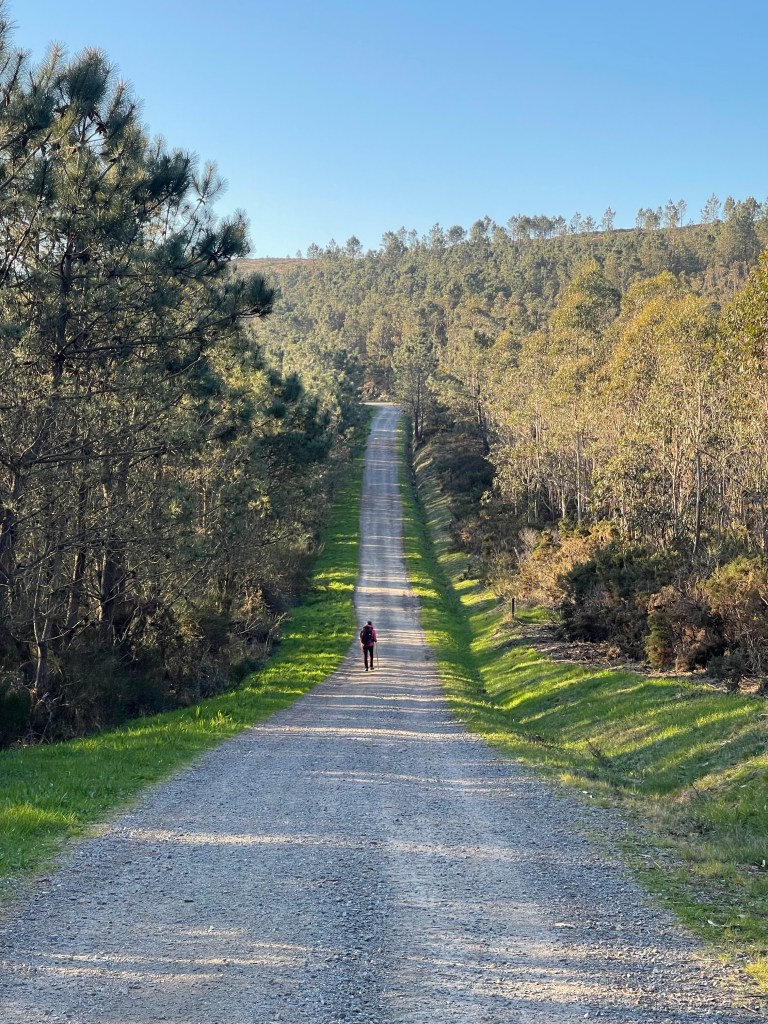
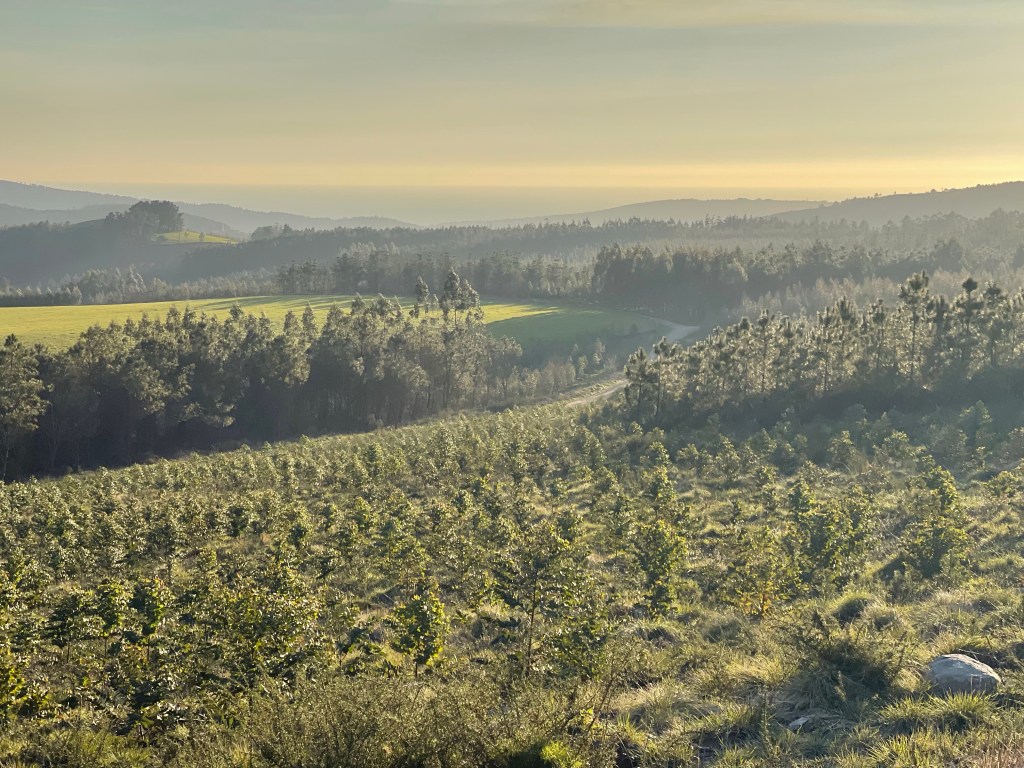
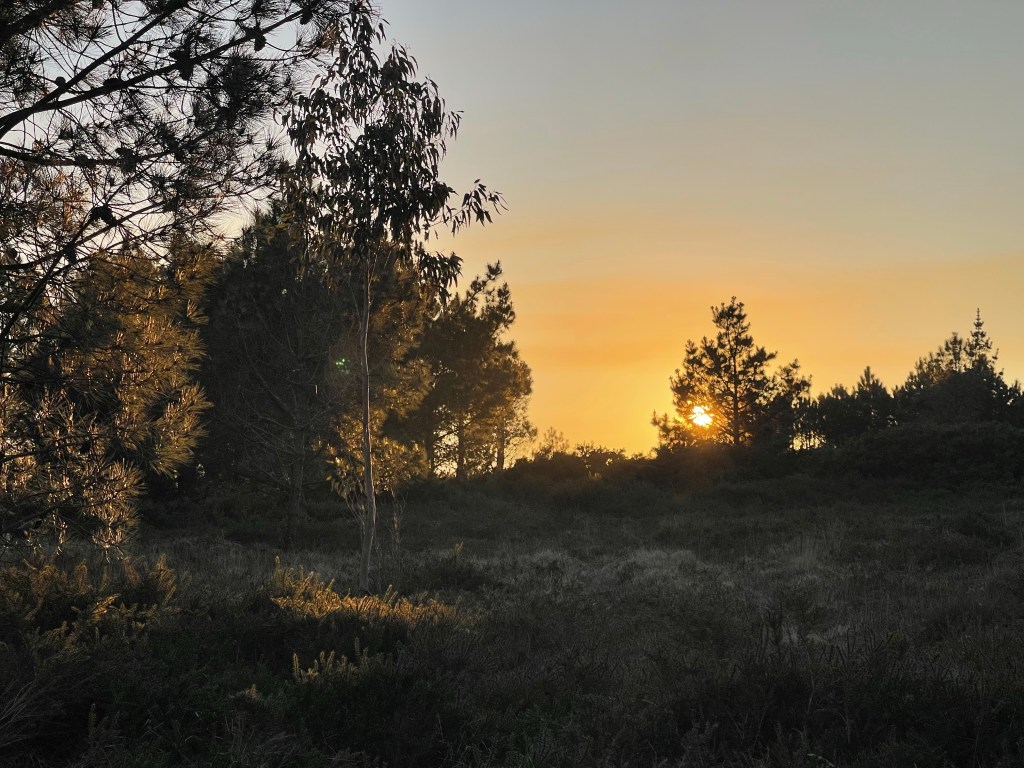
After a gentle but constant uphill, a beautiful valley appears in view on my left. The sun starts to flare in my eyes when it finds its way through the trees. My feet kick a stray pine cone in my path.
There’s a special peace here. It’s a beautiful stretch of hilly forest walk, all the better in the slow setting sun.
The trail markers display the remaining kilometres to Fisterra. It used to excite me when I saw them closer to Santiago, but now, it makes me think of the end.
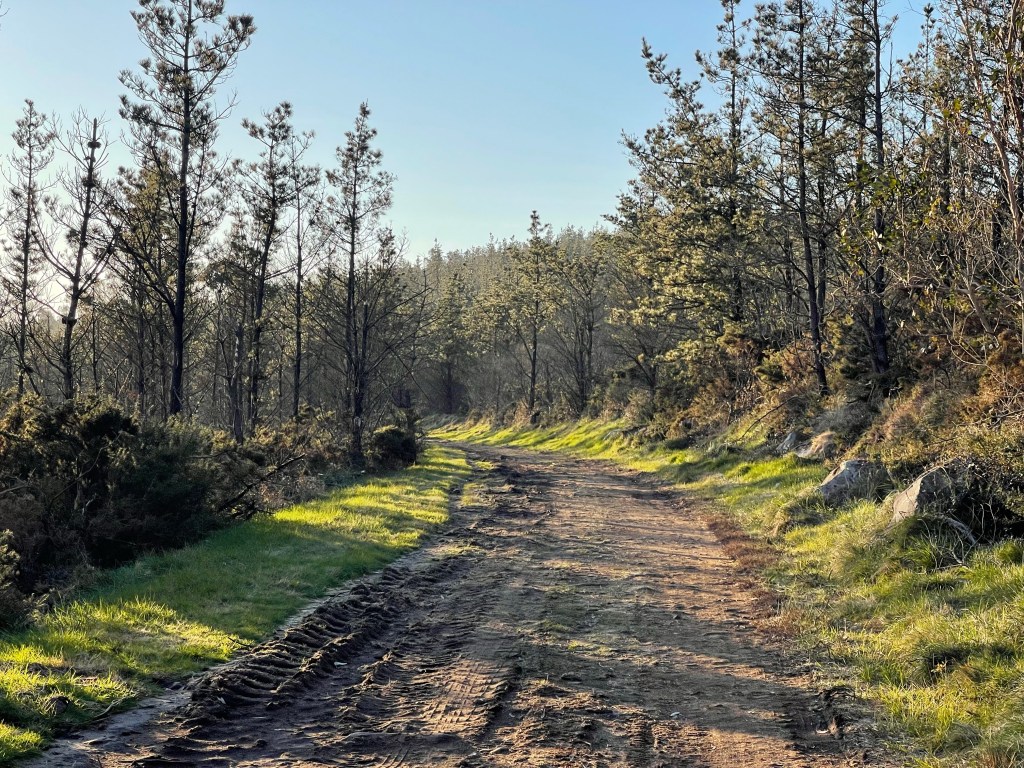

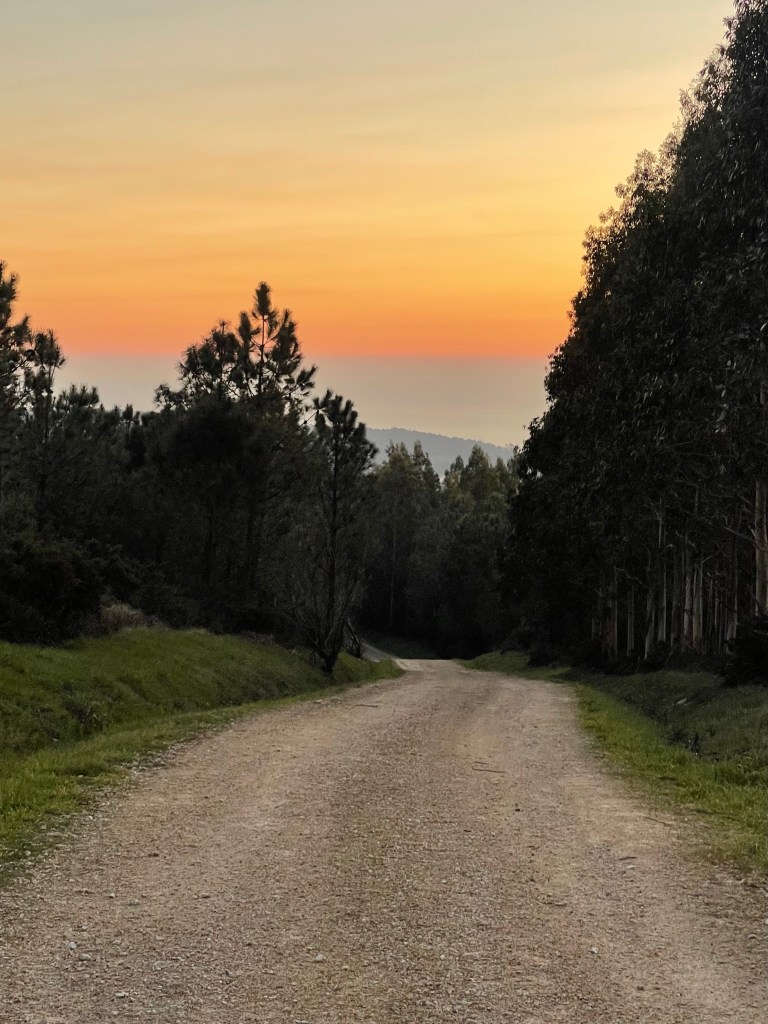
We turn to a steep downslope, and suddenly the sea appears in front of us in the distance. It’s violet along a coastline of silhouetted indigo mountains, among the twinkle of the lights of seaside towns.

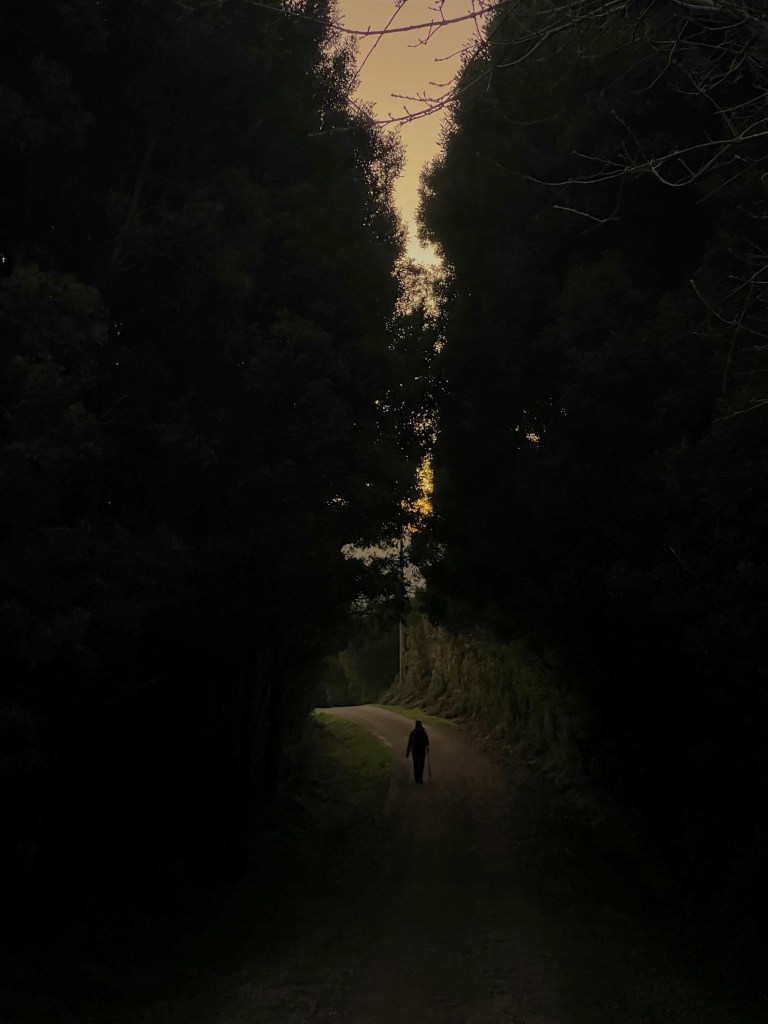
As we enter the city, we get waylaid by old lady for at least half an hour, finding it hard to pry away from her talking. We do manage to do so eventually as it gets fully dark and much colder. At 8.30pm, we’re late to our promised time to Albergue Tequeron, but Pilar, the owner, doesn’t make us feel bad, calmly and warmly welcoming us. We’re glad to reach some comfort and warmth.
In between laundry cycles, we enjoy dinner at a restaurant called Meson Gallego. For the menu, we both choose caldo gallego (Galician soup), merluza (hake), and the best flan ever.
 Jeremy Walks the Camino in Winter
Leave a comment