20km
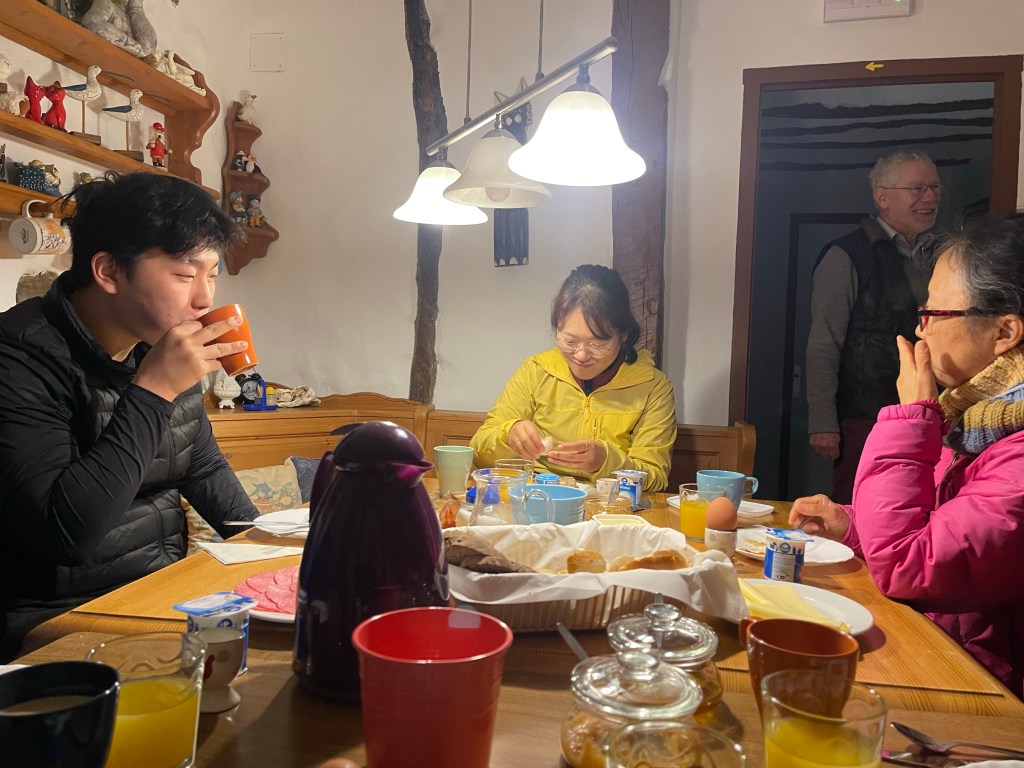
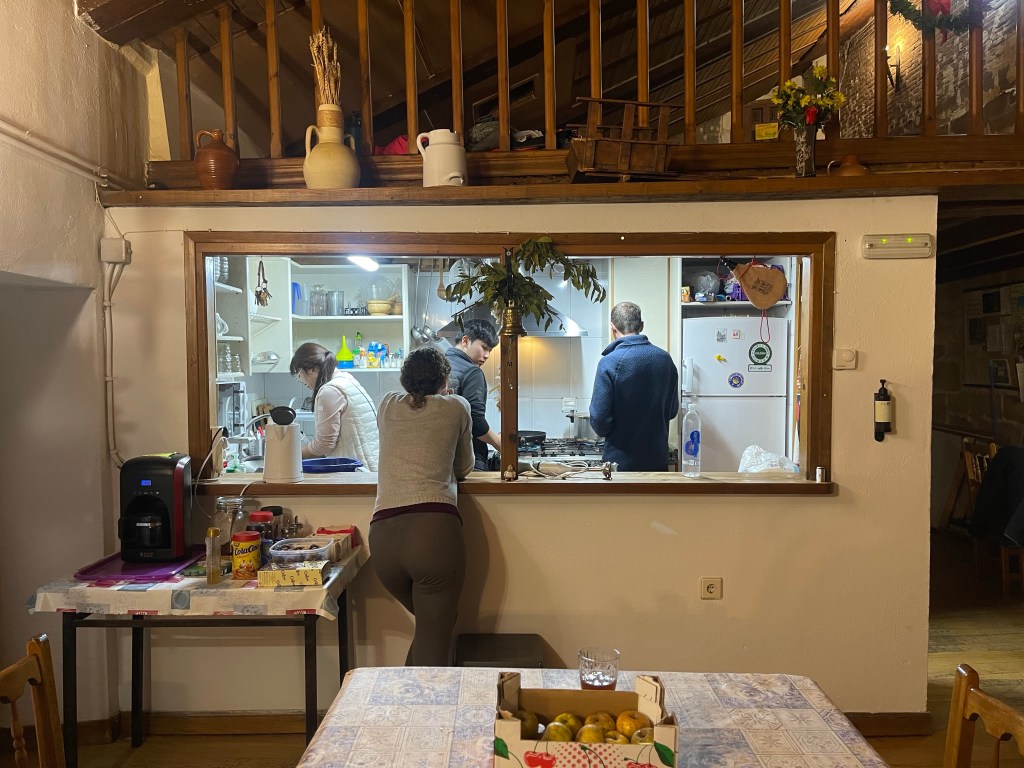
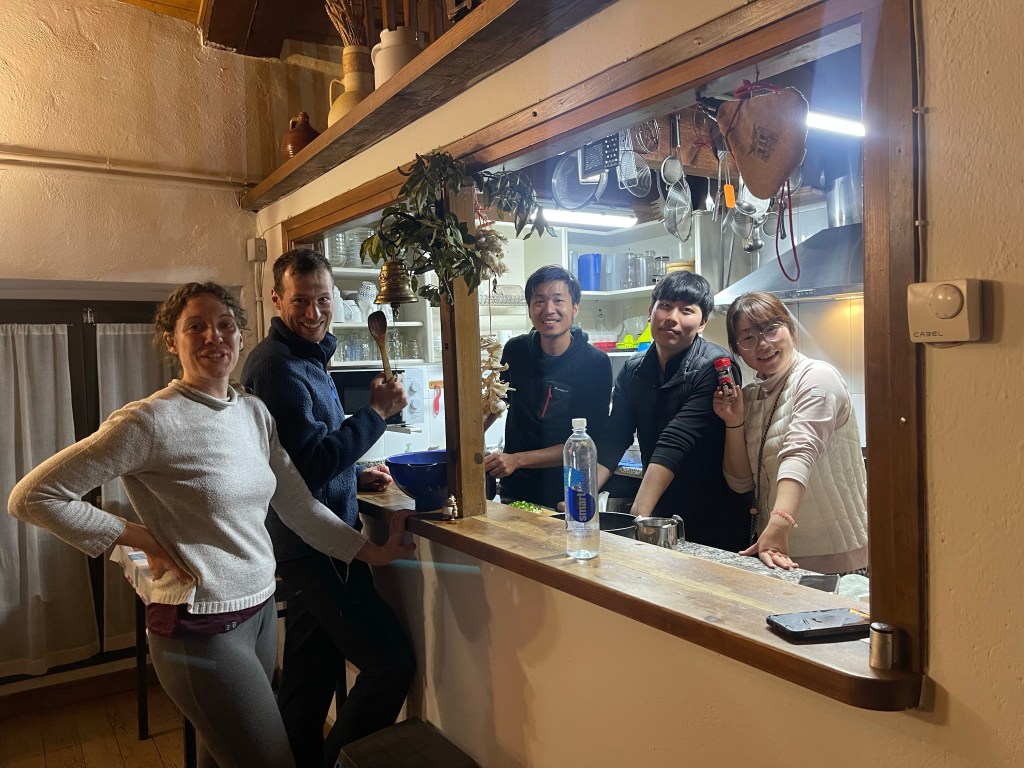
Today we head to Burgos, the next major city. I cook scrambled eggs for the group which we have with plain bread. Samuel figures out how to make coffee with the hostel’s moka pot which perfectly rounds up the simple breakfast.
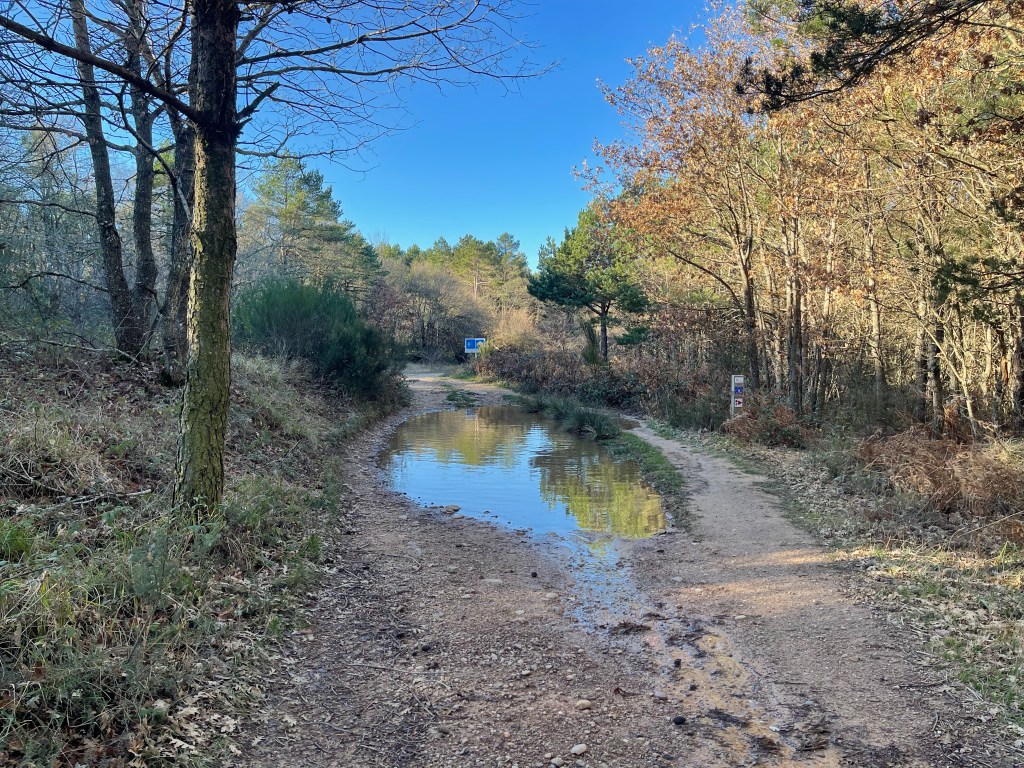
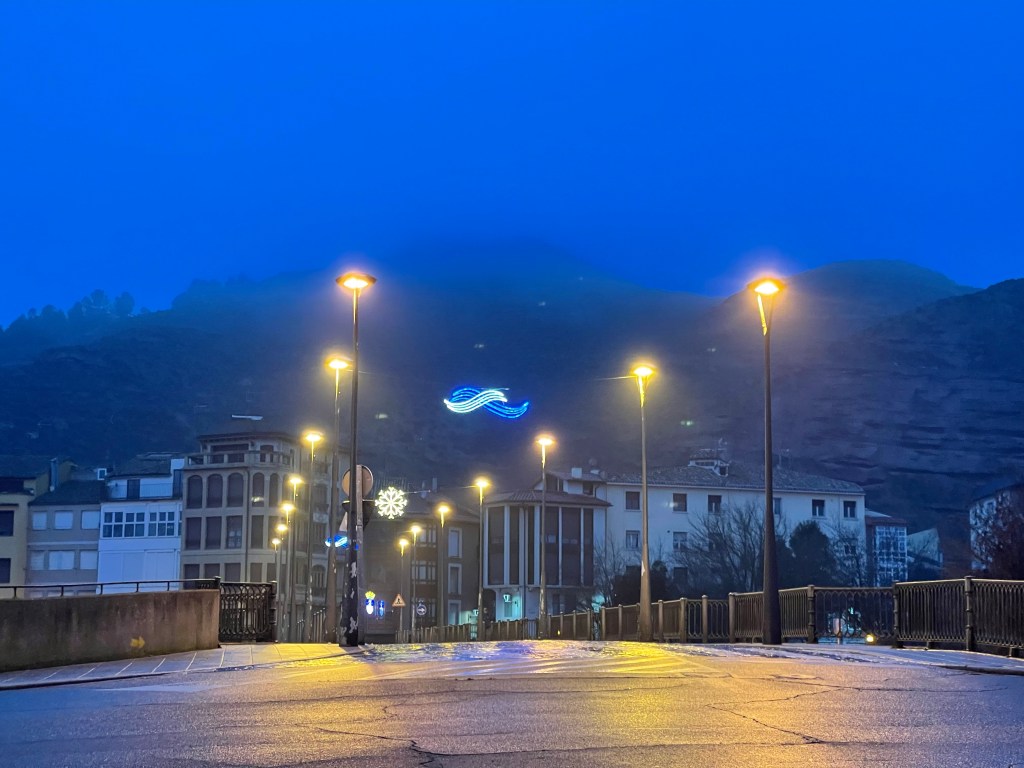
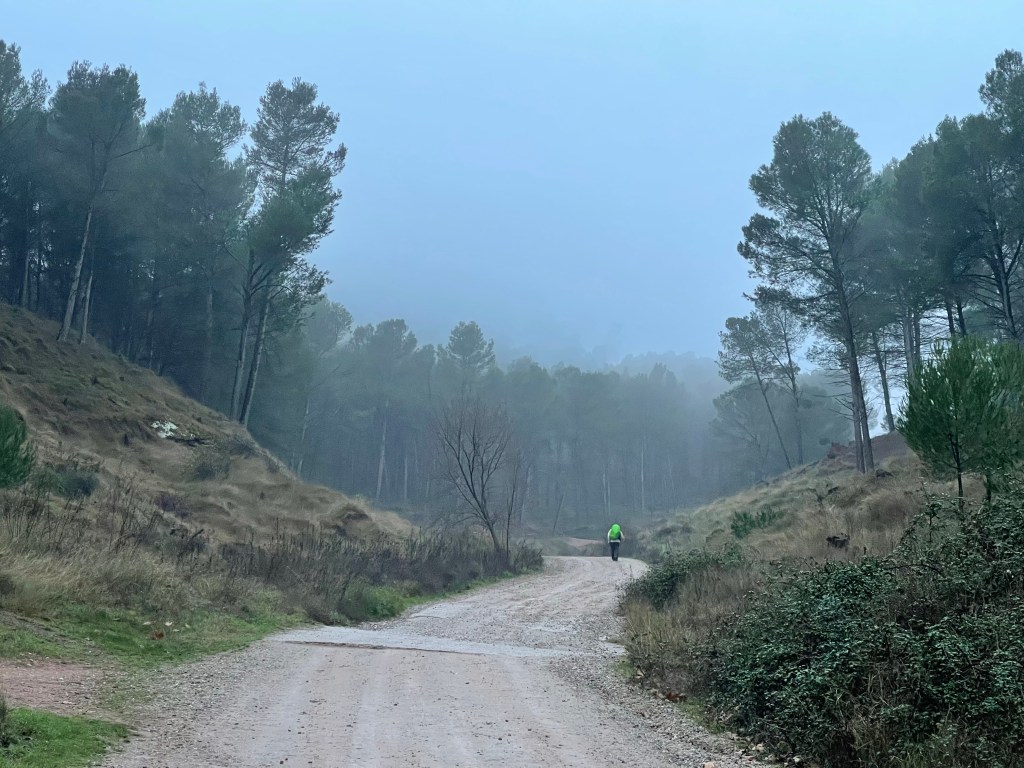
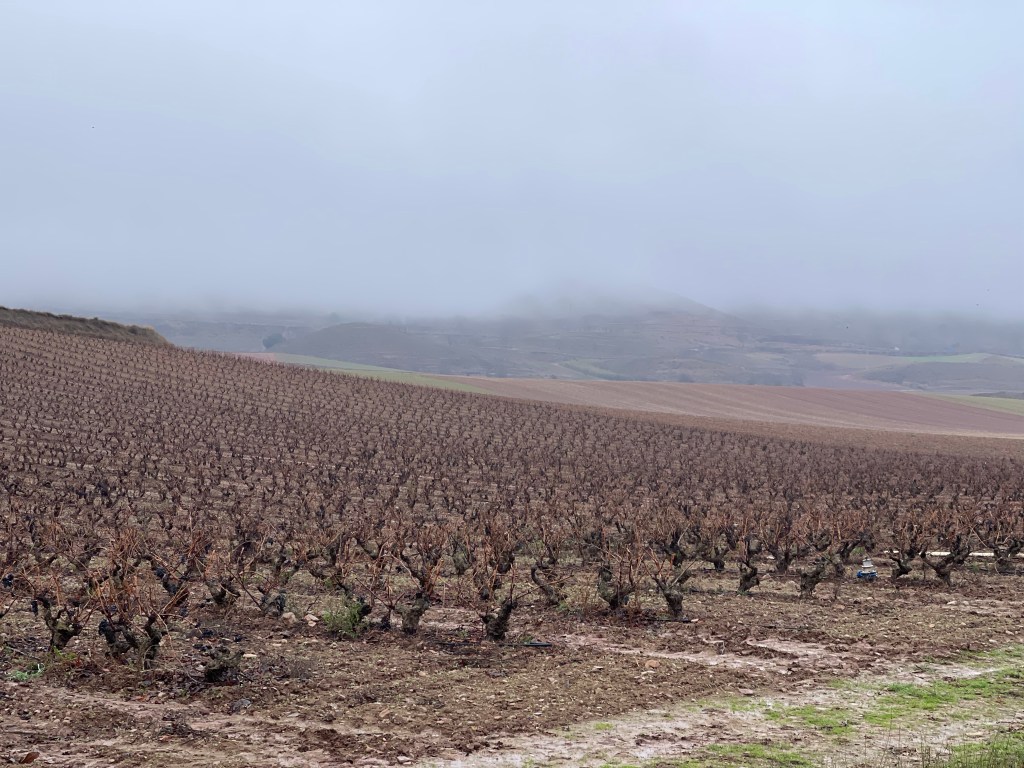
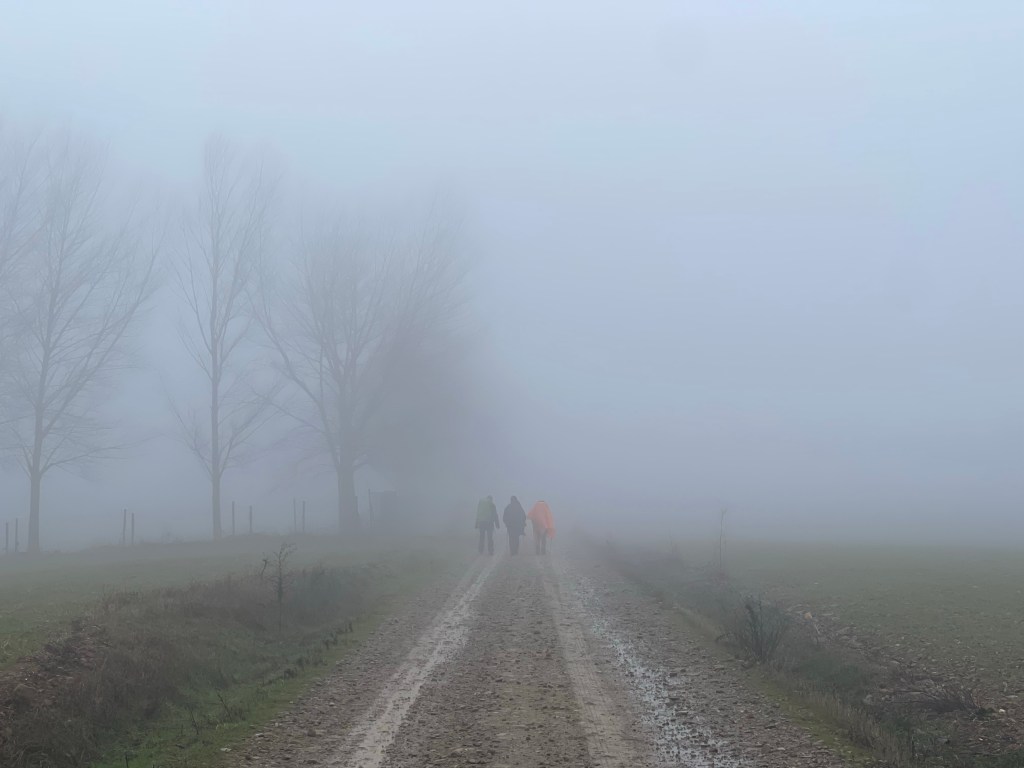
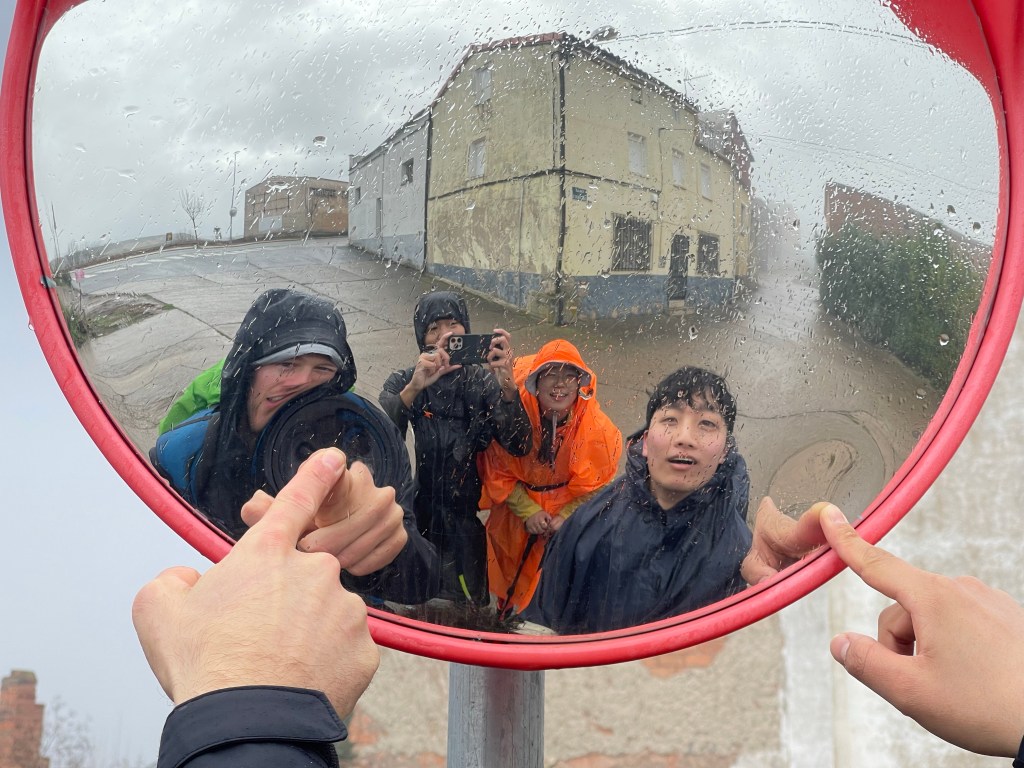
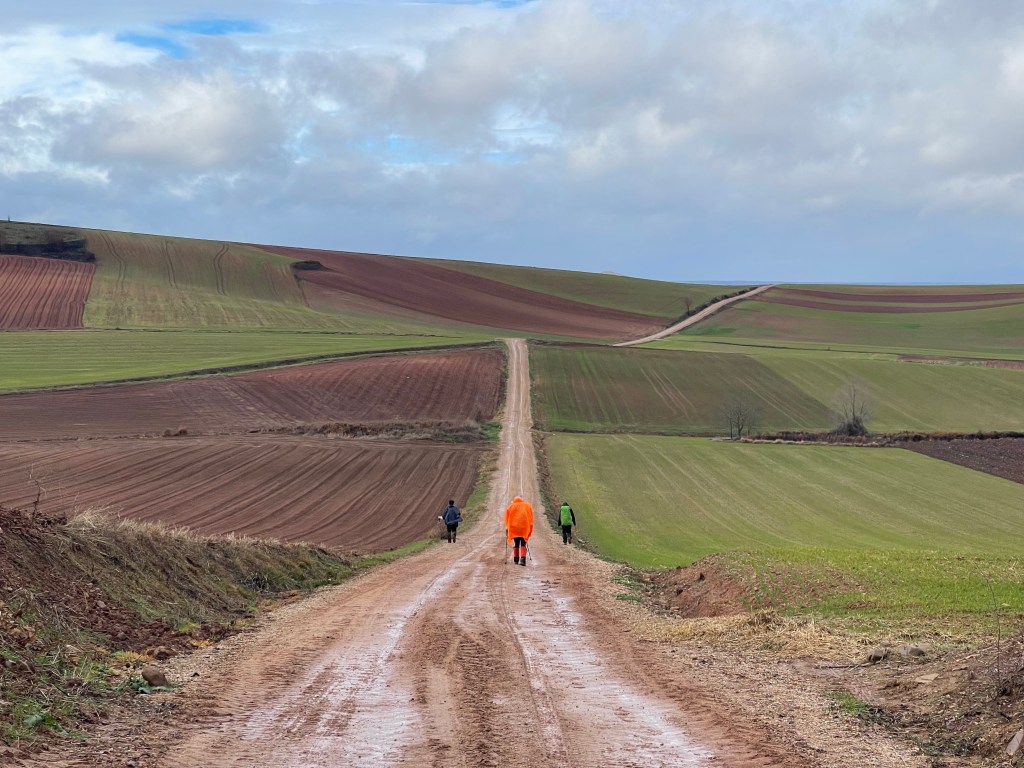
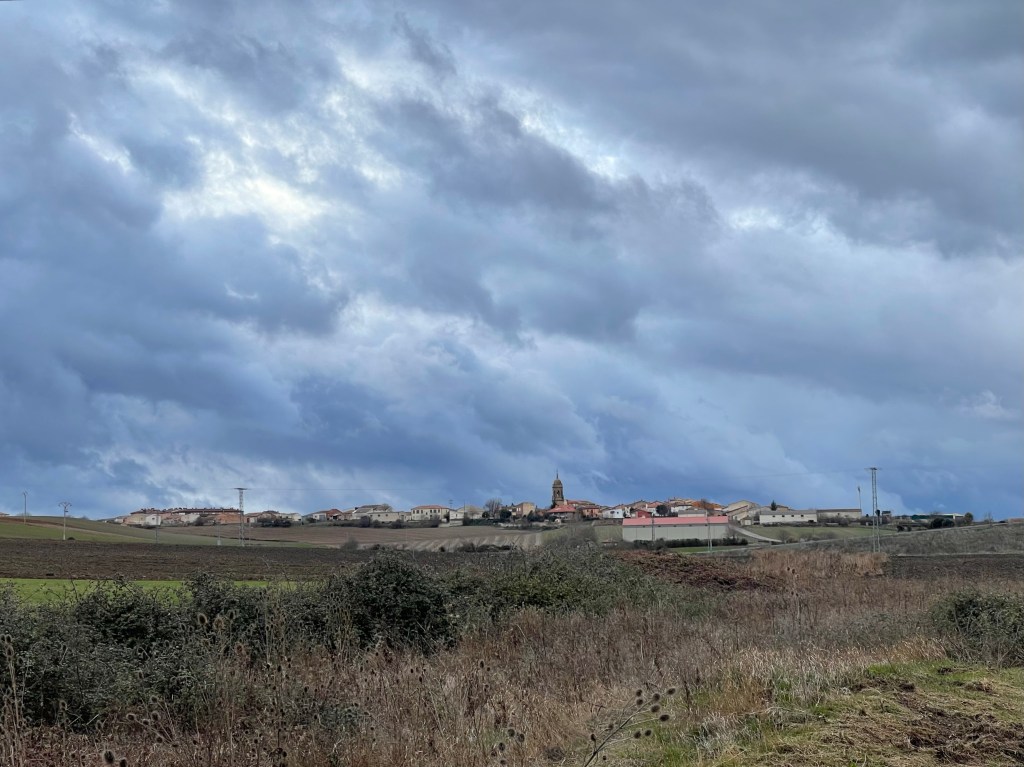
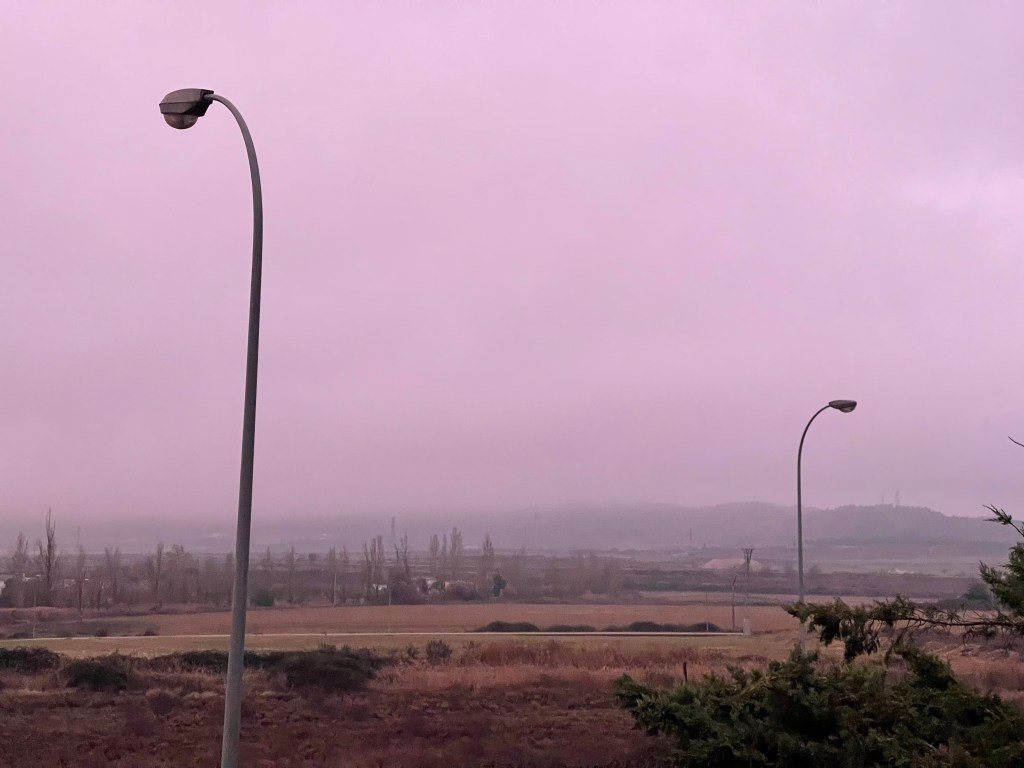
It’s raining when we leave at 8.30am. A drizzle by Singapore standards, but heavier than the previous day. It’s up a hill after leaving the town, and we actively avoid puddles as we go.
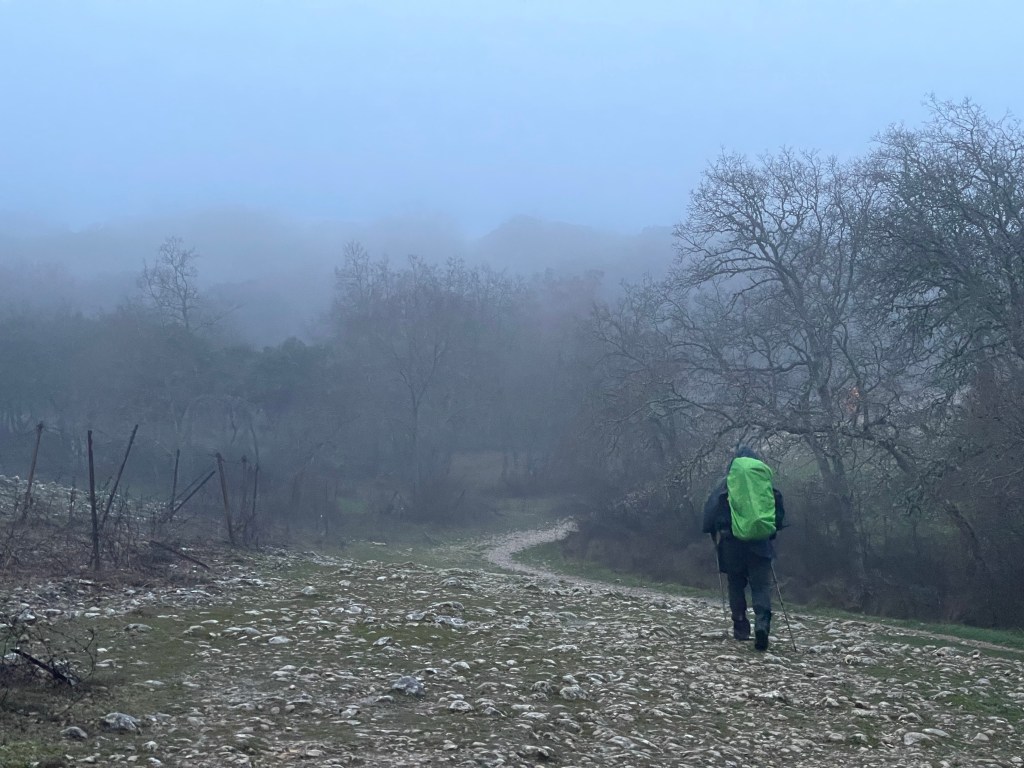
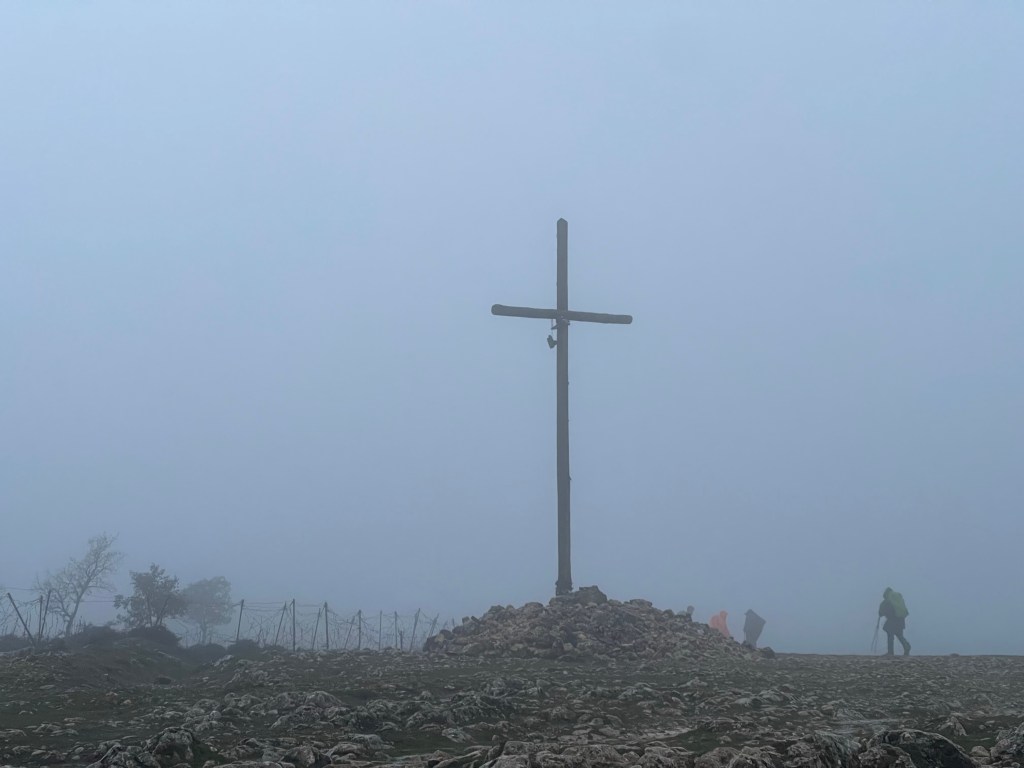
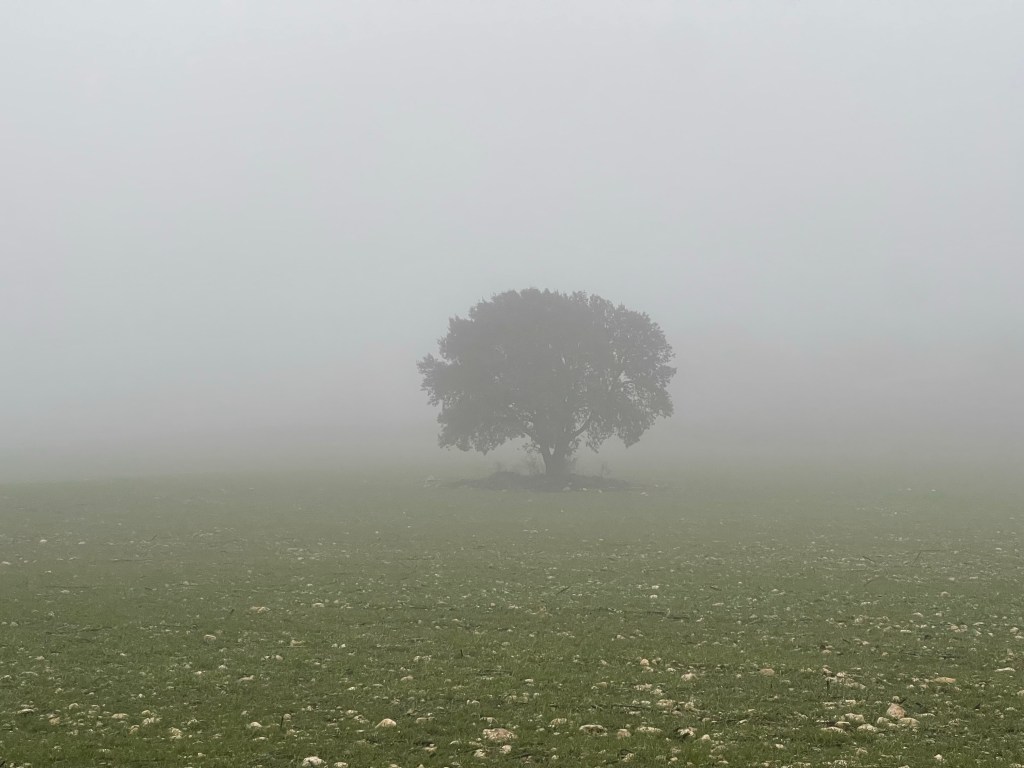
Waterproofing
If you go on a winter Camino, it’s worth considering your waterproofing solution. Some do an all encompassing poncho over their body and bag. I opt to waterproof my pack’s contents with a bin liner in the bag, and wear a lightweight rain jacket and rain skirt, which still leaves me quick access to my bag’s exterior pockets.
If you follow my style, just be sure to not tuck your jacket into your skirt, or you’ll start to feel wet in the nether regions, which was what happened to me when the rain started flowing into instead of over my skirt.
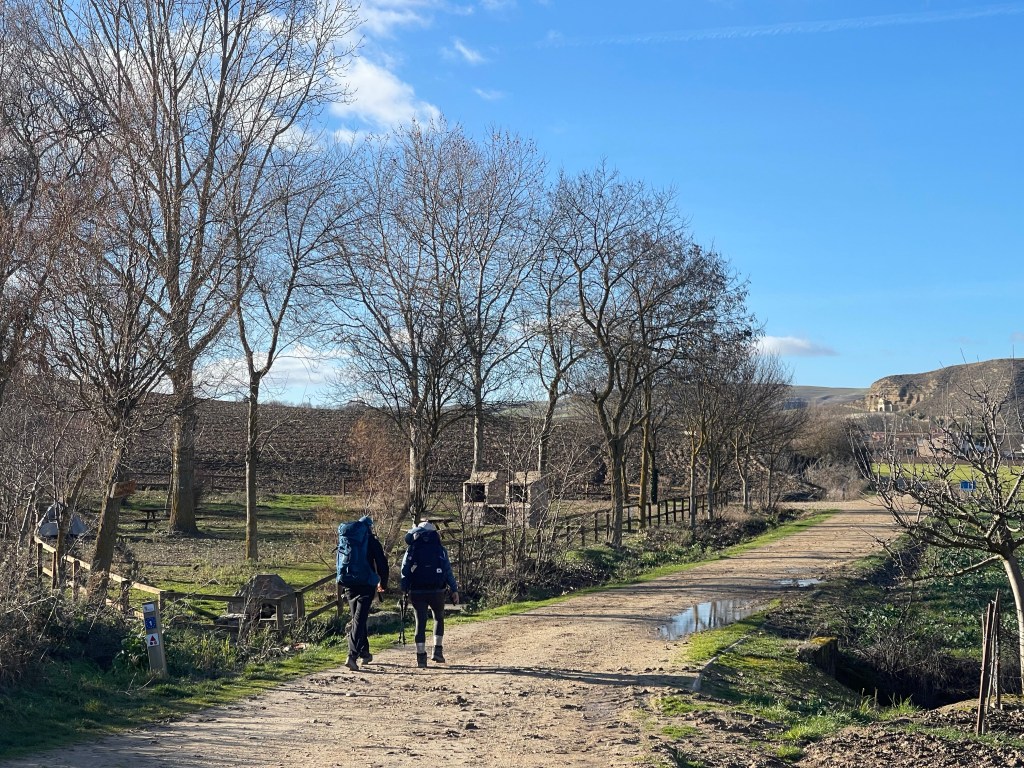
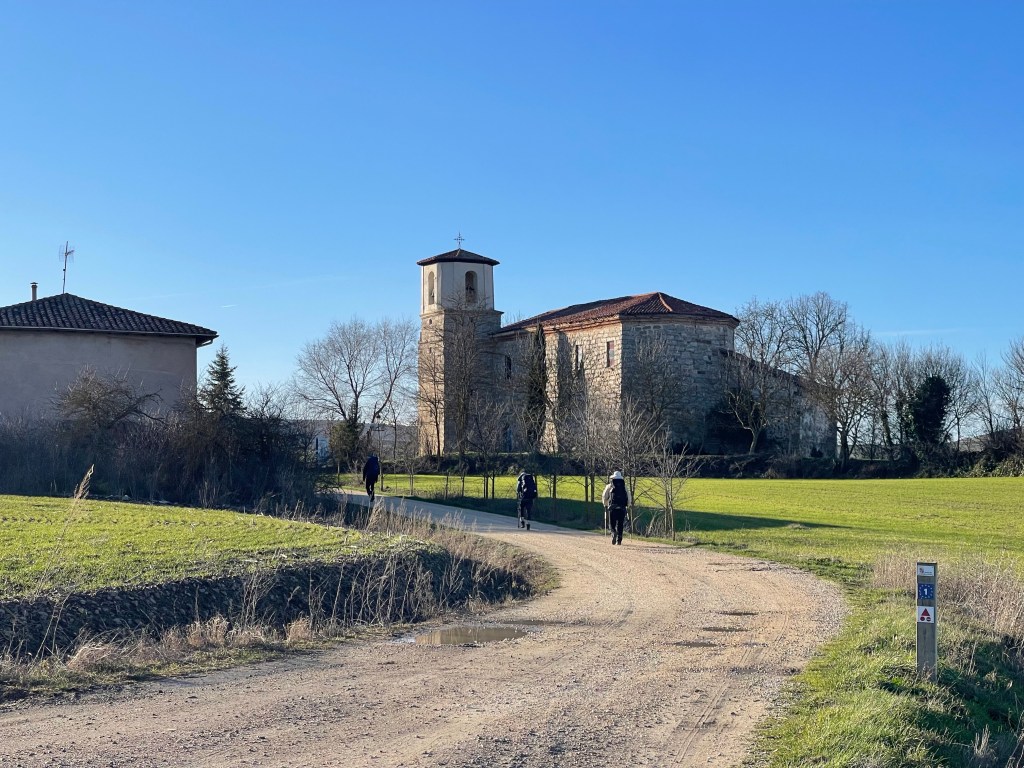
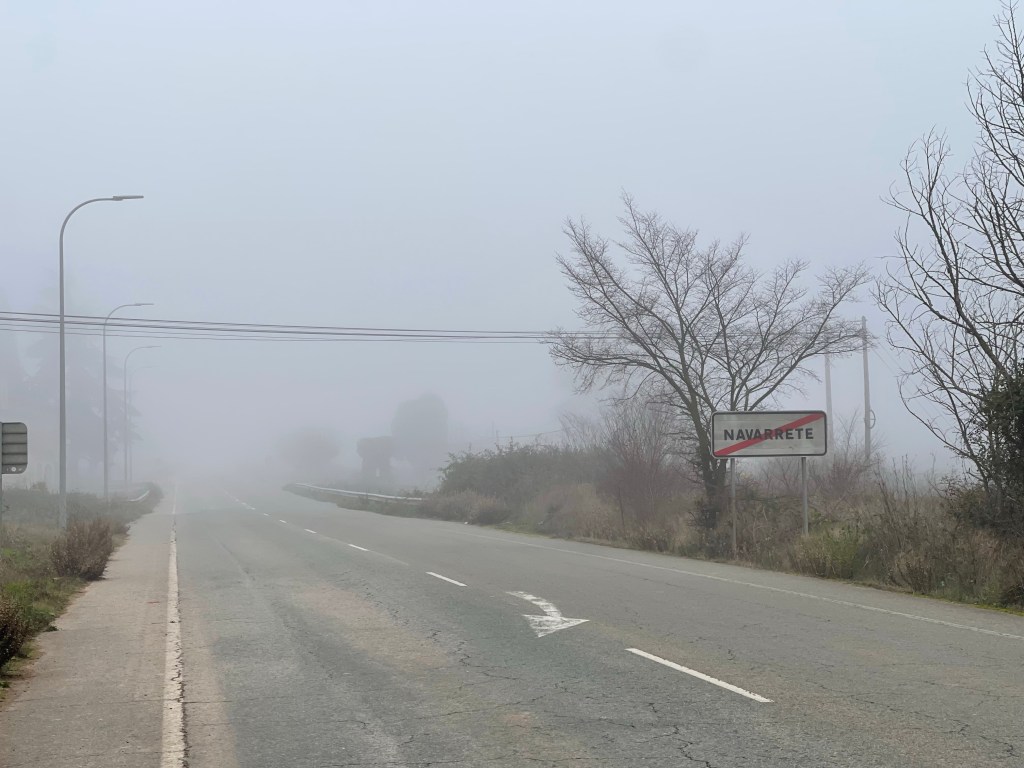
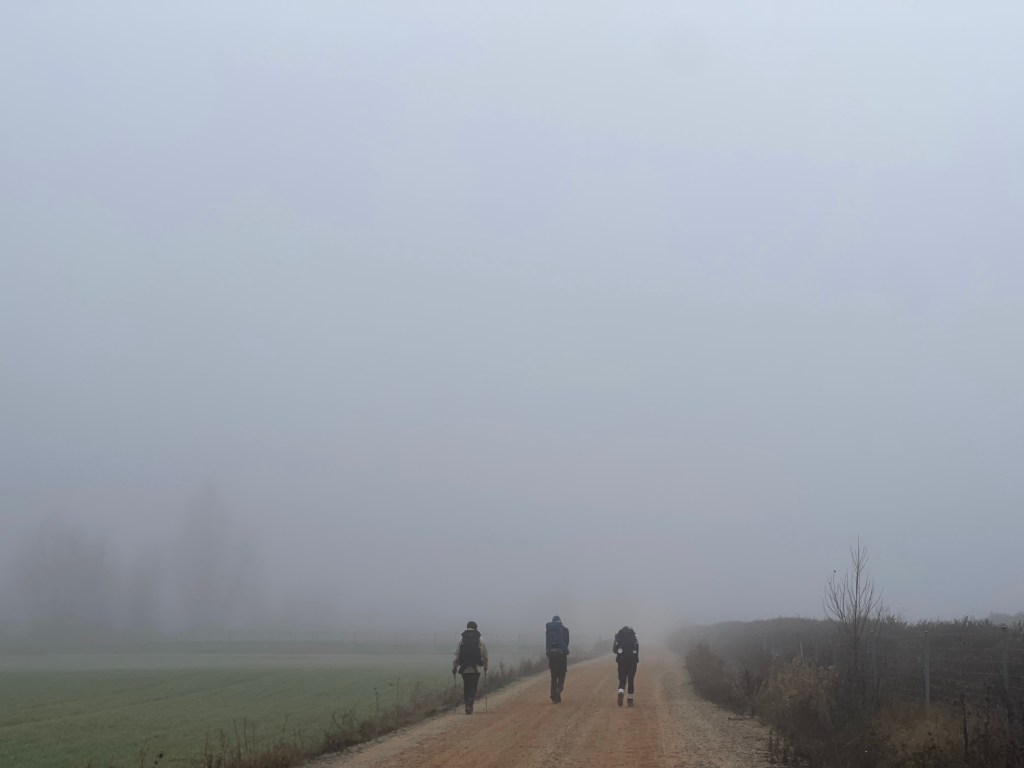
We’re yearning for warm coffee, but there’s no cafe open at the first town, Cardeñuela Riopico. The rain does start to lighten and stops after we leave the town. At the next town, Orbaneja Riopico, there’s no cafe open as well, so we soldier on.

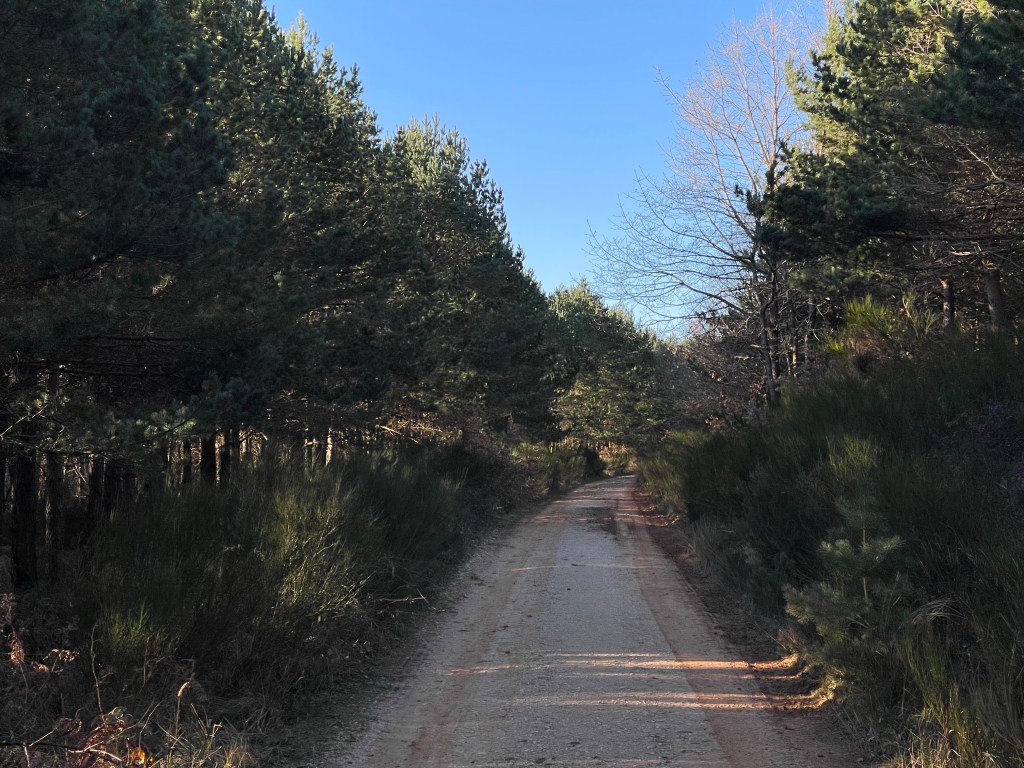
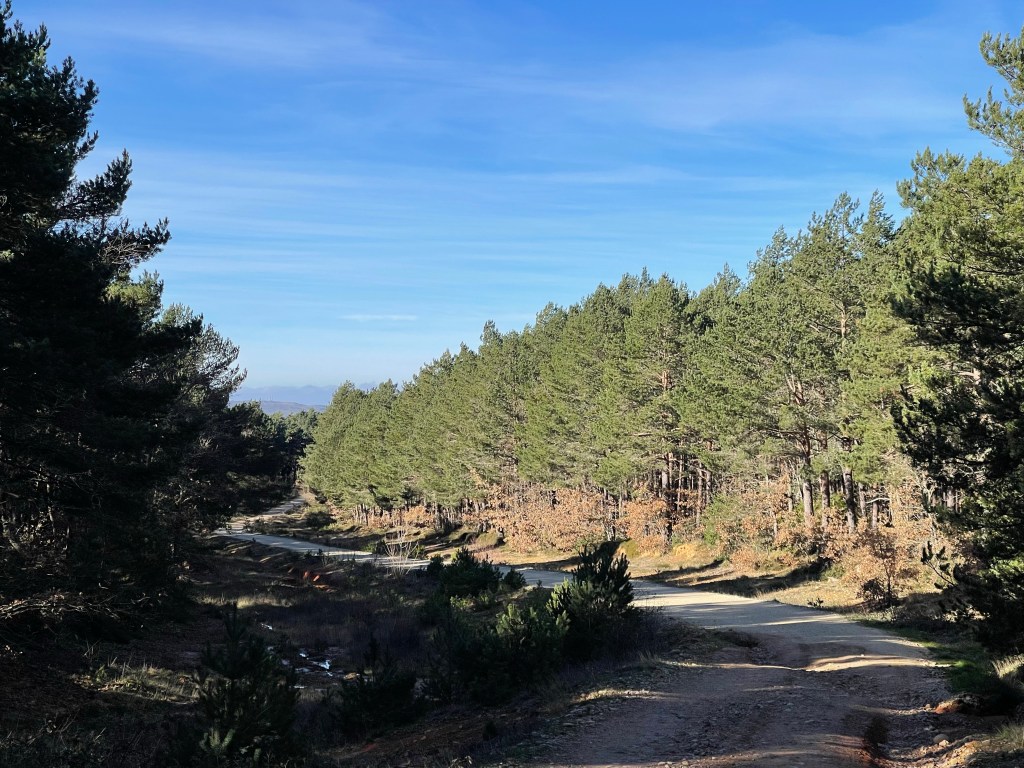
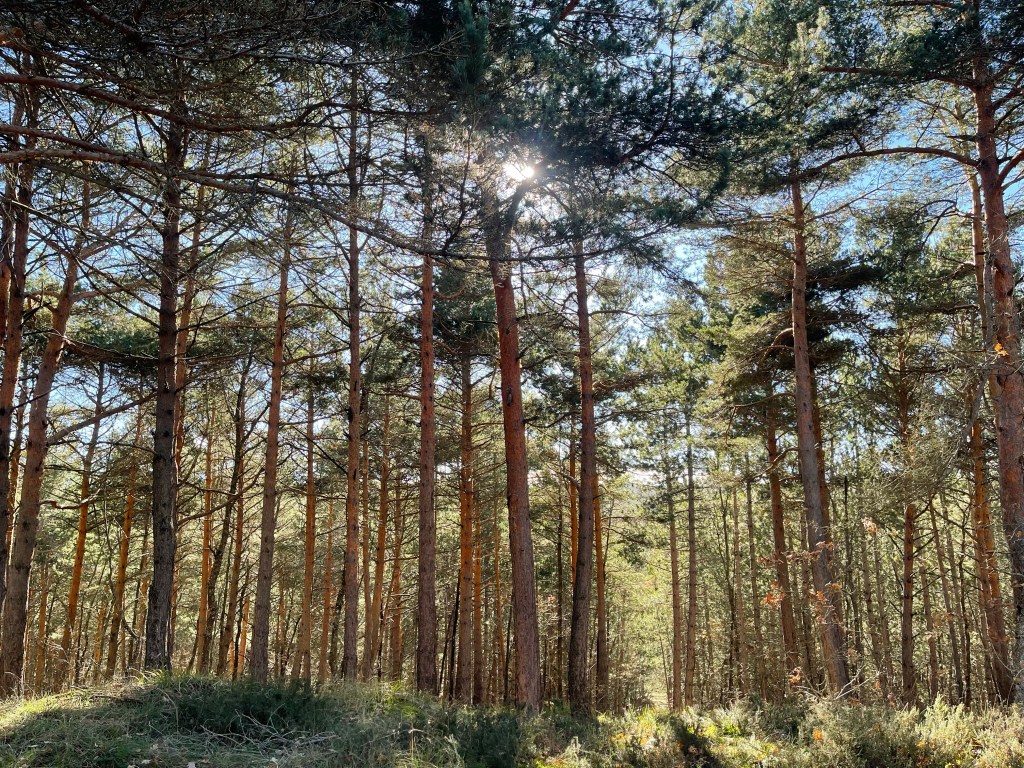
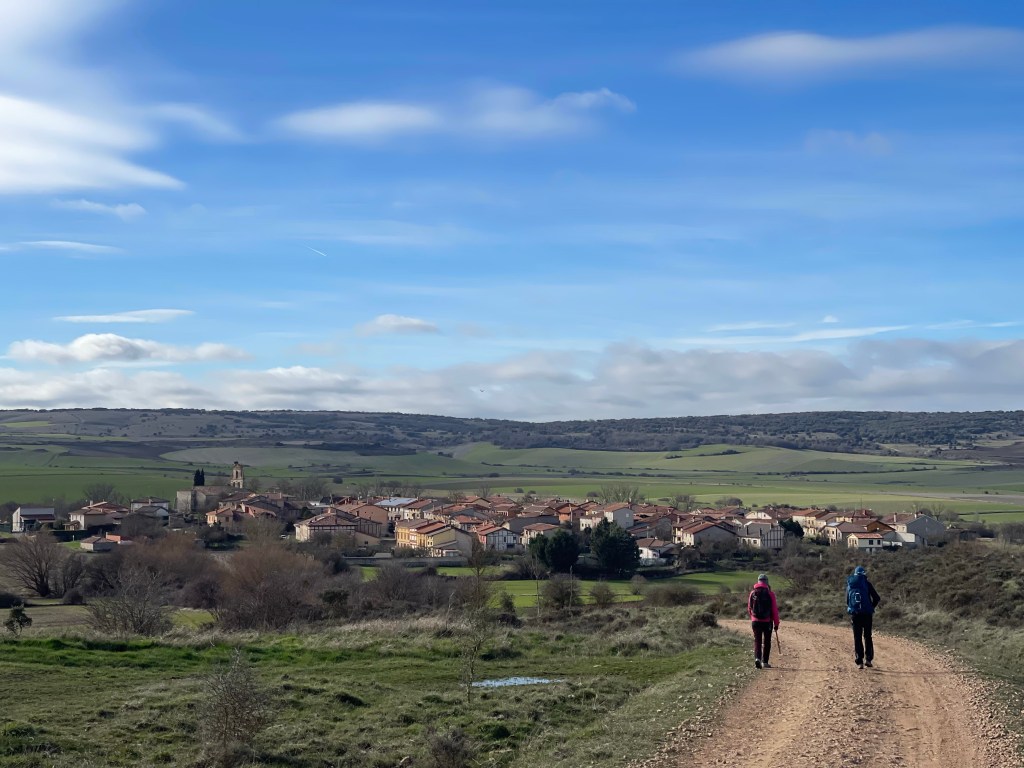
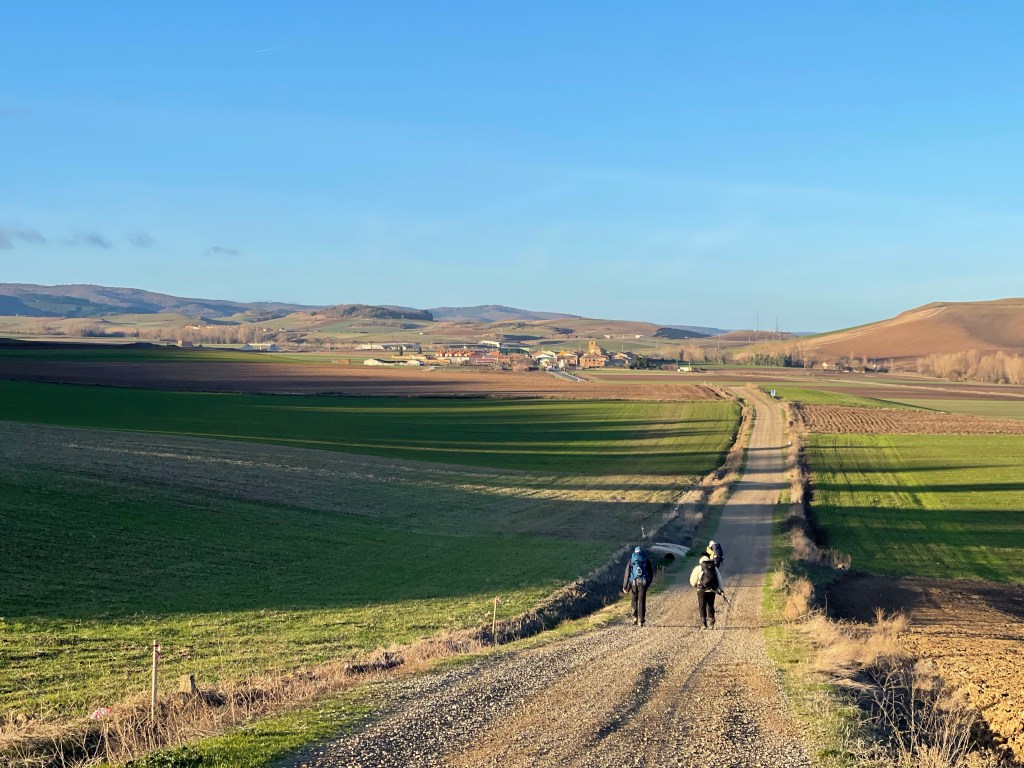
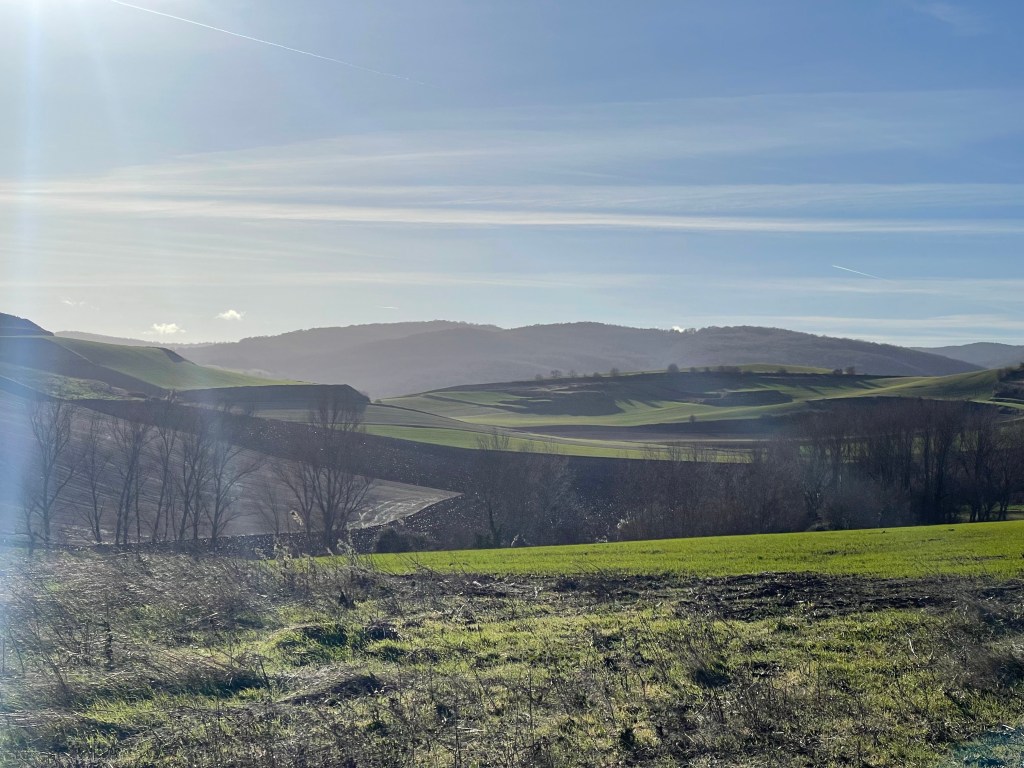
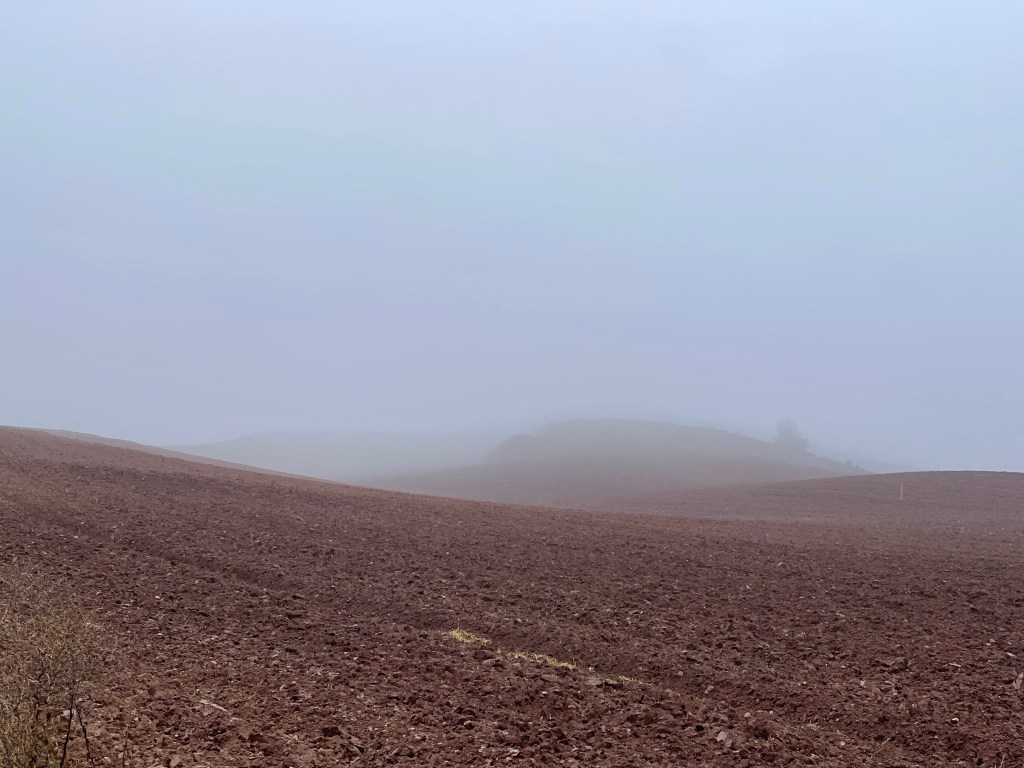
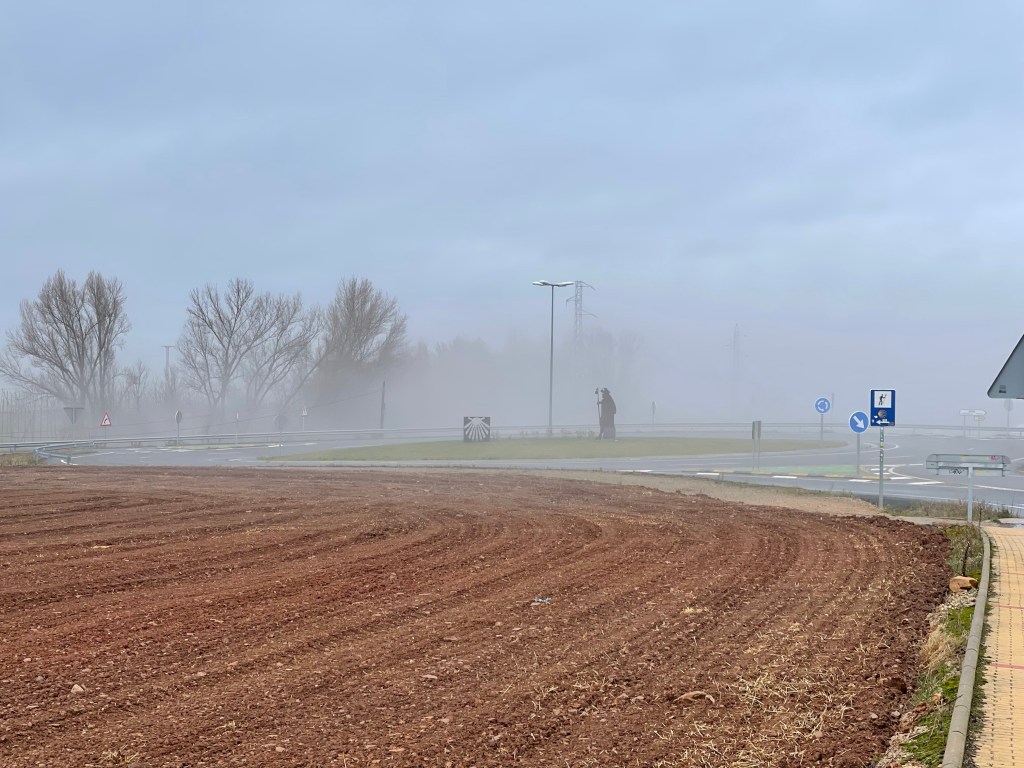
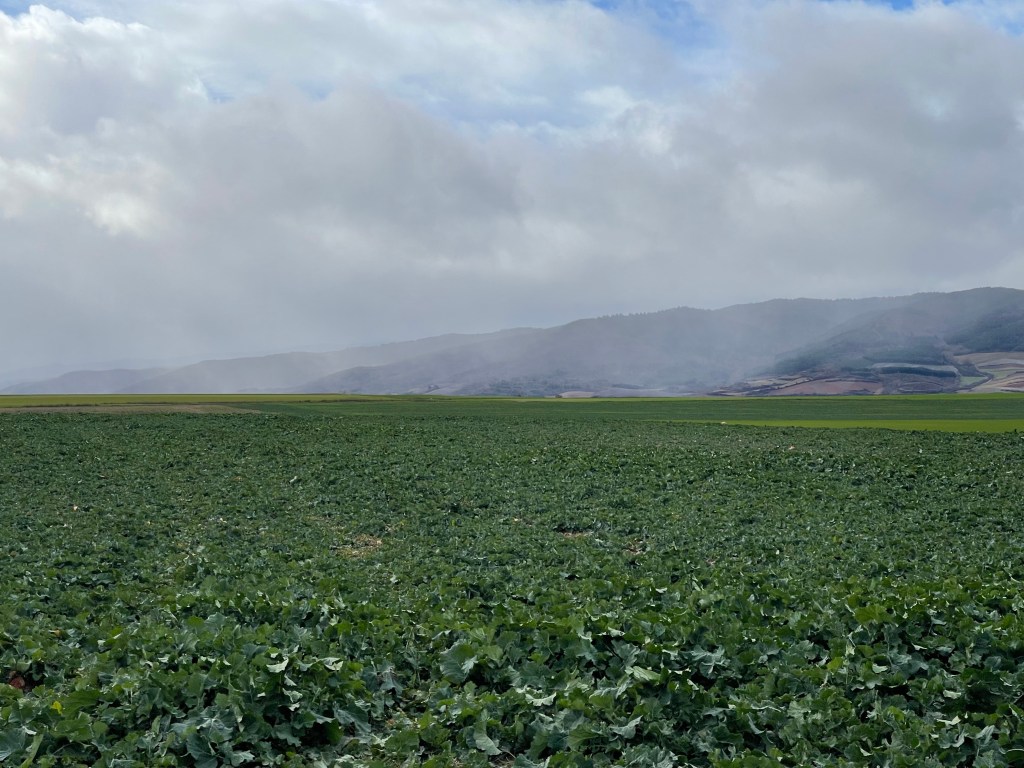
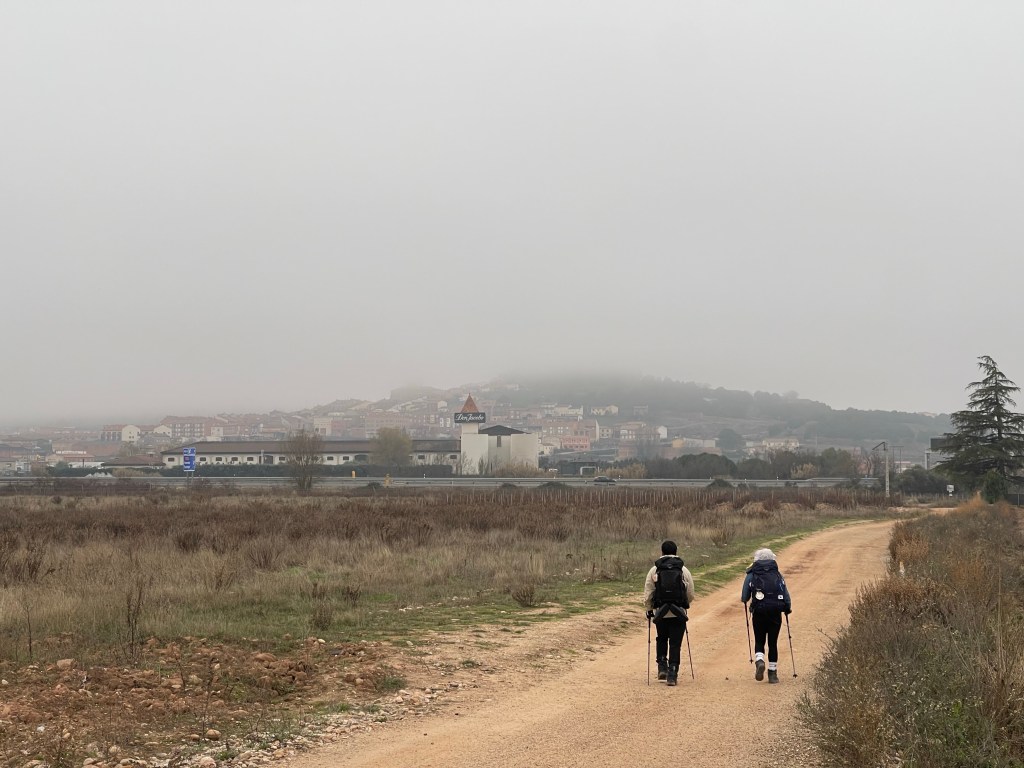
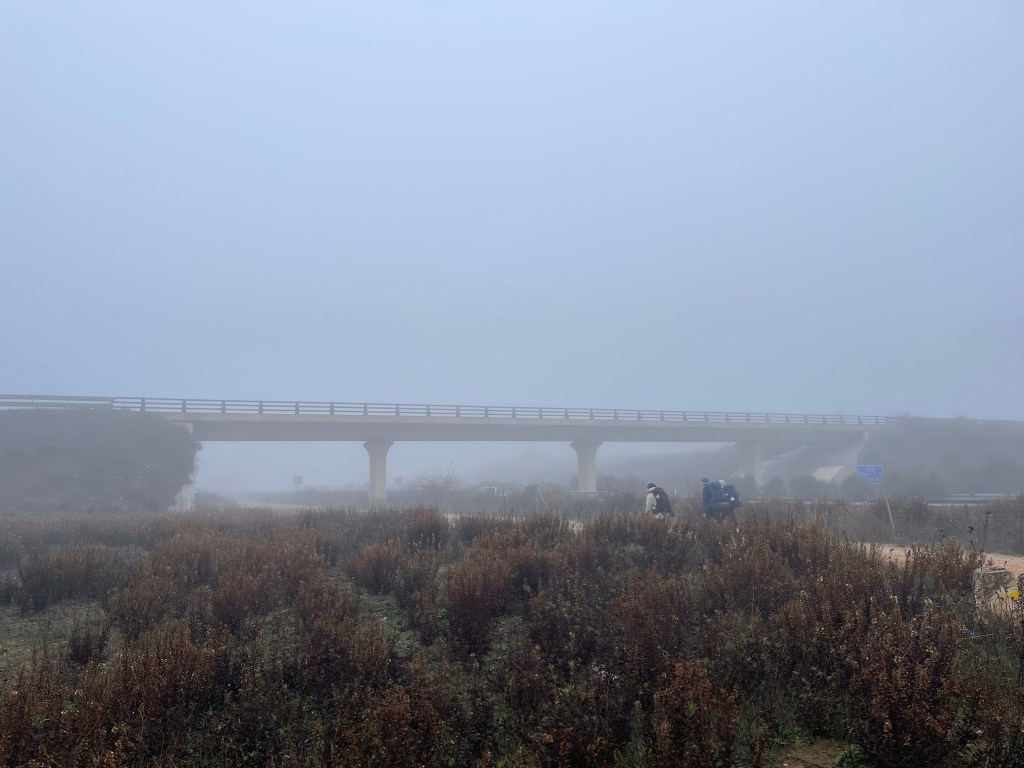
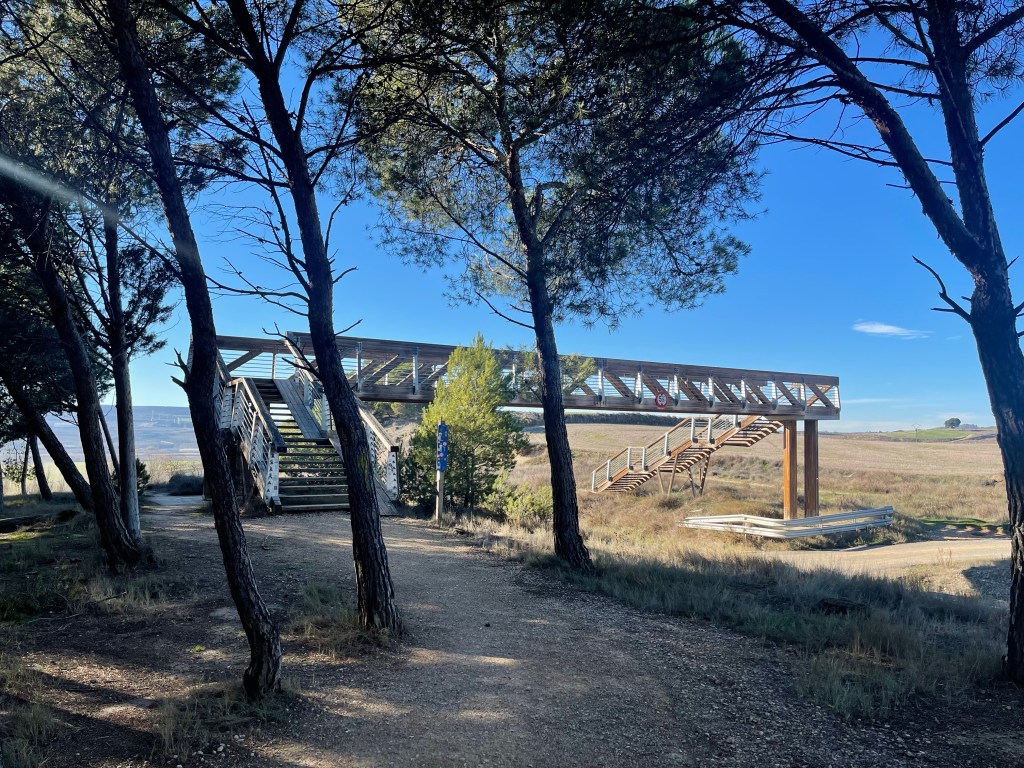
After Orbaneja Riopico, we take the southern alternative route to Burgos, which goes through more natural landscapes than the industrial areas on the outskirts. We walk past Burgos Airport to a town right outside the city, Castañares. There we find a restaurant called Restaurante El Descanso, which serves delicious food and coffee for our lunch. Empañadas (meat pastry), tortilla (potato omelette), albóndigas en salsa (meatballs in sauce), callos a la Madrileña (tripe stew), and boquerones en vinagre (fresh anchovies in vinegar).
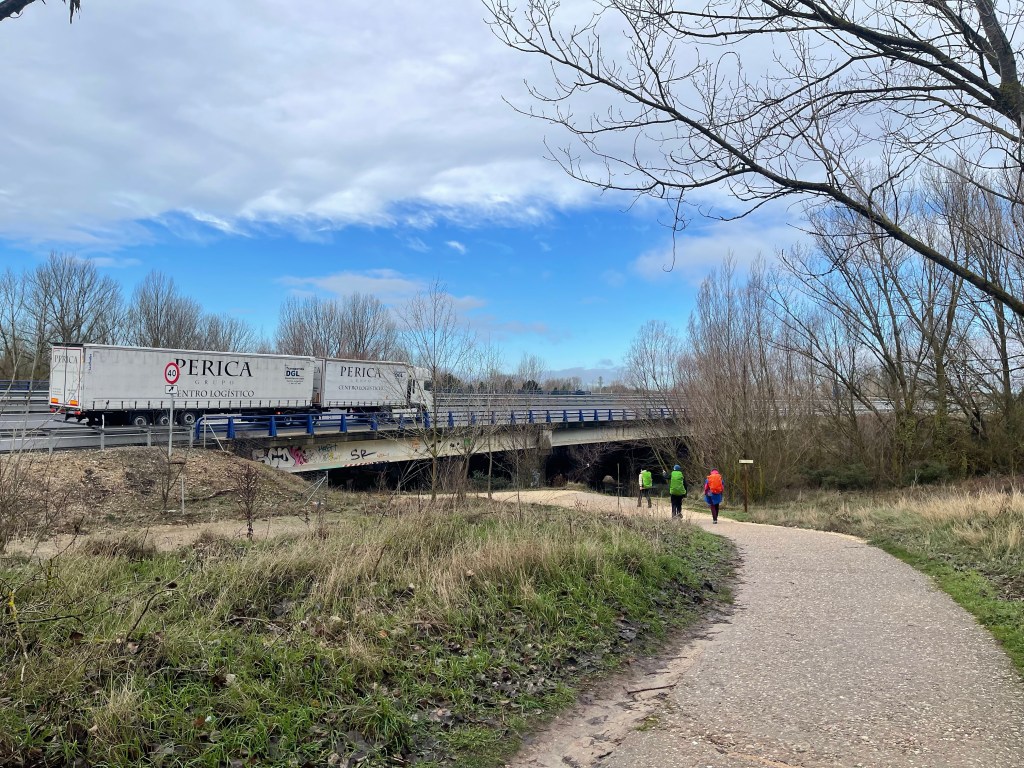
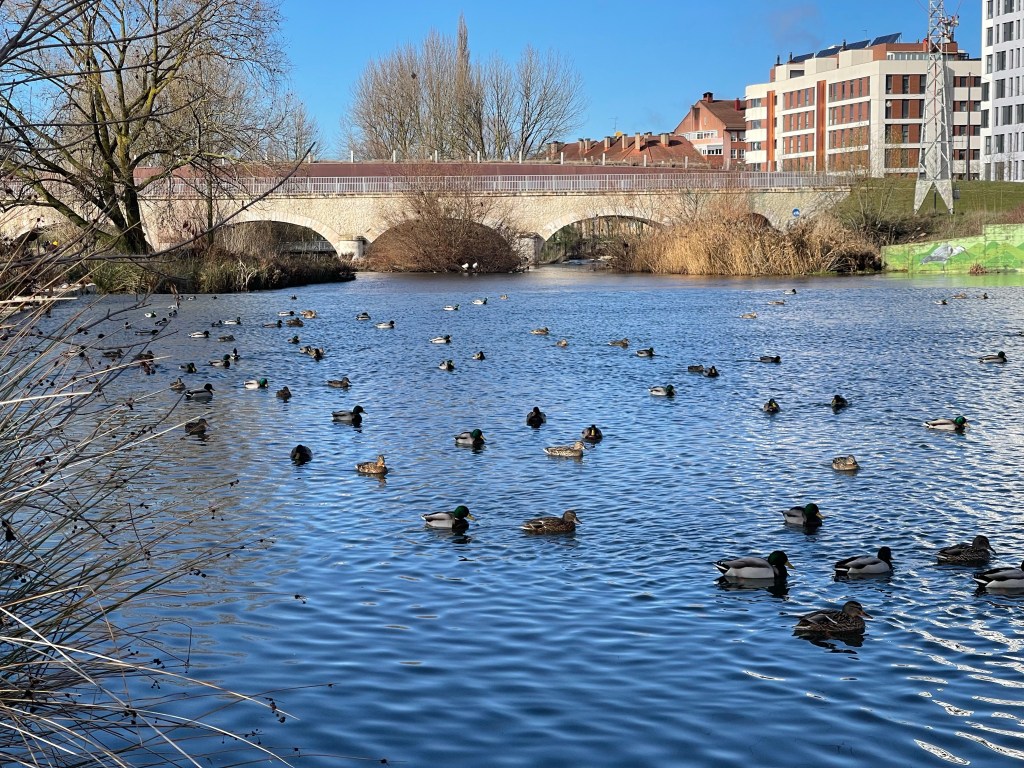
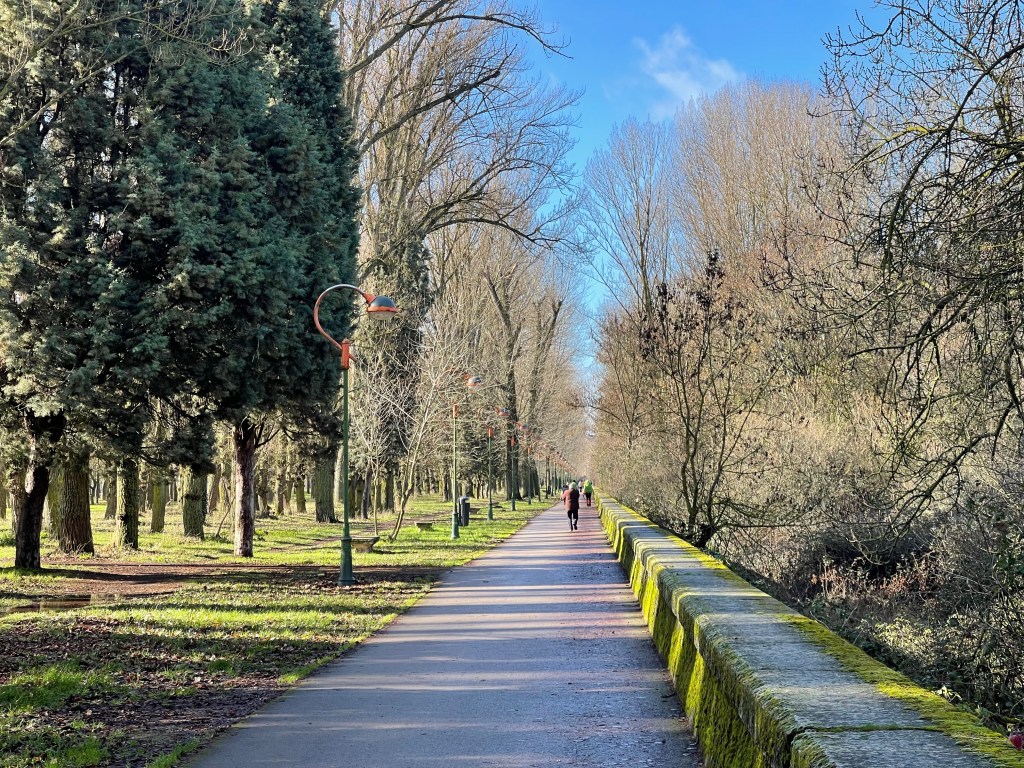
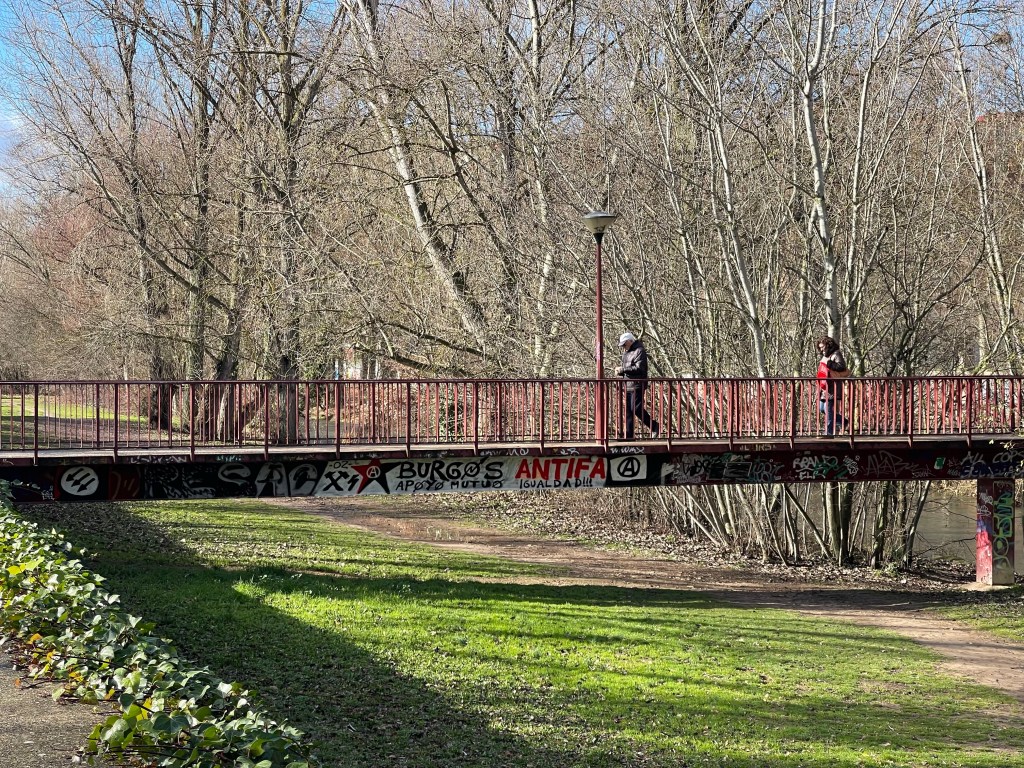
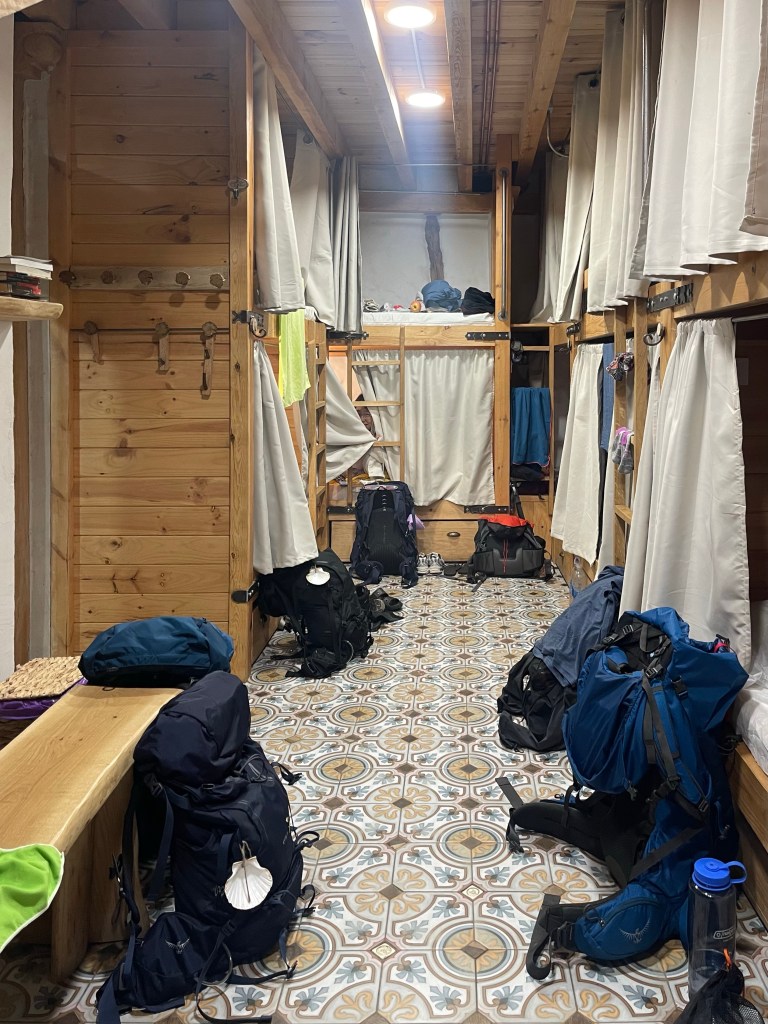
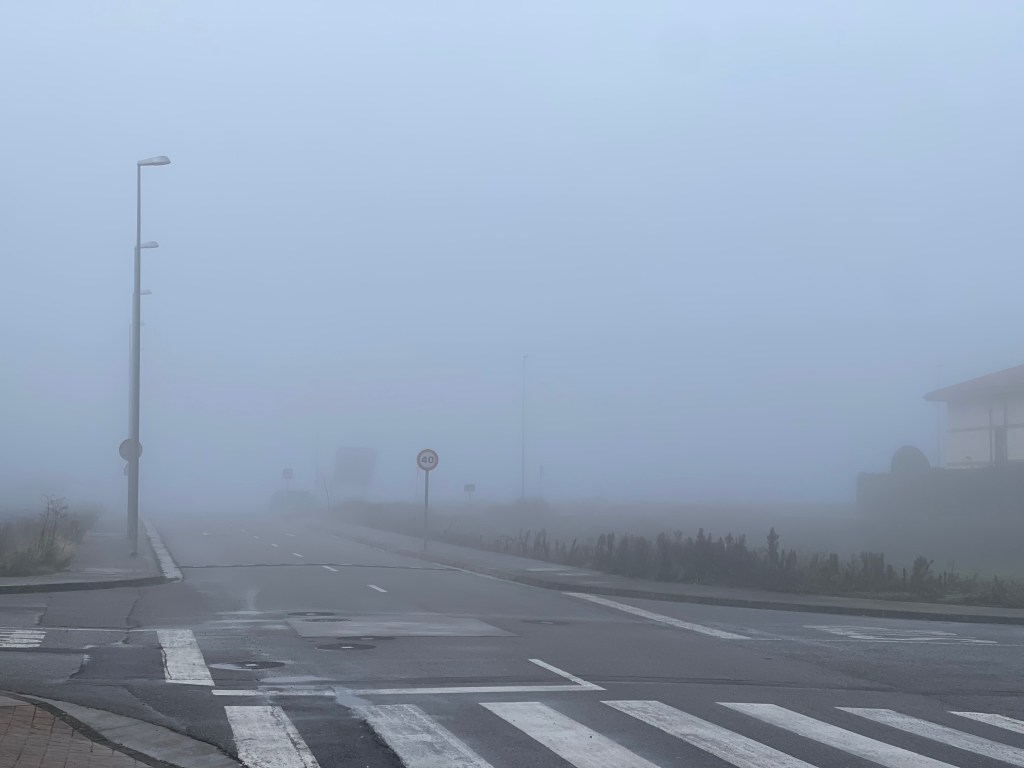
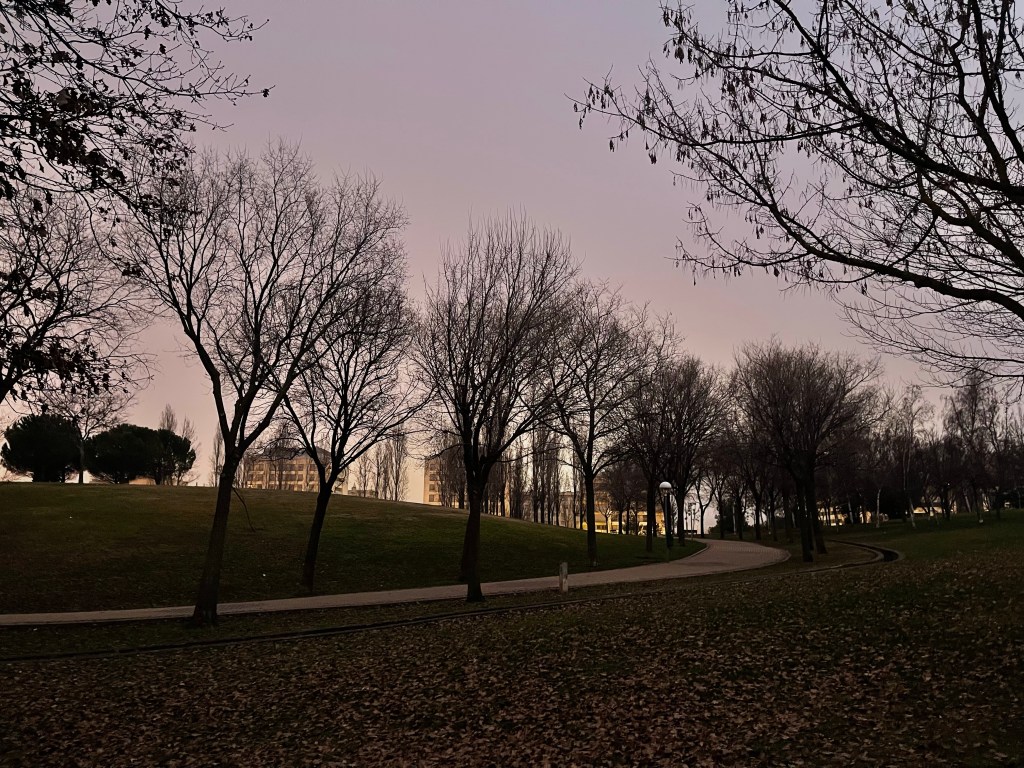
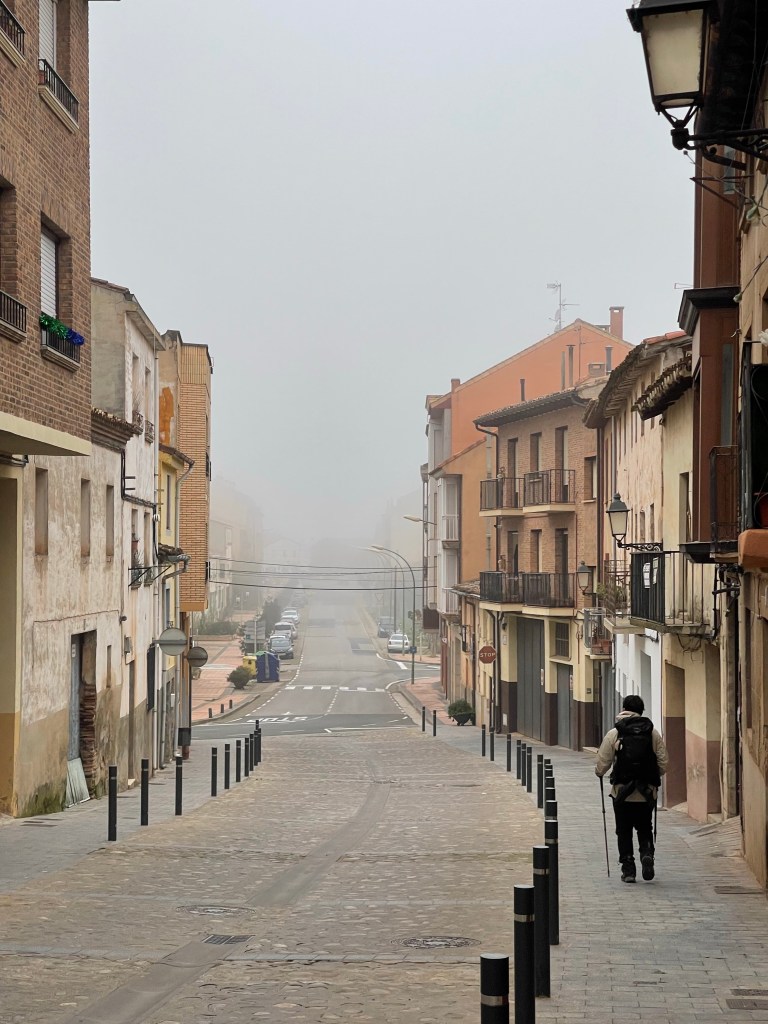
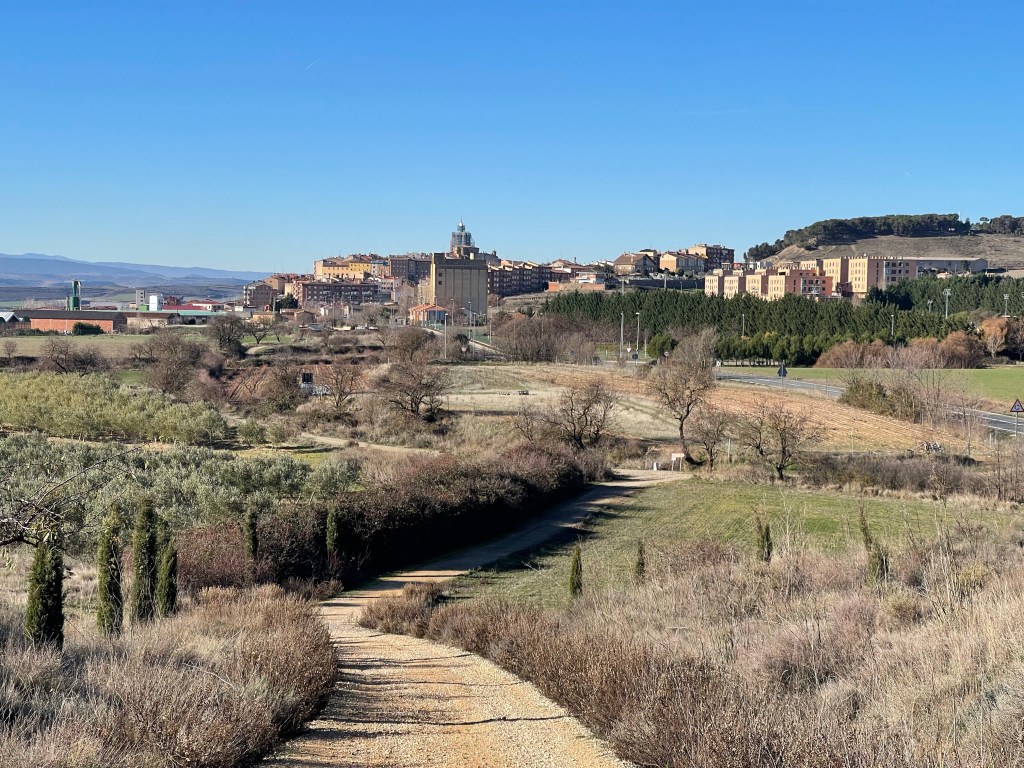
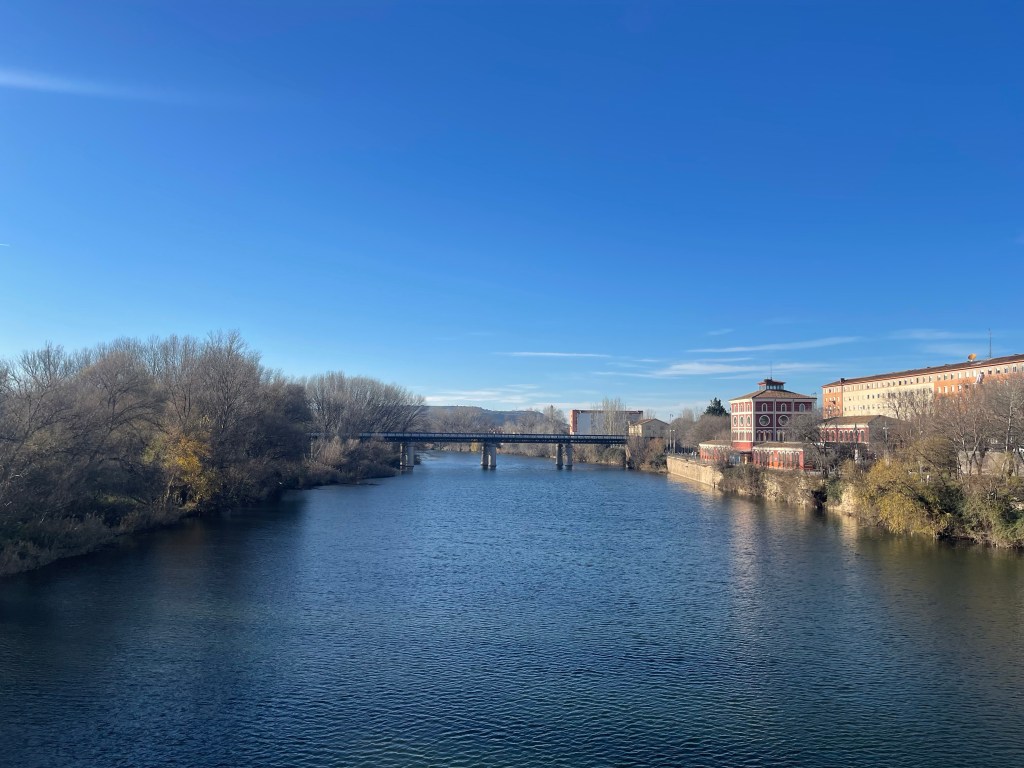
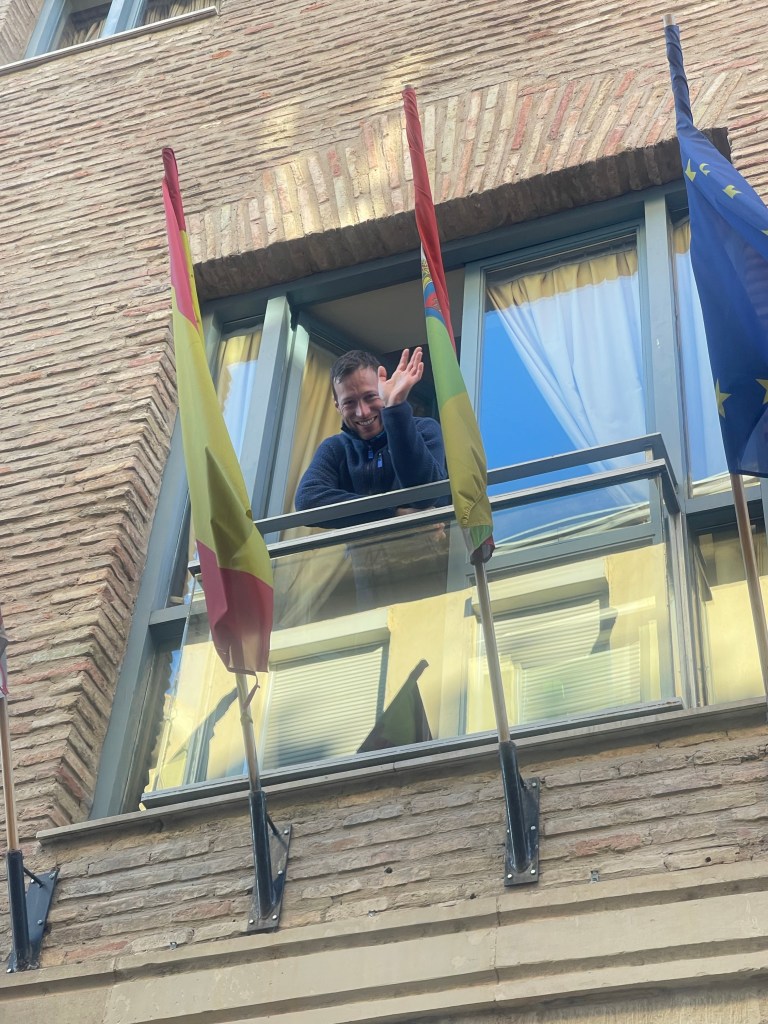
We enter Burgos via a long city park path along the Arlanzón river. Burgos is a beautiful major city that is strangely much less known by tourists (unlike Madrid and Barcelona). We reach the municipal albergue which has a traditional architectural façade, but is a modern big albergue on the inside.
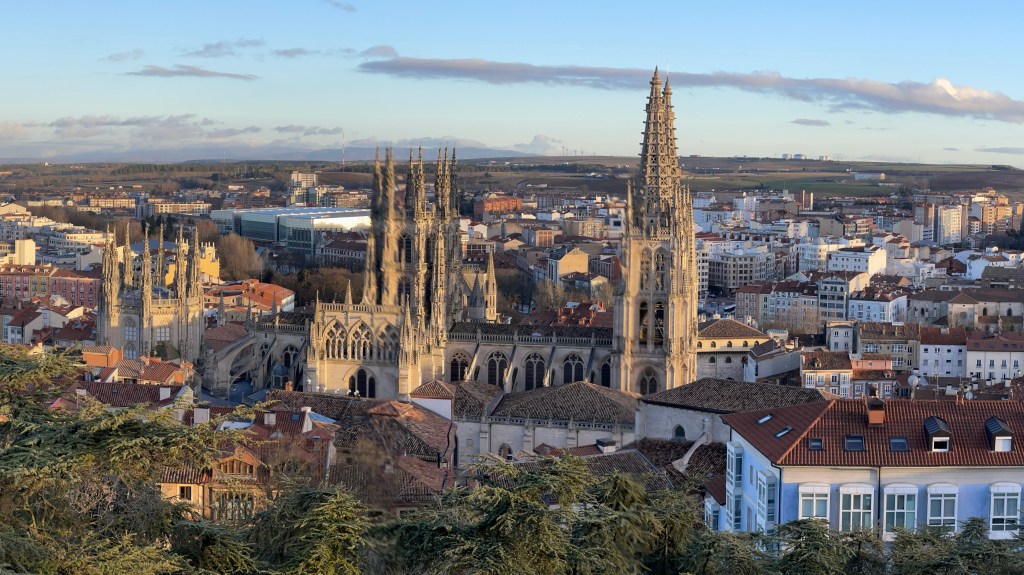
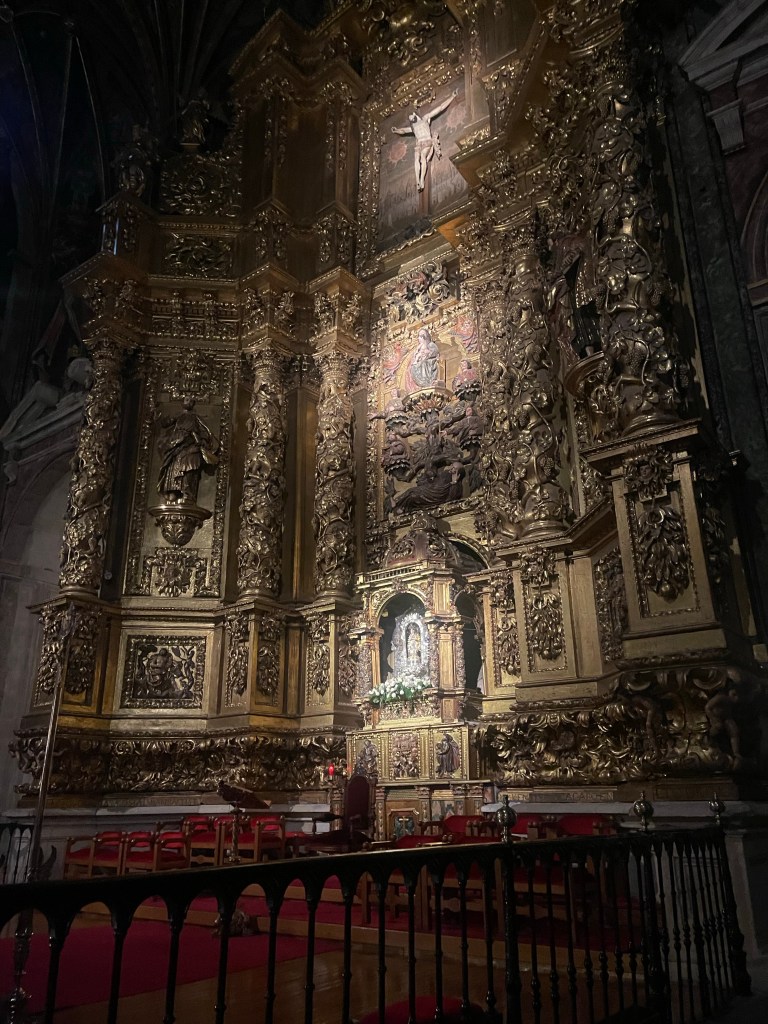
Once we clean up and settle our laundry, we have some time before dinner to explore Burgos. We check out the beautiful gothic cathedral nearby, then head up the hill to the castle, where there’s nice view of the city in sunset.
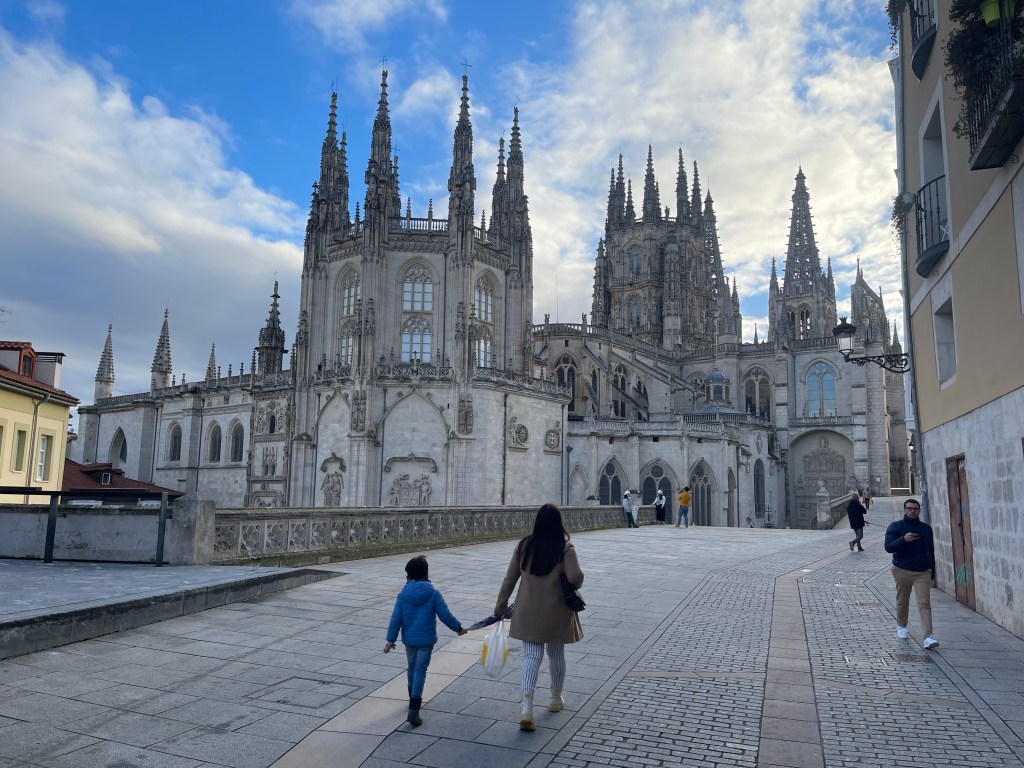
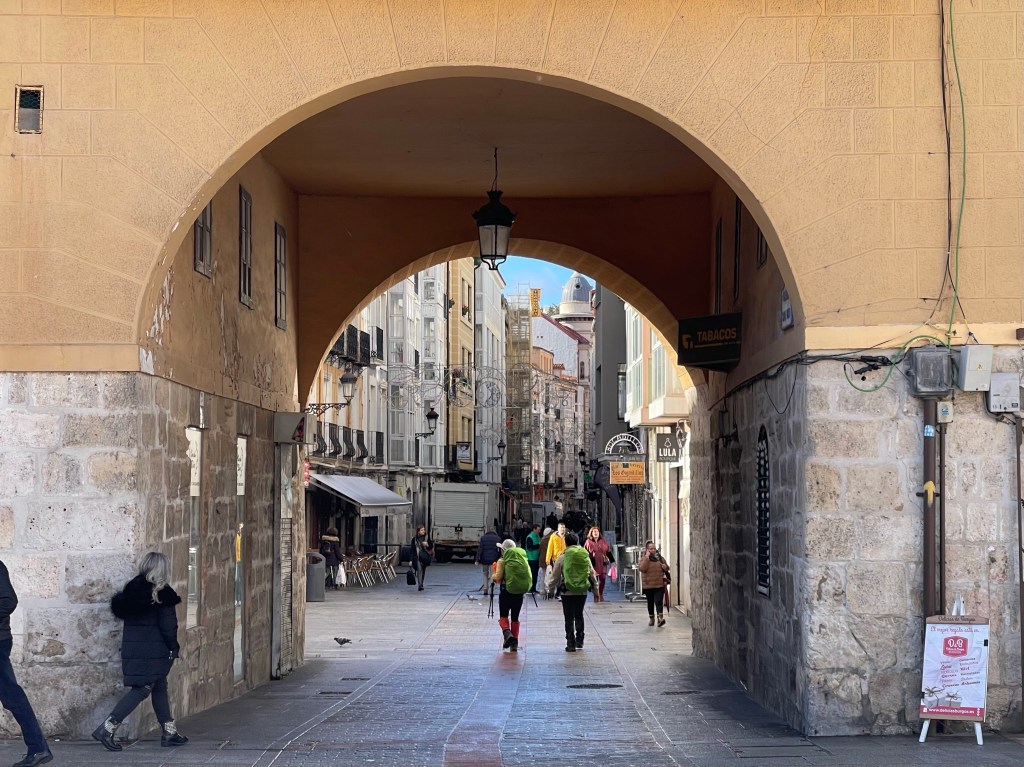
We planned to go to the Museum of Human Evolution next, which is about the archaeological findings at Atapuerca. On the way is the arch of San Esteban, one of the gates of the old walled city that ancient pilgrims would have entered through. For fun, we redo our walk into the city through it.
As we pass by a statue at a roundabout before a river, I learn about El Cid, a knight/warlord the city is proud of. Also, I learn from Ingrid why the Spanish we learn is known as Castilian—because this region, Castilla y León, conquered the rest of Spain and made their language the standard.
We were looking forward to a pilgrims discount to the Museum of Human Evolution, but even better, they have free entry this evening. The museum gives deep insights into the archaeological findings at the Sierra de Atapuerca, and is presented in an interesting and understandable way. The caves there preserved different layers of fossils over epochs, including those of the archaic humans homo antecessor. I contemplate the sheer scale of time and how short our time is on earth, or comparatively, how short my time on the Camino is.
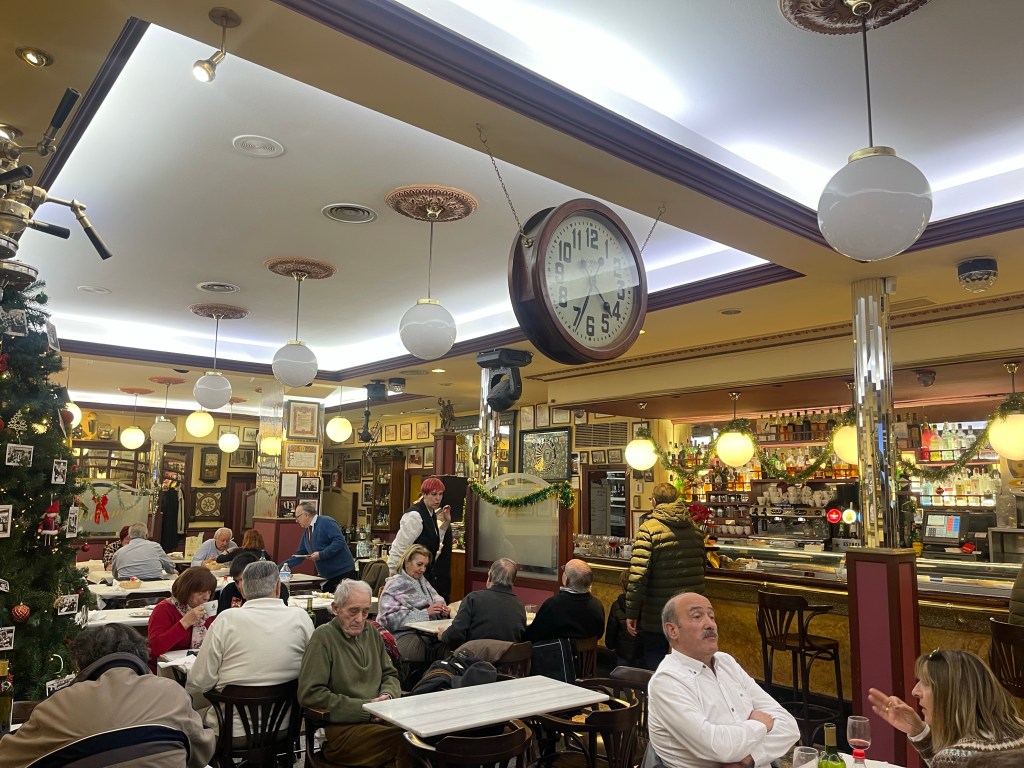
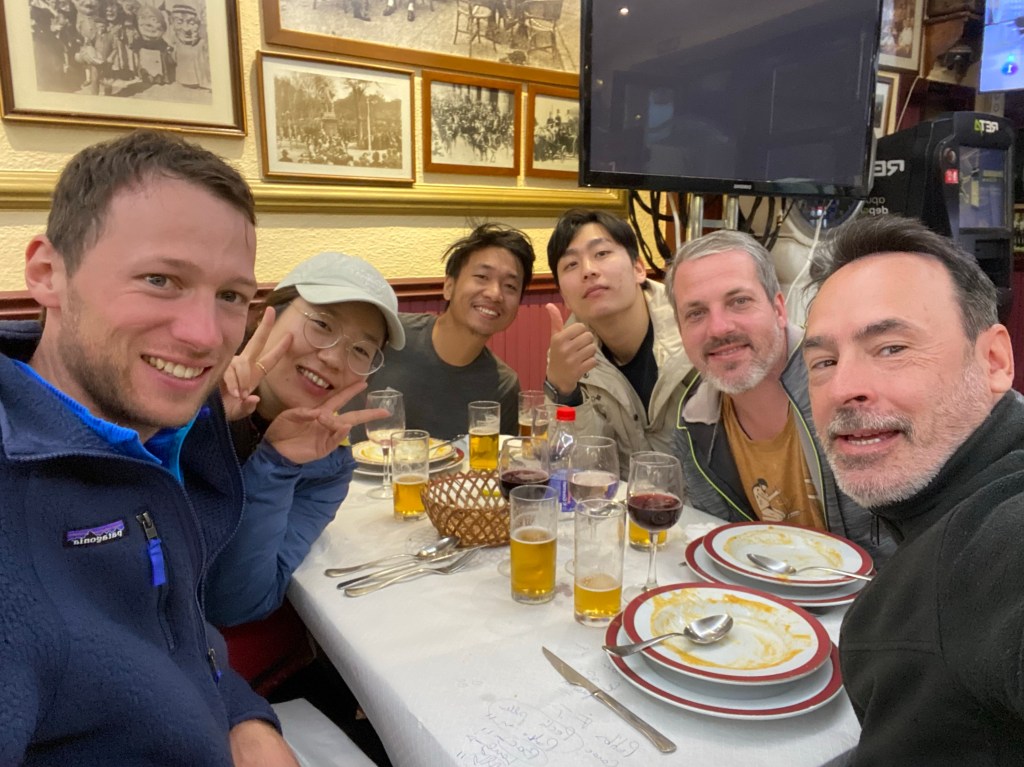
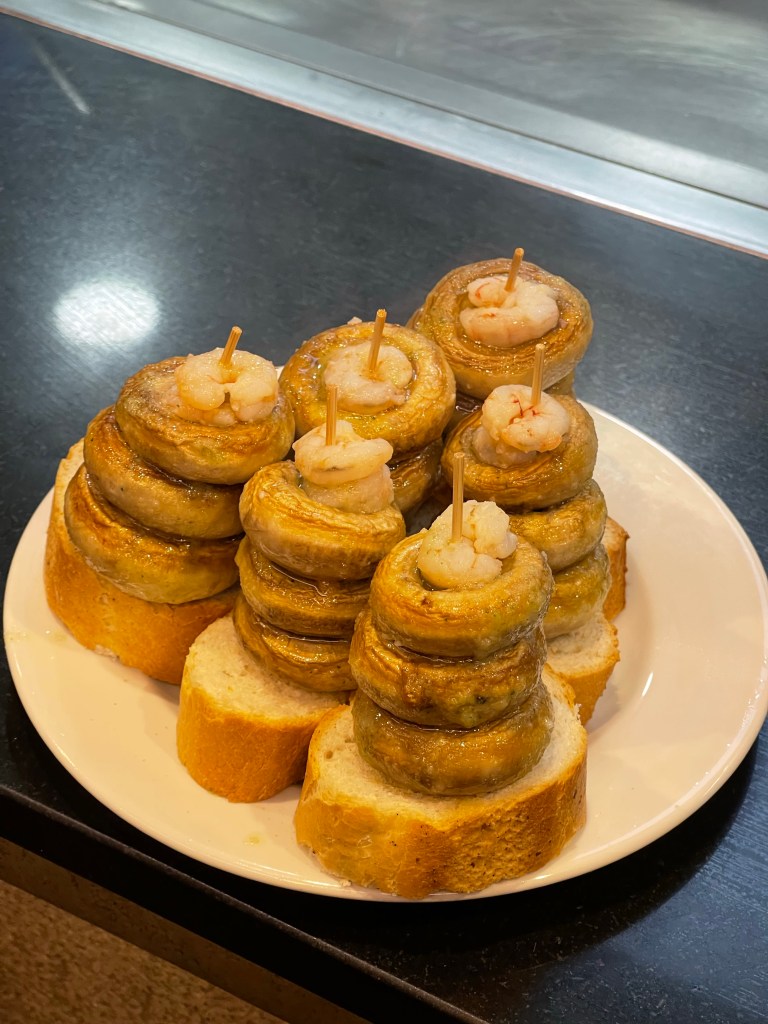
For dinner, Ingrid finds a bustling joint called Casa Pancho. The whole meal was standout after standout—the sopa castellana (local Castilian soup with melt-in-your-mouth fatty pork skin), prawns in garlic oil, morcilla de arroz (blood sausage mixed with rice, a regional classic), tigres (“tigers”, stuffed and battered mussels) and leche fritas (fried milk fritters). It totals to be more expensive than usual, but it is a delectable meal with a sample of regional cuisine, and we have no regrets.









 Jeremy Walks the Camino in Winter