28.1km
Ingrid and I leave at about 9am, to -3°C air, breath visible. Villafranca del Bierzo seems like a charming town in the day. The sun has already risen, and the streets are coming alive.
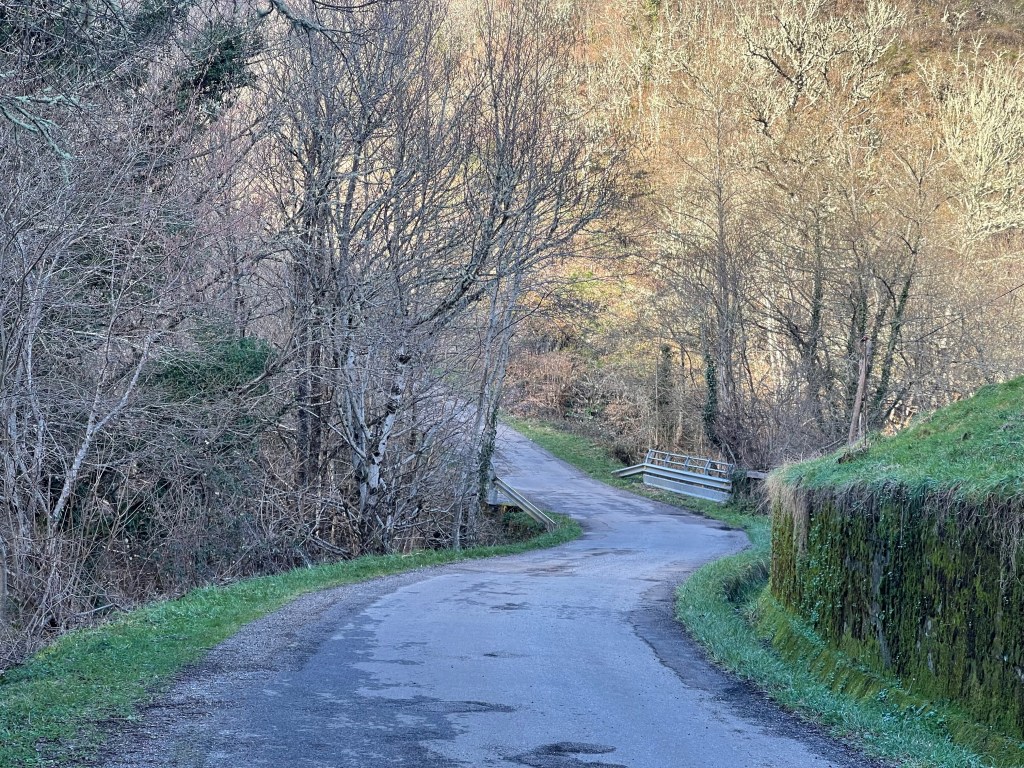
We leave the town, walking at the side of roads winding between hills. The sound of a flowing river is always nearby.
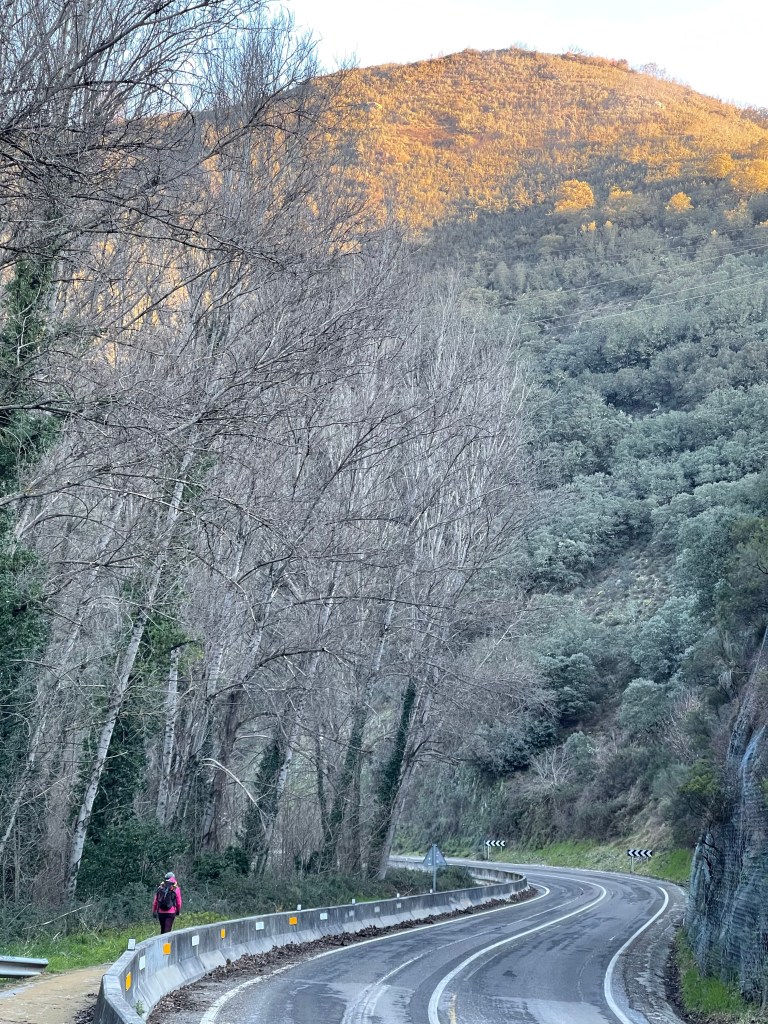


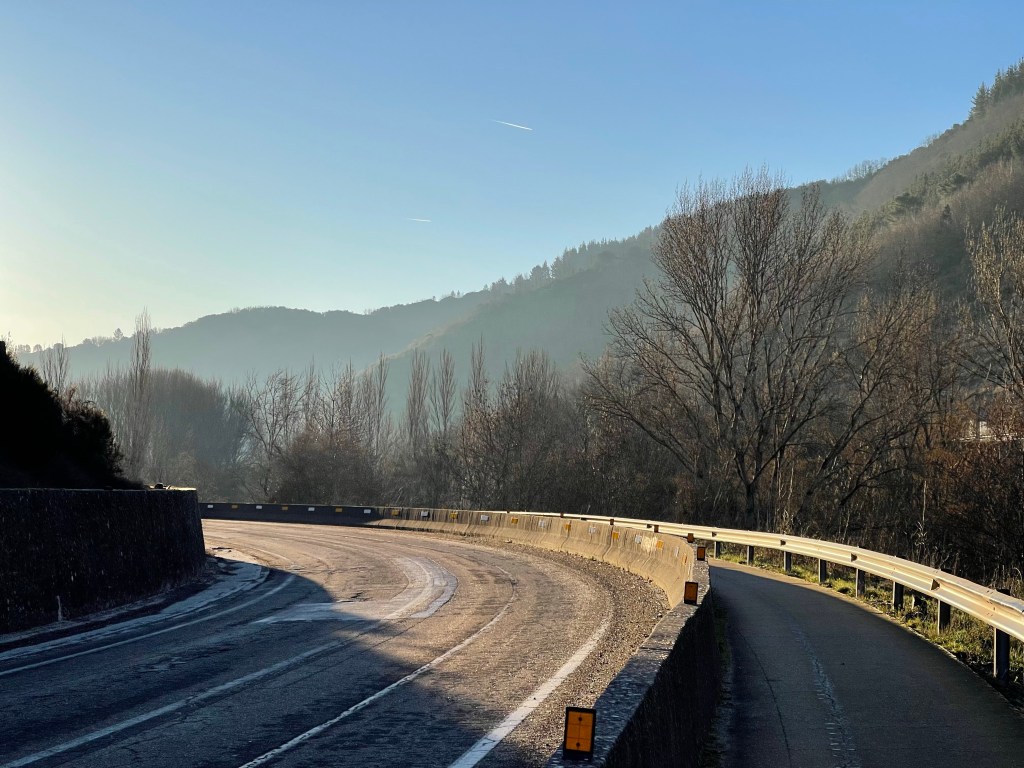
I stop to take a pee while Ingrid goes ahead. As I’m zipping up, another pilgrim with shoulder-length salt-and-pepper hair catches up. He’s Antonio, from Galicia, and he’s been walking his Camino since September from Rome. He doesn’t speak much English, but he’s very good at communicating with his body. Together with my limited Spanish we keep up a bit of a conversation. He says he has been very happy on the Camino.
At a fountain at Pereje, we catch up with Ingrid and I introduce Antonio. After the town, we leave the highway and follow another road next to a river, which leads to a forest.
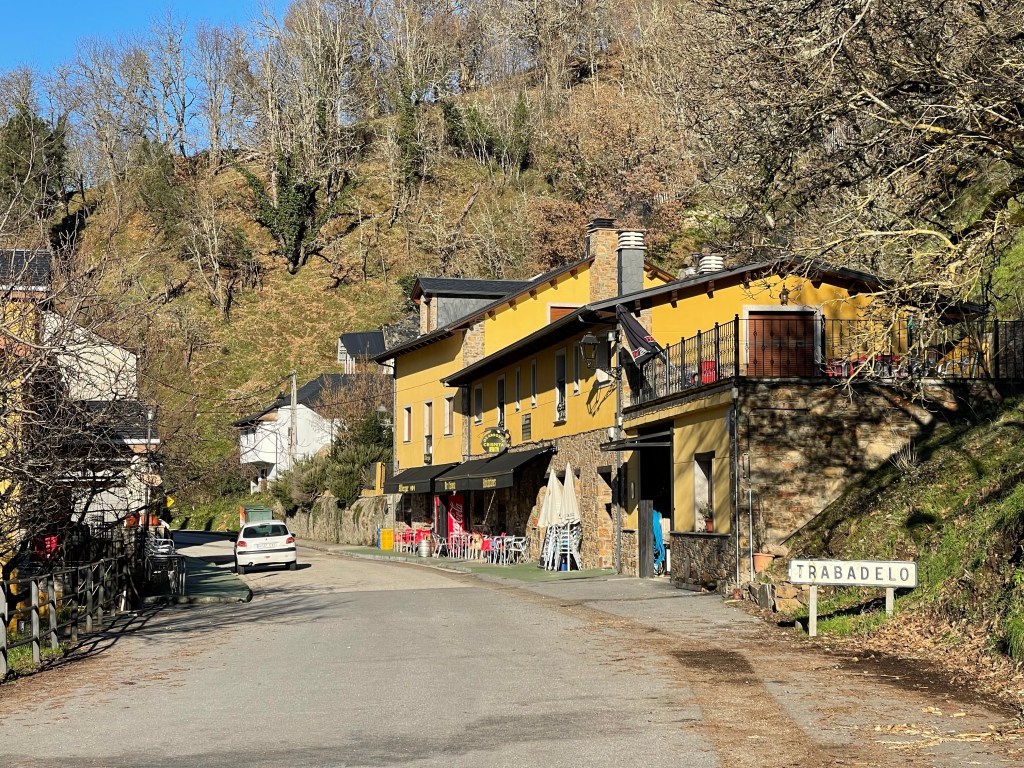
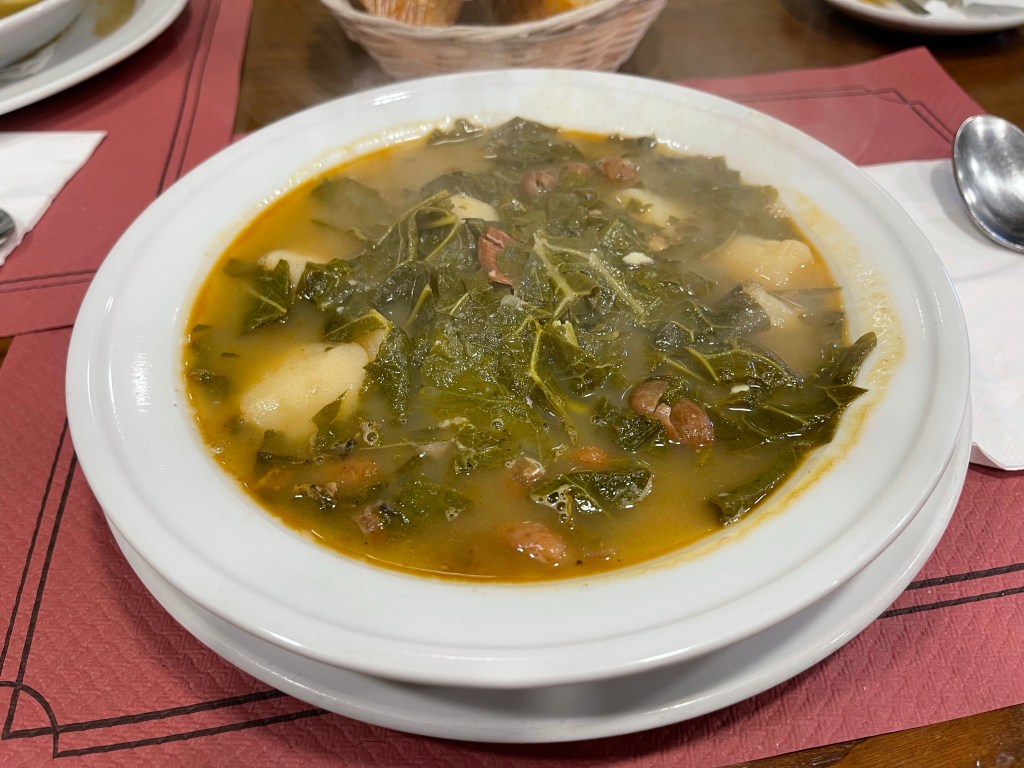
At Trabadelo, I stop with Ingrid and Antonio at a bar for some sustenance. Antonio leaves after a drink while Ingrid and I stay to eat. I try some caldo gallego (traditional Galician soup), and I’m so happy with it because it has lots of vegetables, a change from the meat-heavy Camino I’ve been having.
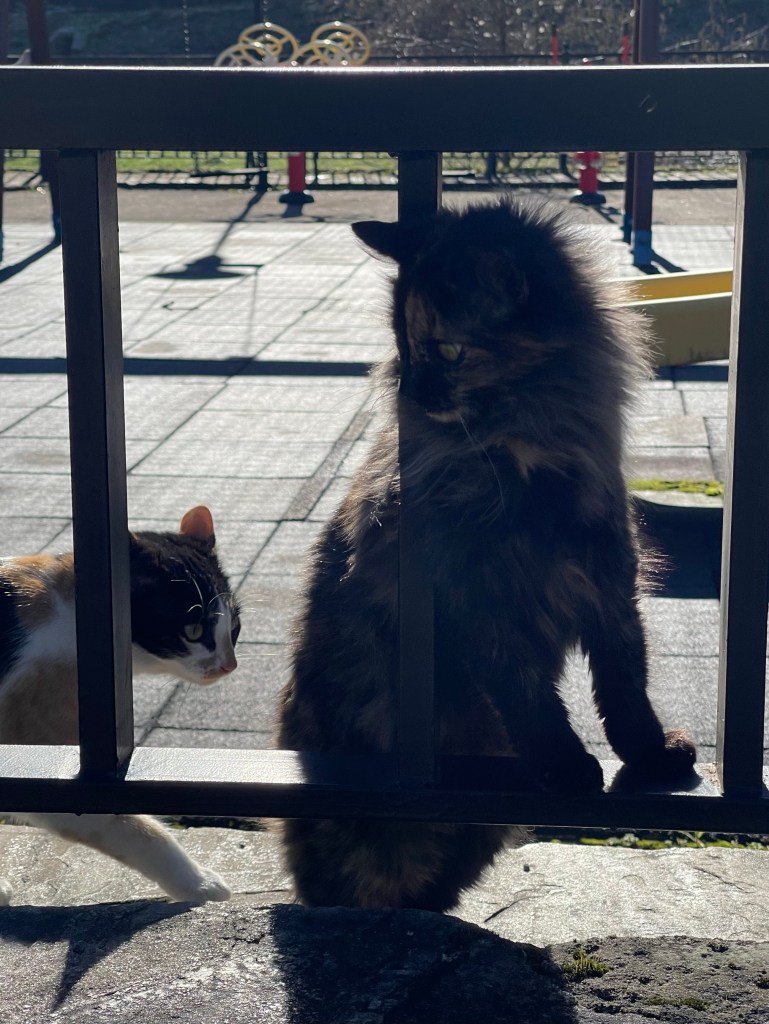
The path joins back a highway and river, Rio Valcarce. At Vega de Valcarce, an adorable cat trots towards us, mewing continuously. We can’t help but stop as they endear themself to us.
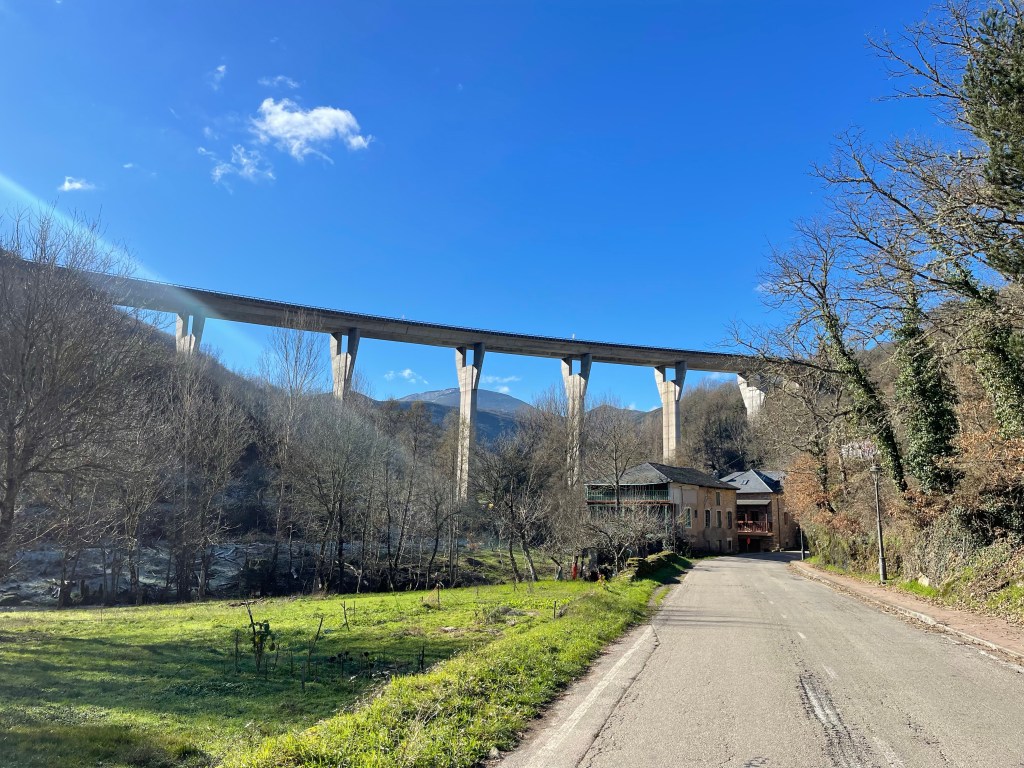
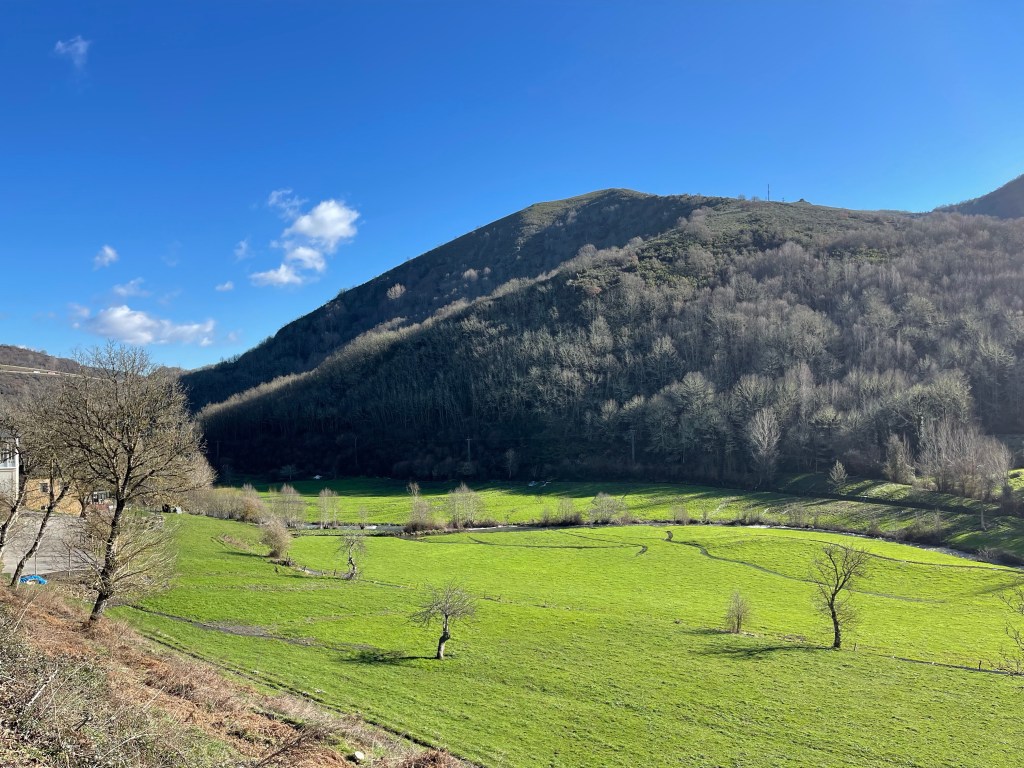
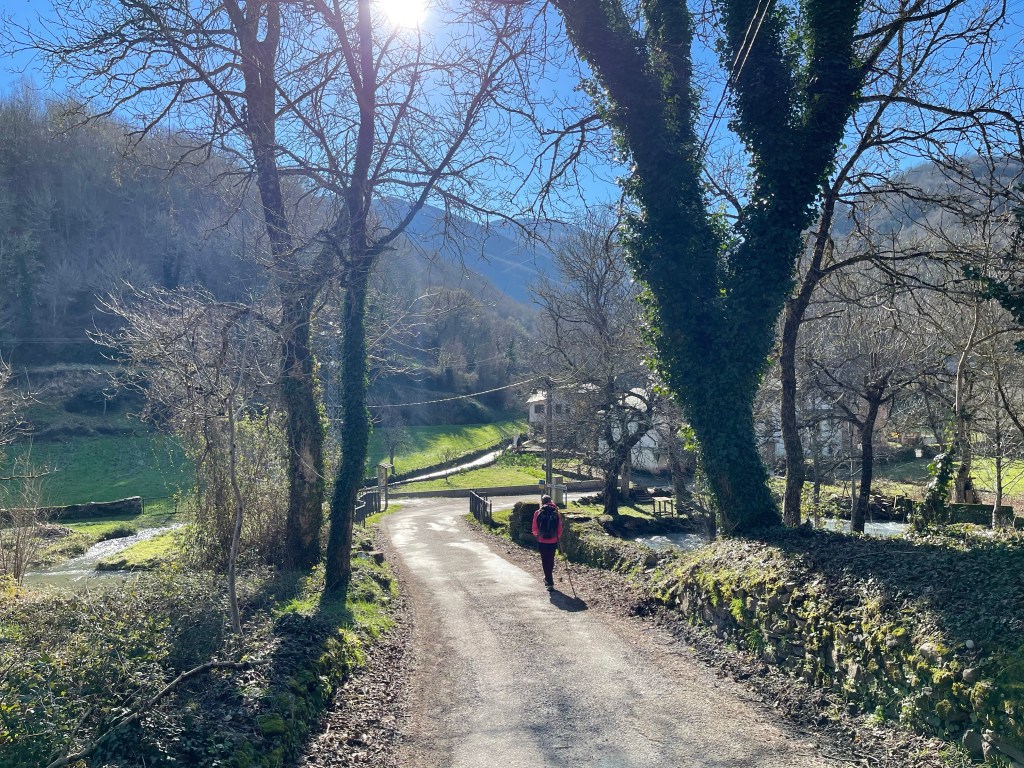
Las Herrerías is a beautiful town along a river. We walk down hoping to get coffee, but it is very quiet. We do find an open bar right before leaving the town. Another new pilgrim comes in, a Spanish guy called Enrique. We briefly introduce ourselves and leave after finishing our coffee.
It will be constant elevation after this, so we take the chance to rest and refuel at benches next to a river. We have some bread, espetec (cured pork meat in pork gut), torreznos (fried bacon snack), and digestive biscuits.

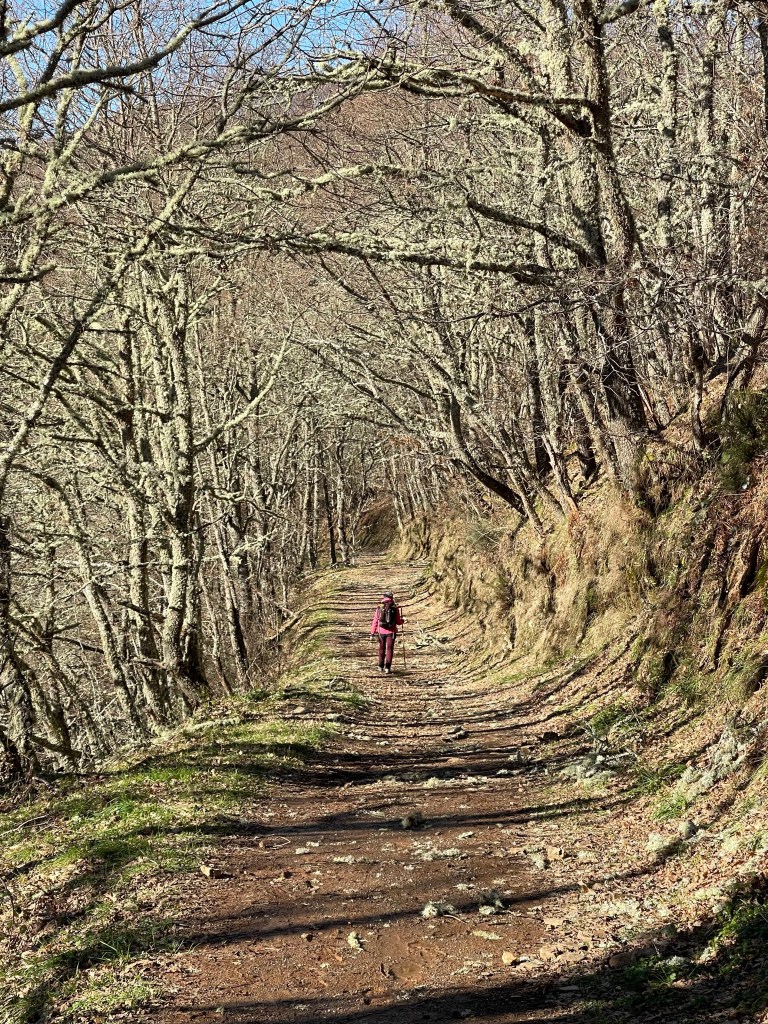
After going up a long steep road, we reach level to a beautiful forest path padded with brown leaves. It’s a sunny day but the forest shelters us in full shade. There’s the sound of a river flowing on our left below us. Ingrid goes first while I take some photos and go slower.
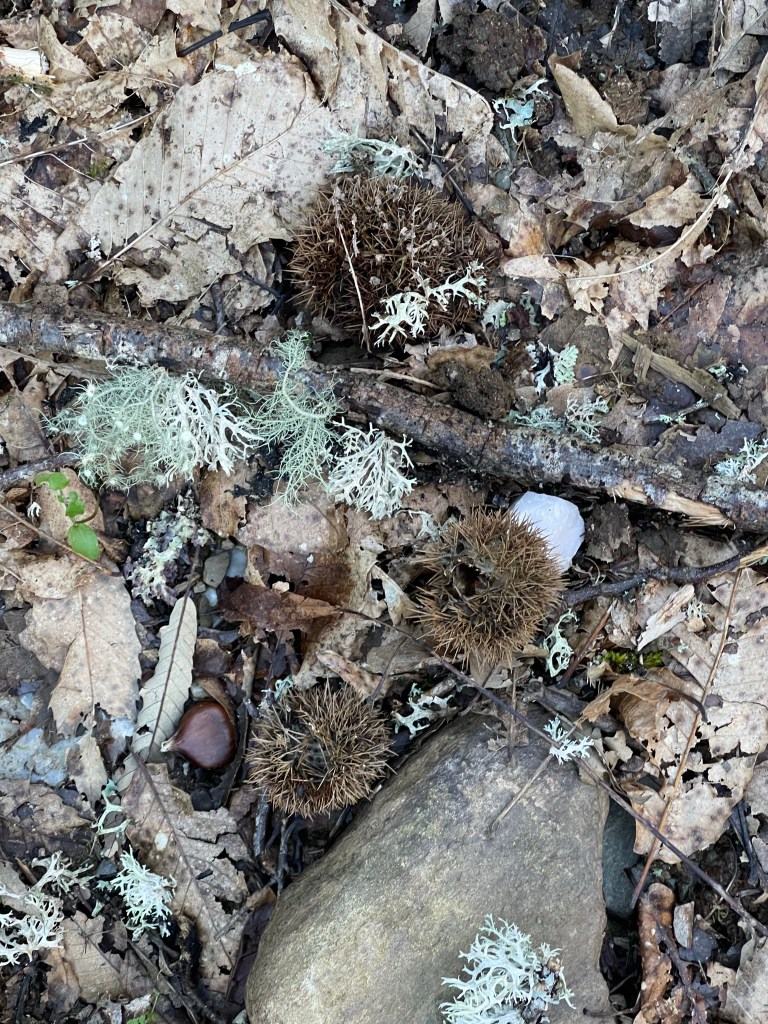
I reach a denser part where there’s no direct sunlight through the trees, so the forest takes on mystical air. The walls going up from the side of the path are textured and mossy, and it’s soft mulch underfoot. There are chestnut shells scattered around. I take slow strides up a gradual upslope.
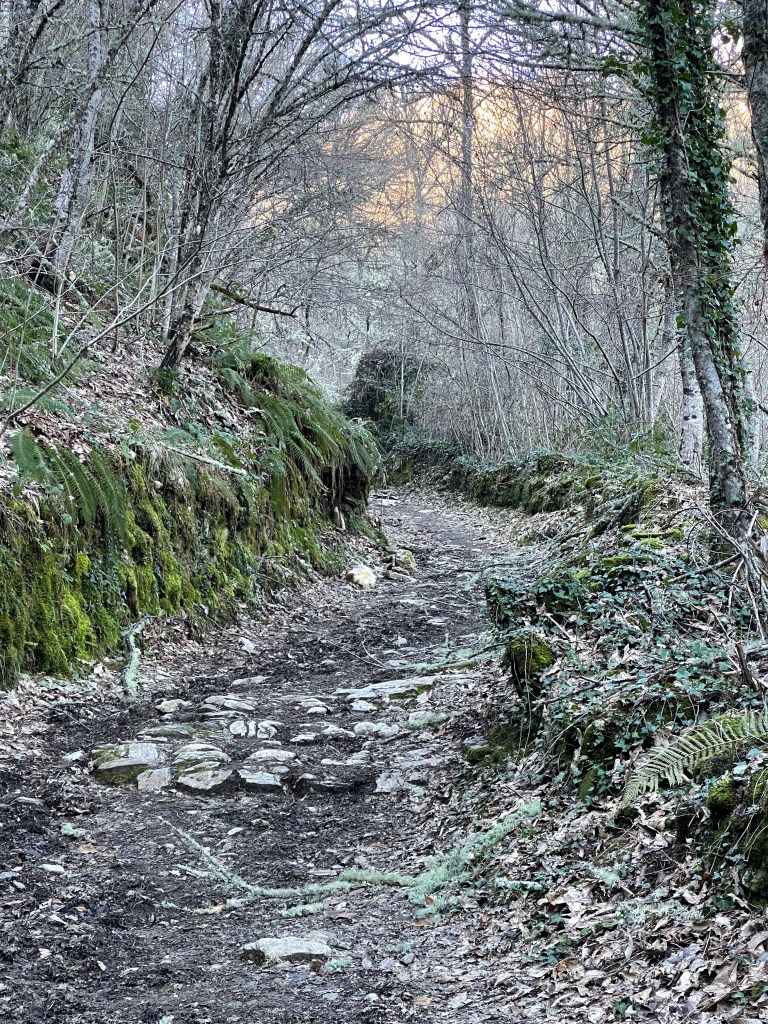
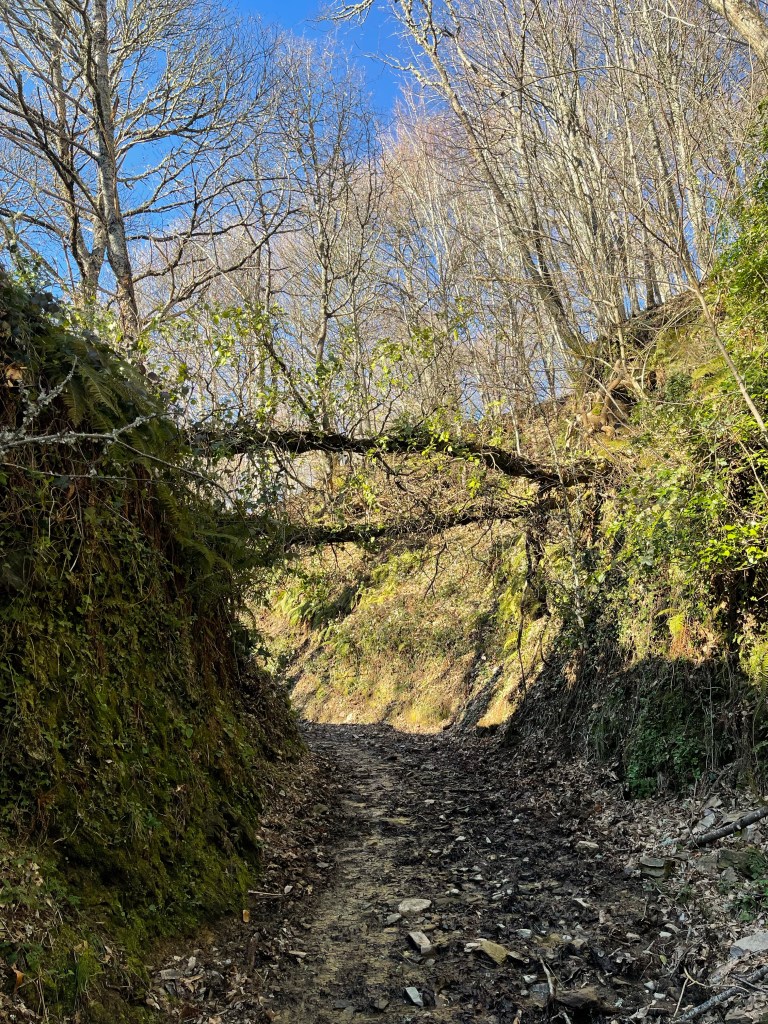
There are some big fallen tree branches over the pathway, and I have to step over and squat under the branches of some fallen trees to get through. I hope everyone makes it through safely.
My feet get a little wet and muddy from little streams trickling down the path. They do stop when I start to reach sunlight, leaving just autumn leaves, crinkling with each step touching the ground.
I emerge from the forest to La Faba, where I take a seat at a stone wall to rest and drink some water. A gentle breeze stirs.
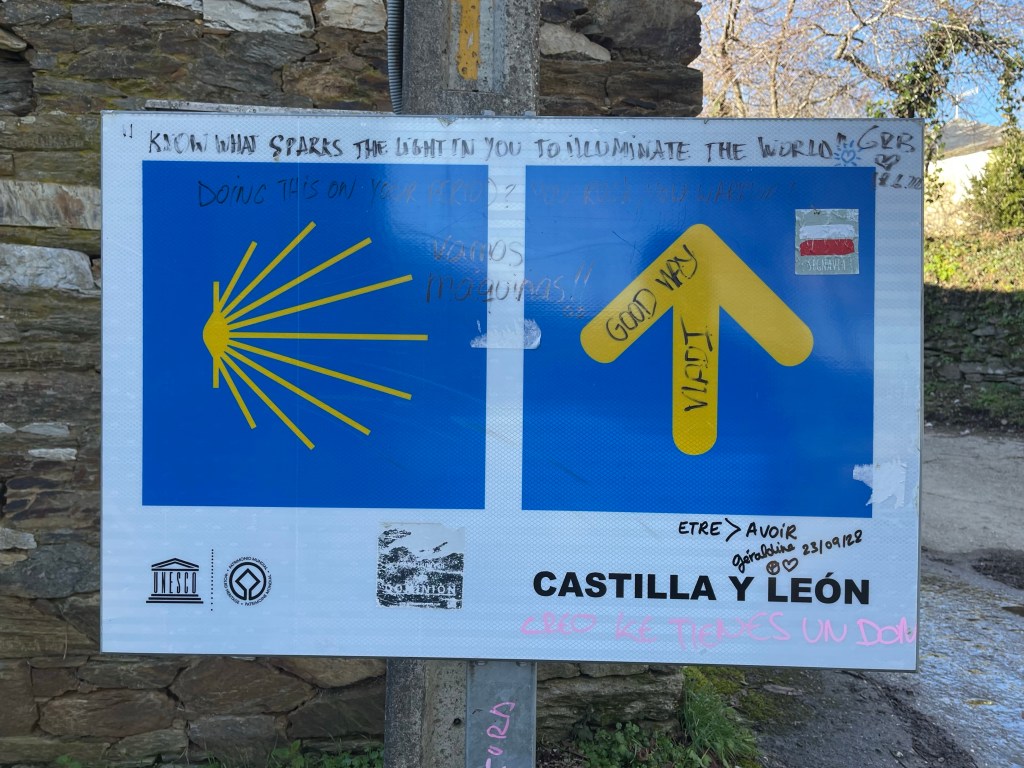
I continue on a charming countryside path with grassy stone walls. I pass some beautiful stone houses, but they are quiet, I don’t see a single person.
The route goes uphill again up a muddy path. Gradually the path gets drier, and some snow starts appearing on the side of the path. I ascend to mountain vistas around me. The path starts to have portions where I have to walk on snow.
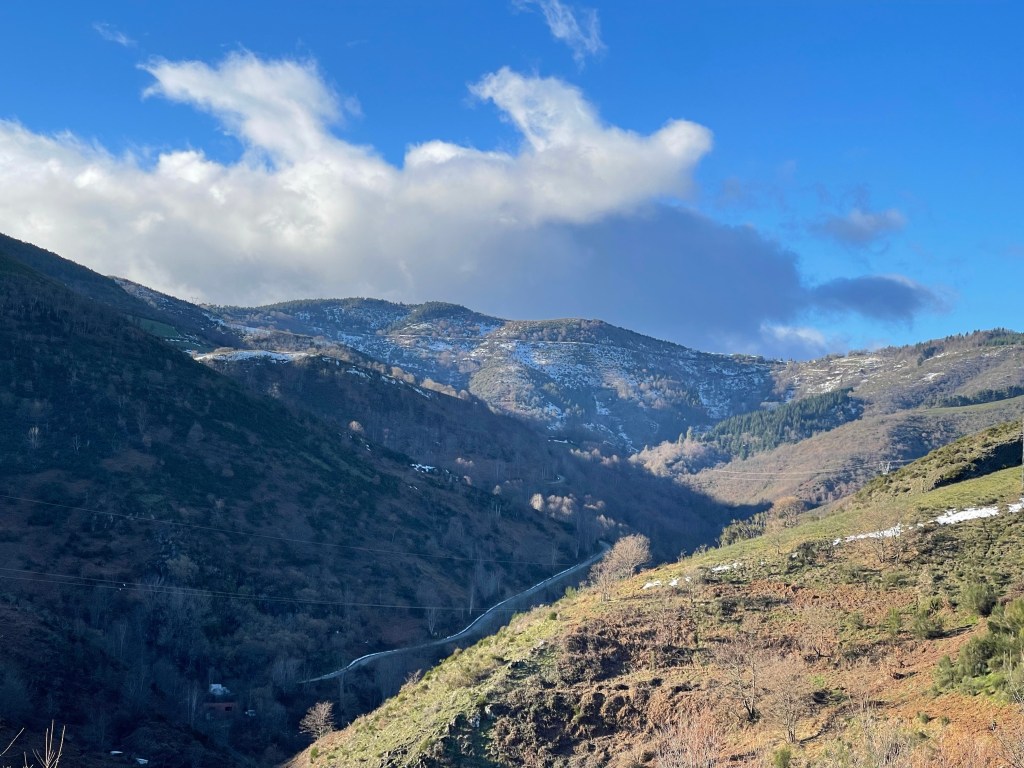
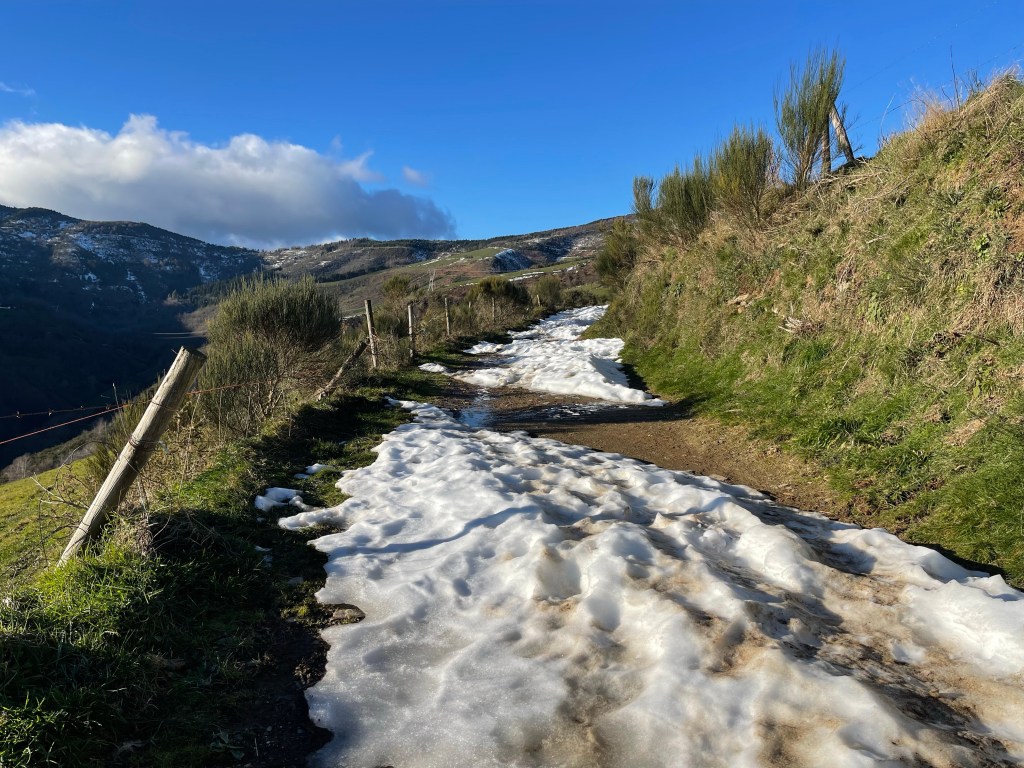
The smell of cow farms greet me close to La Laguna de Castilla, and there are a few farmers at work. I walk past a closed bar called La Escuela (the school), the second bar I’ve seen with that name. Ingrid explained the joke previously—it’s so you can tell your parents you’re going to school when you go to the bar.
When I stop walking, it’s complete silence with only the sound of my breathing. I stop to admire the view.
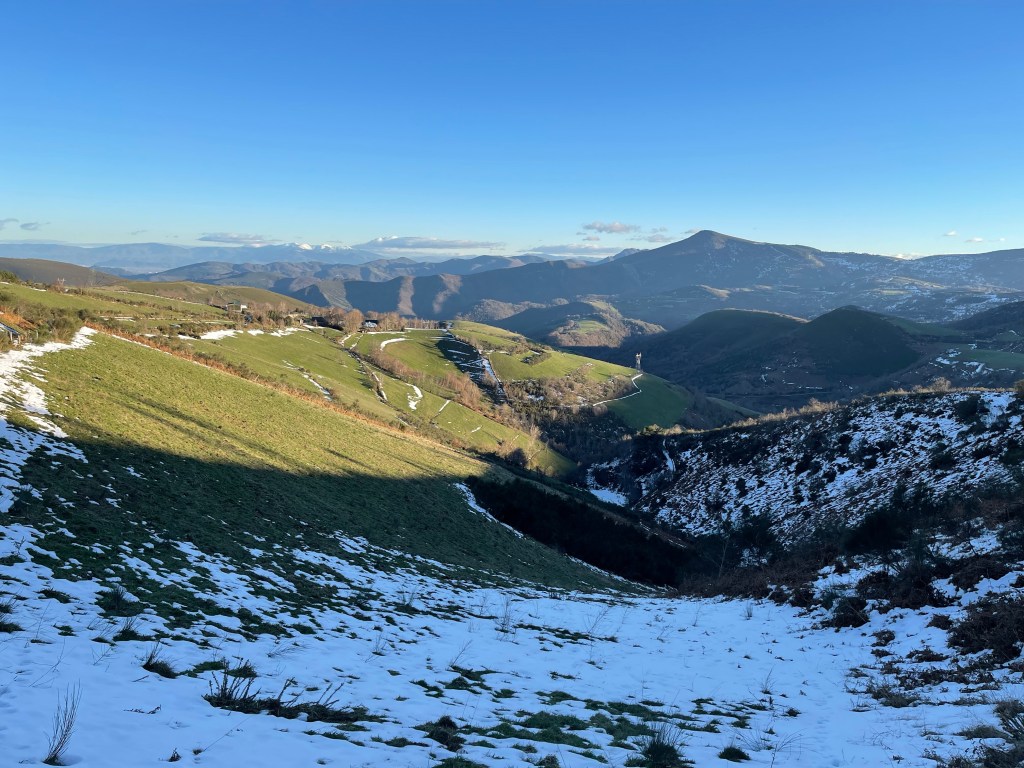
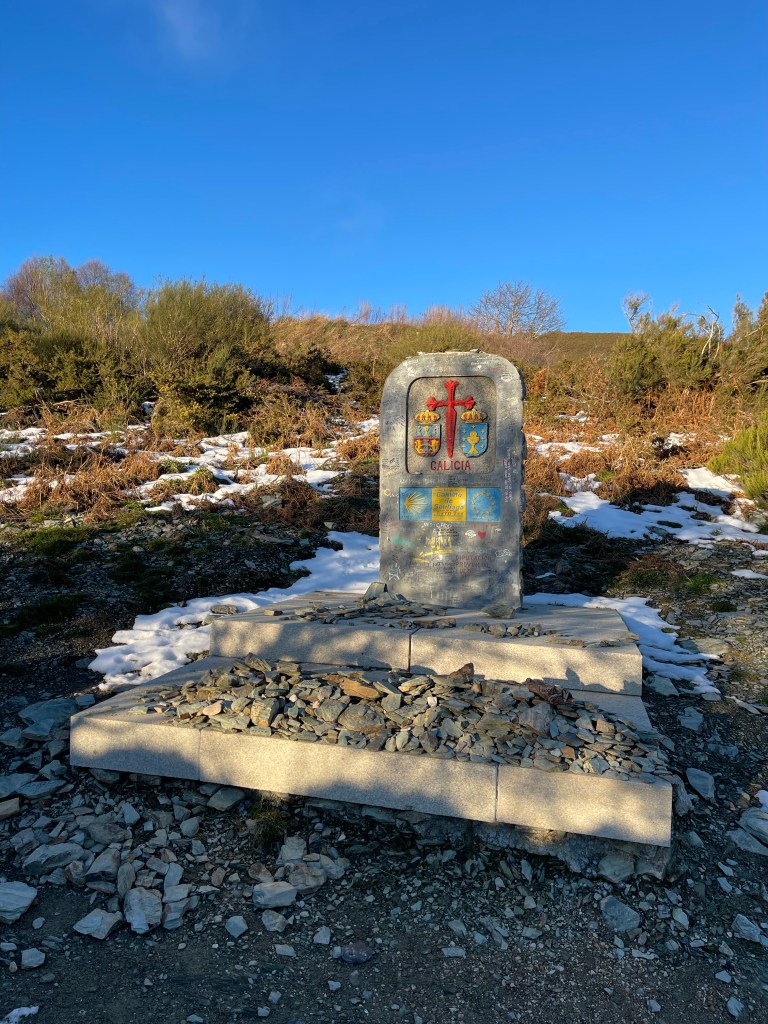
The view on my left gets more amazing as I ascend. There are rolling green hills behind me, and a snowy mountain scape in front of me.
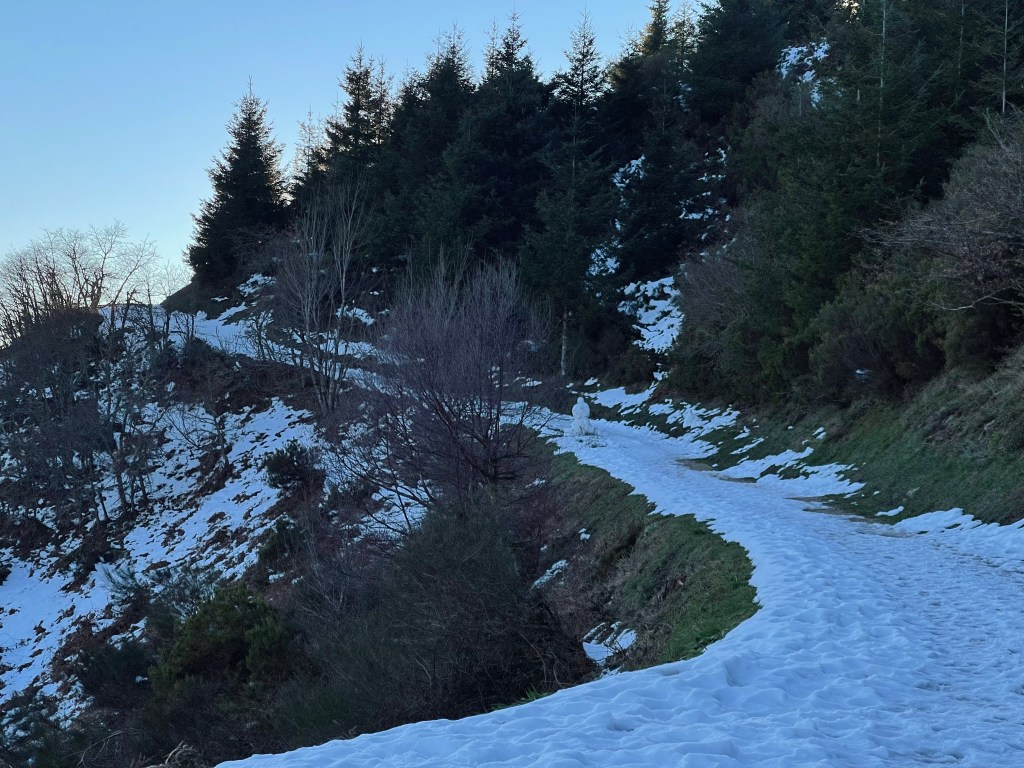
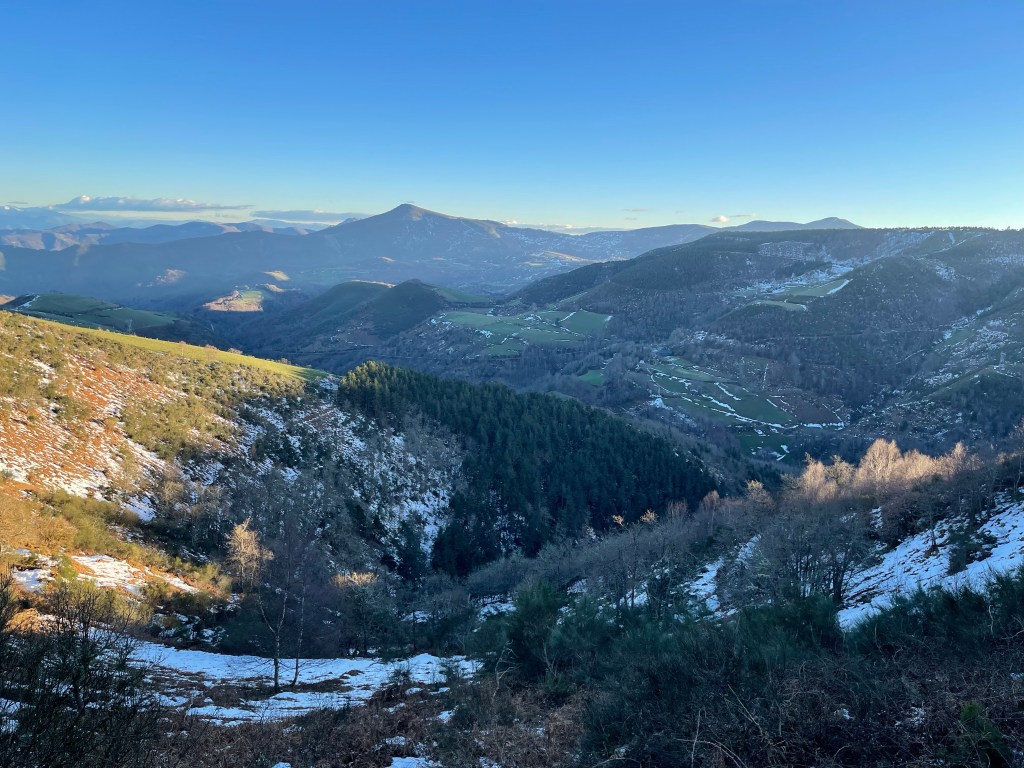

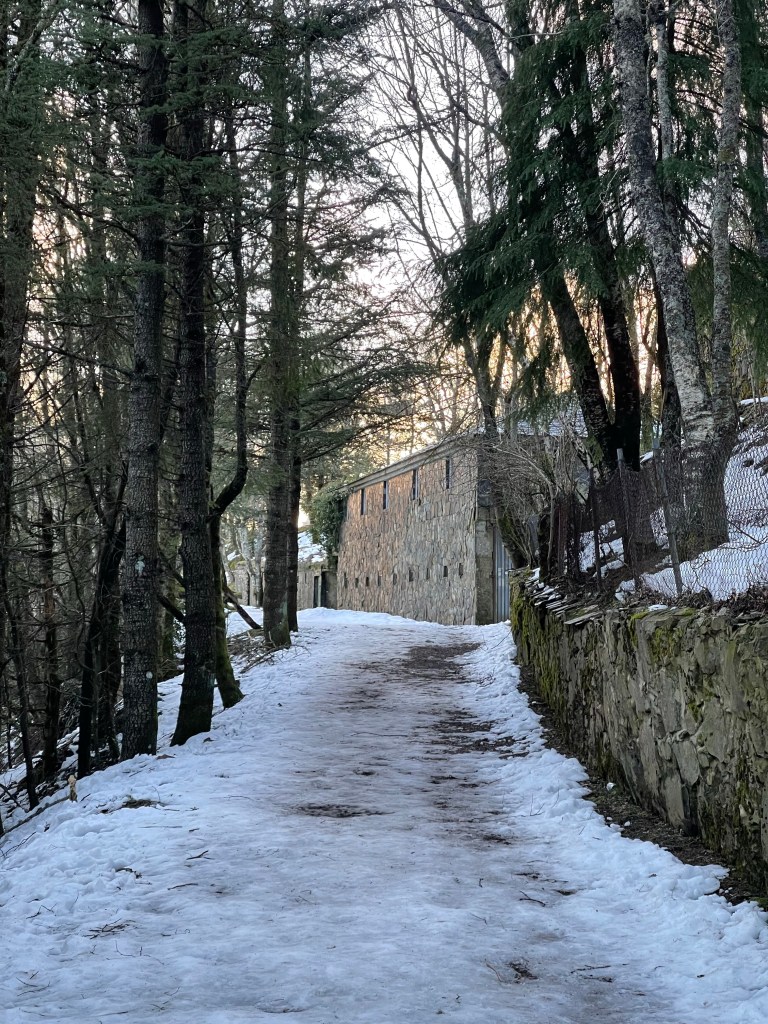
A stone building peeks out at the end of a path between conifers. I’m excited, but I tread carefully as the snow path is tightly packed with much icy parts. The village bell tolls six times as I enter O Cebreiro.
I reach my first public Xunta albergue. Xunta is a government organisation of Galicia that runs the municipal albergues in the region. All Xunta albergues are open on weekdays all year round and all are standardised at €8. This particular one has no closing time and check out time. The laundry machines are also affordable, at €3 for washing and €2 for drying.
Edoardo, James, Boom, the Moon family, and Antonio are here. The Hungarians, Bertalan and David are here as well. There’s also a new person I’ve never met. Ingrid, however is not here, so I send a message to make sure she’s ok. She found a kind man at La Faba that invited her to stay at his place, and we’ll see each other tomorrow.

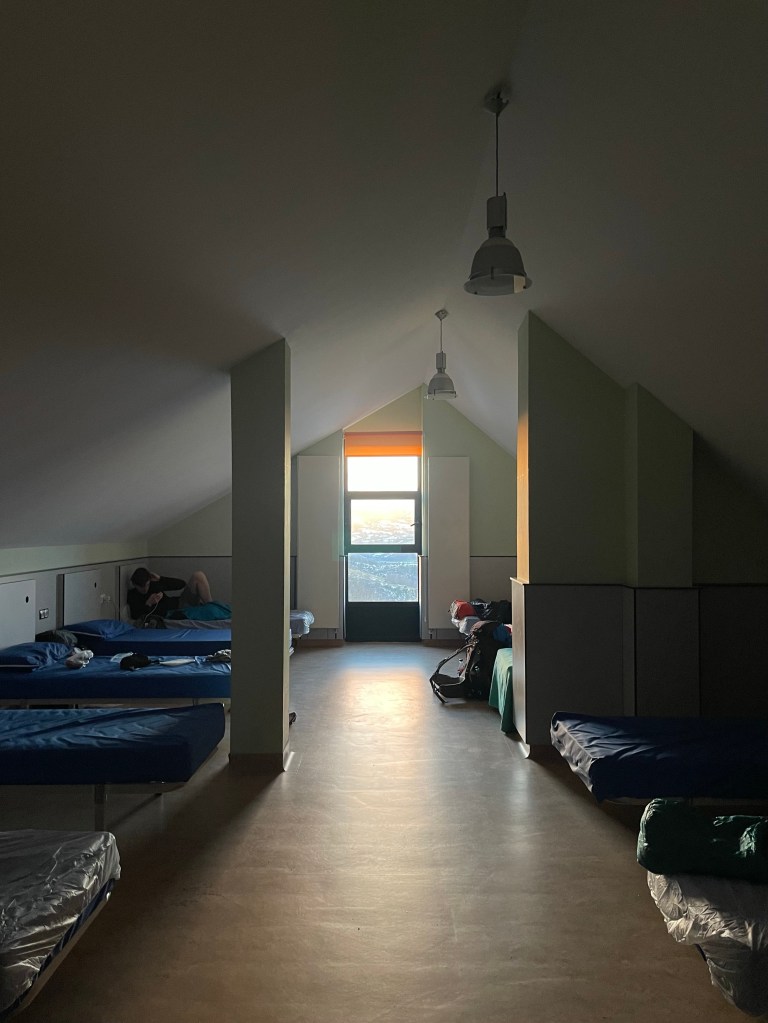
Antonio asks if I’m going to dinner and we set a time to go together. Edoardo, James, Bertalan, and David come as well. Dinner time conversation is a hoot—on one end, Antonio’s Spanish and limited English, on the other, the Hungarians who have better English, and Eduardo, James, and I somewhere in between the two parties. It’s a fun multicultural experience.
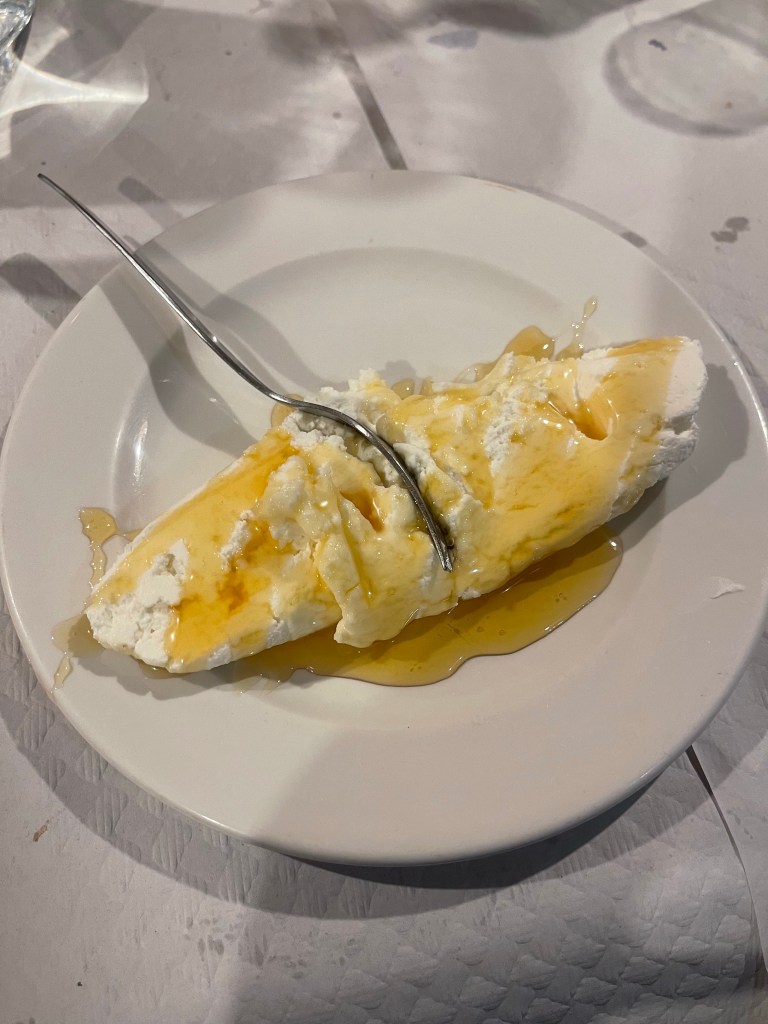
I get caldo gallego, chuleta de cerdo (pork chop), and a special Galician dessert Antonio was excited for us to try, queso con miel (cheese with honey). It is amazing. As we are finishing dinner, we meet the new person at the albergue earlier, María, who has a signature raspy voice. She started her Camino from her home in Cacabelos, a town we passed by yesterday.
The dinner ends with a chupito (shot) of local Galician liquor, orujo, made with the distilled leftovers of grapes used for wines. It comes in three strengths—blanco (original, transparent), hierbas (with herbs), and crema (cream). I get a crema, which tastes smooth and milky like Baileys Irish Cream. I’m offered a sip of someone’s orujo blanco. It spreads a warm sensation in my chest.


 Jeremy Walks the Camino in Winter
Leave a comment