28.8km +
After two relaxing days in Fisterra, Ingrid and I set off again towards Muxía.
I loved Fisterra. It was a charming place with a quiet energy. The day after we arrived, we got to reunite with Roman, María, James, and Jae at lunch. Antonio came that night from Muxía to the hostel Ingrid and I were at, and the day after, we had delicious home-cooked spider crabs, simply boiled in ocean water.
Roberto, the Italian hospitalero of Albergue Pedra Santa, is a pilgrim too, who is working there for now. I asked him who I could give my hiking pole to since I can’t fly back with it, and he said, “why not me?” I am glad it is going to be used on more Caminos.
He asks me to write a Chinese saying on a post-it note for the hostel noticeboard before I go, and I write “脚踏实地”, which literally means “for feet to step on real ground”. It also means to be down-to-earth, realistic and steady. I think it’s apt for walkers.
Ingrid and I stock up on some supplies at the supermarket as it looks like there might not be stops between here to Muxía. We then have a quick coffee, and leave the town close to noon.
We find the fork to Muxía outside Fisterra, which brings us up an incline to a view of the bay on our right. We take small roads among houses, the route encircling the bay. There are trail markers pointing in either direction towards Muxía and Fisterra. We then split off left from the bay, northwards, following a road, walking past houses with small farms and horreos.
After San Salvador de Duio, we enter a eucalyptus forest. It feels interesting walking without my stick. We pass by one or two pilgrims heading to Fisterra.
Near Castrexe, we leave the forest and walk towards the ocean, which comes into view in the distance. Seeing the ocean is like meeting an old friend.
We want to go to Praia do Rostro after hearing more than one person mention it, so we take a detour from the Camino and find a way to the beach. We descend down towards it. It is a wide, long beach, with powerful winds and vigorous waves, not much for relaxing. Taking off our shoes and socks, we walk along its length. I close my eyes with some steps, hearing the power of the ocean in my left ear.
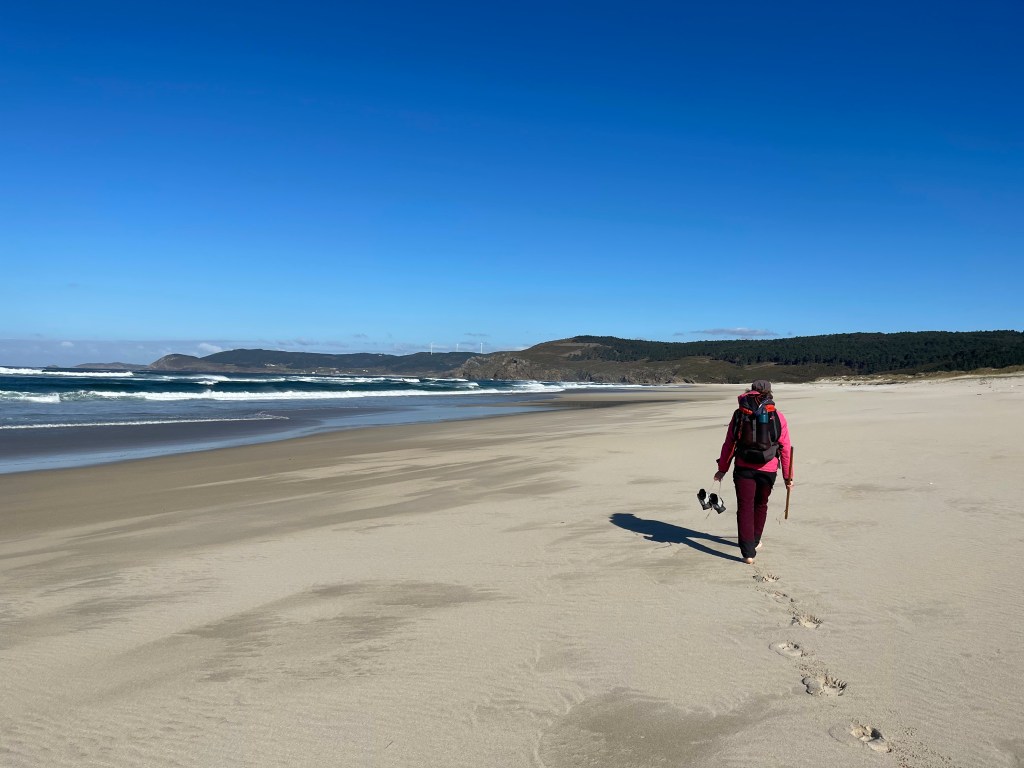
Ahead of me is a familiar figure in pink I will miss. If the walk to Fisterra was learning how to end my Camino, it feels like the walk to Muxía is for me to learn to say goodbye to my friend. Ingrid will be continuing her Camino after this, walking all the way back to her doorstep in Girona. We catch each other smiling at some points, and a familiar exchange comes out.
“Why so happy?”
“Why not?”

We reach a fork with a sign indicating a coastal alternative, and choose to go that way. It leads us down a winding path covered with brown pine leaves. This route has occasional red marks on rocks in the path to guide us. Another pilgrim passes in the opposite direction.
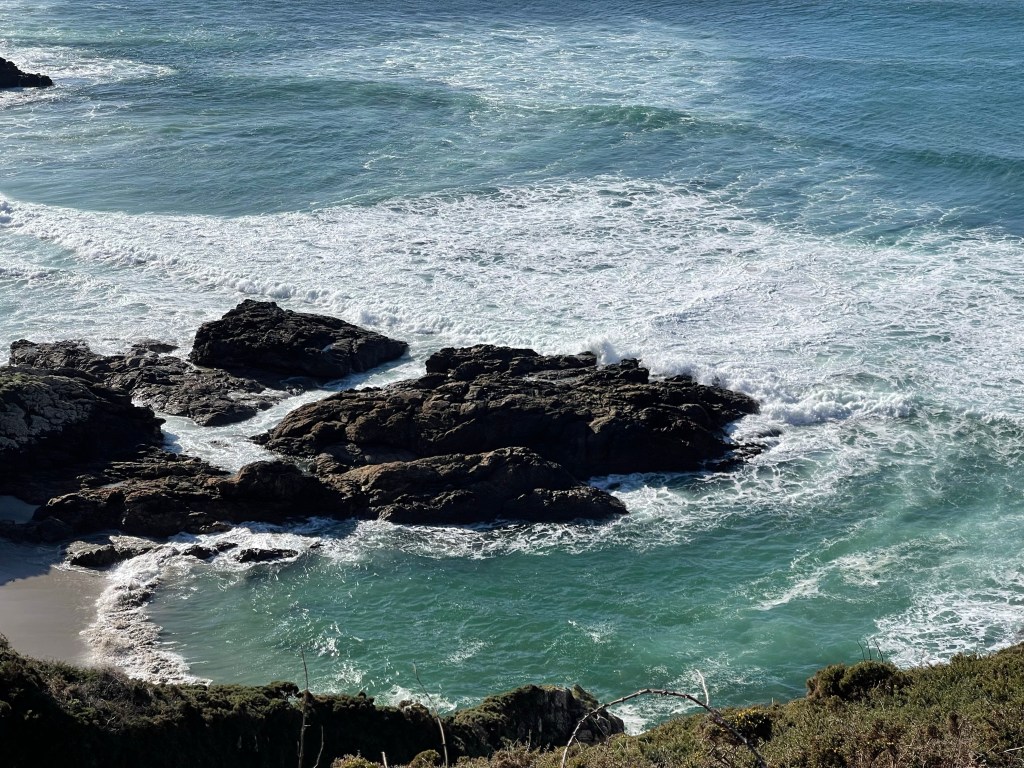
We start to hear the ocean, and see it through the trees. Coming out from the edge of the forest, the ocean is revealed. The ragged coast is battered by powerful waves, reminding us of its name, Costa da Morte (Death Coast) because of the many shipwrecks along it.

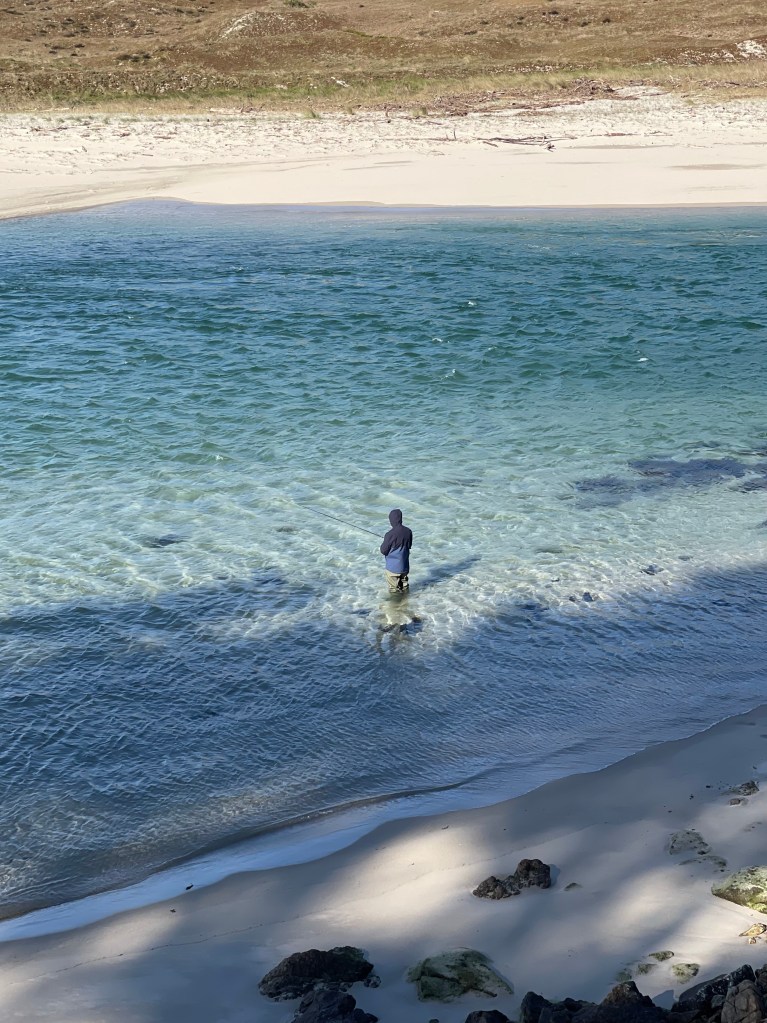
Before Lires (where our path joins back the main route), we find a bench before the bridge into town and have some bread, cheese and fuet (a thin, dry-cured sausage of pork meat in a pork gut).
Today is a calm, simple walk in natural settings. Apart from the ocean detours we took, there’s nothing particularly spectacular. It gives lots of time for reflection for the final part of the journey. We go through eucalyptus and pine trees, towns without bars, on gravel paths and asphalt roads, past farms and wind turbines.
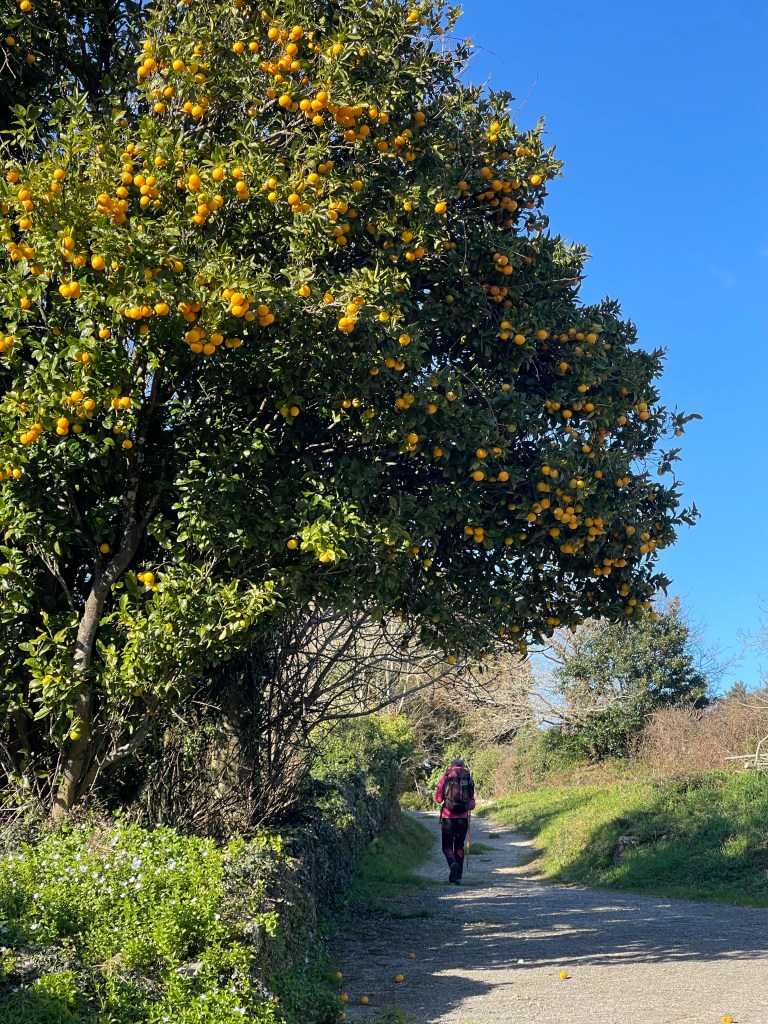
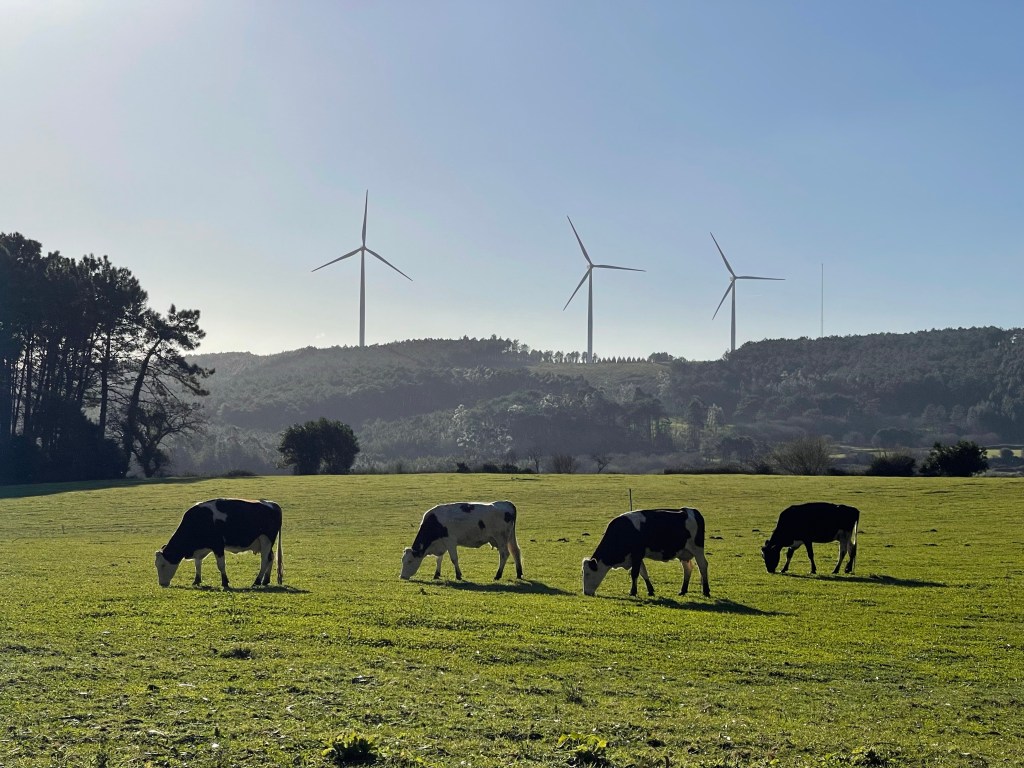
Walking northward, the sun behind me casts my shadow in front of me. It gets breezy at times—cooling, confident winds mostly above us and not against us. Some wind turbines nearby swoosh loudly. Clouds drift by quickly.
The penultimate town of Xurarantes signals three kilometres from the end. It starts to get really windy.
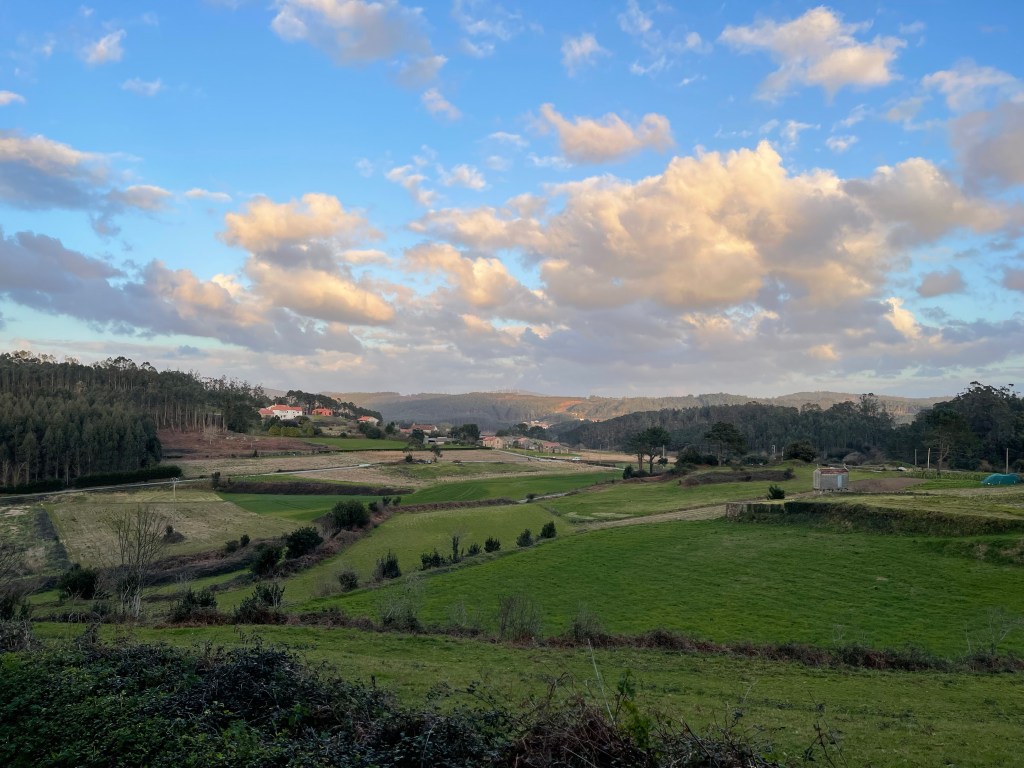

I round a bend, and the ocean appears, peeking between the treeline. Somehow the reveal of the ocean still feels special.
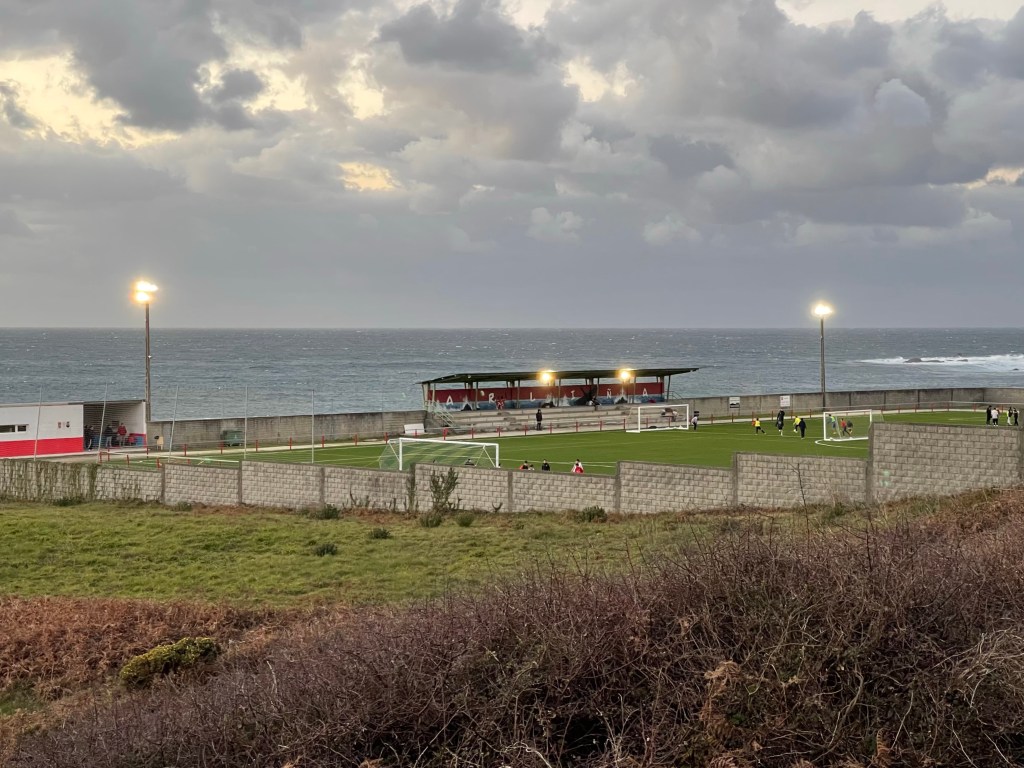
We join a road that leads us towards and along the ocean. There’s a football field by the coast and a small beach next to it. We rest at the beach for a short while. The wind doesn’t let up. The clouds we walk towards are dark.

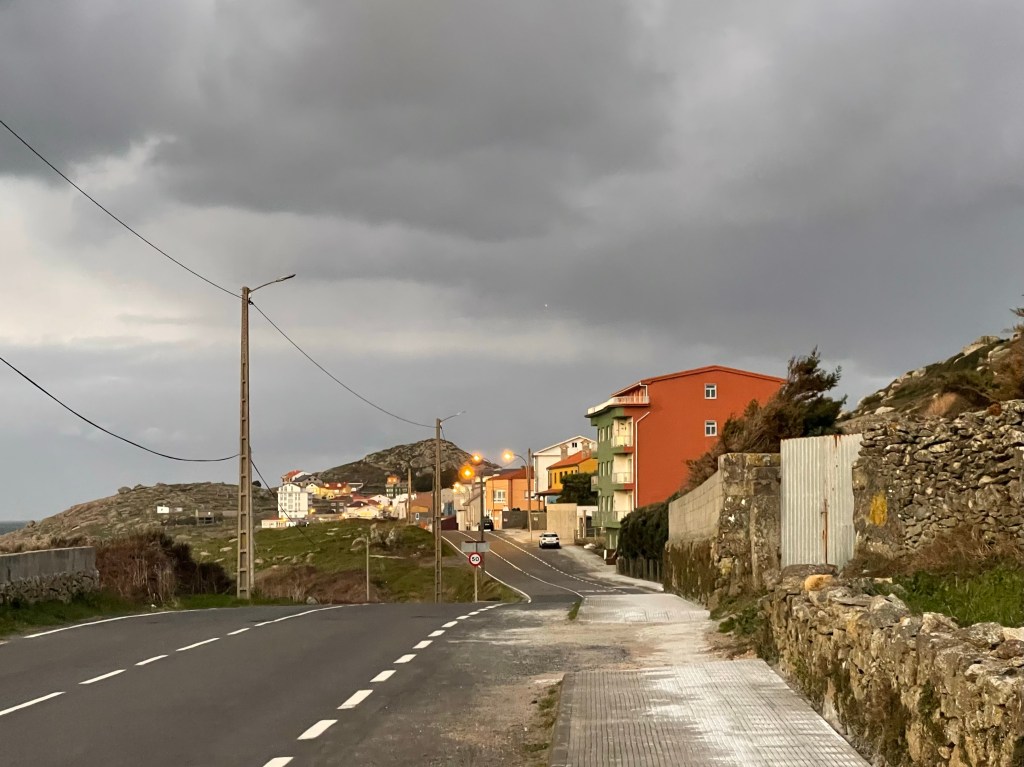
The sun has already set when we arrive at the Xunta albergue. James is at the albergue too, and it’s just the three of us here tonight. It feels strange that it will be my last time walking for awhile. The staff gives us the Muxiana, the certificate for reaching.
In the early morning, I wake up at 4.30am to go to the toilet, and can’t sleep immediately after. The restlessness feels a bit like when I was in Saint-Jean-Pied-de-Port, thinking about my Camino ahead. I drift off after a while, and wake up again at 7.30am. As I pack my bags for one last time in the albergue, it feels strangely final.
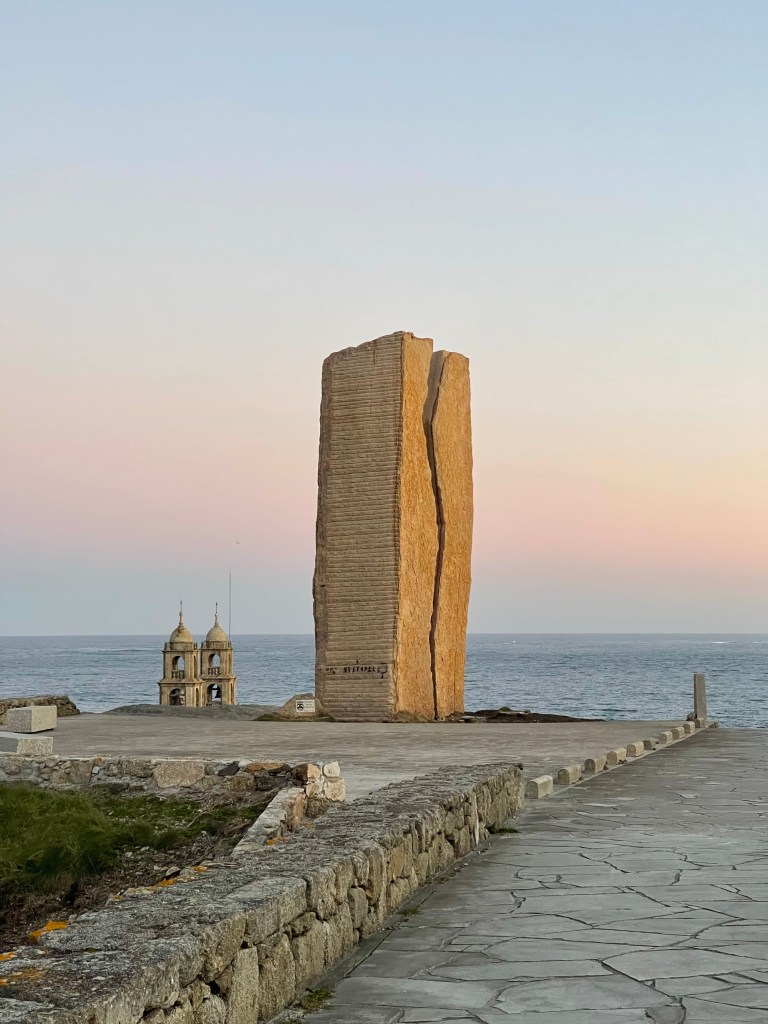
Santuario da Virxe da Barca is the final ending of the Camino in Muxía. As we head there, cars go by, and seagulls squawk above us. The town is waking. I start feeling some sadness about the end.
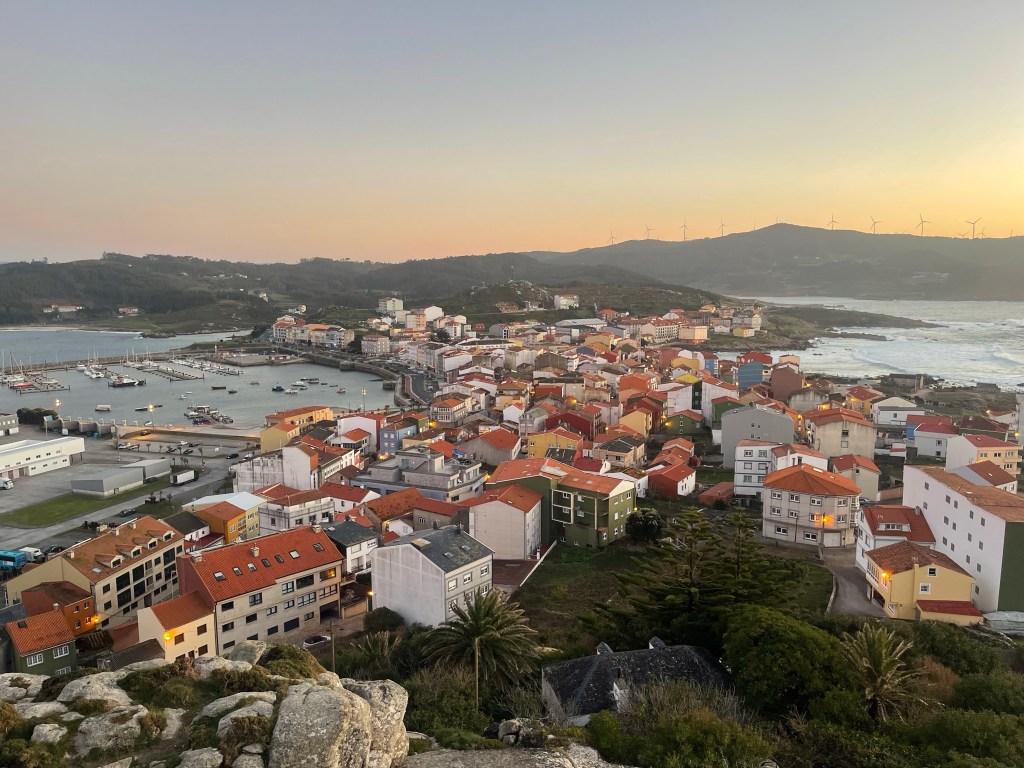
There’s a rocky mound which is the highest point here with a view on all sides. Ascending it, the town and harbour is laid out before us.
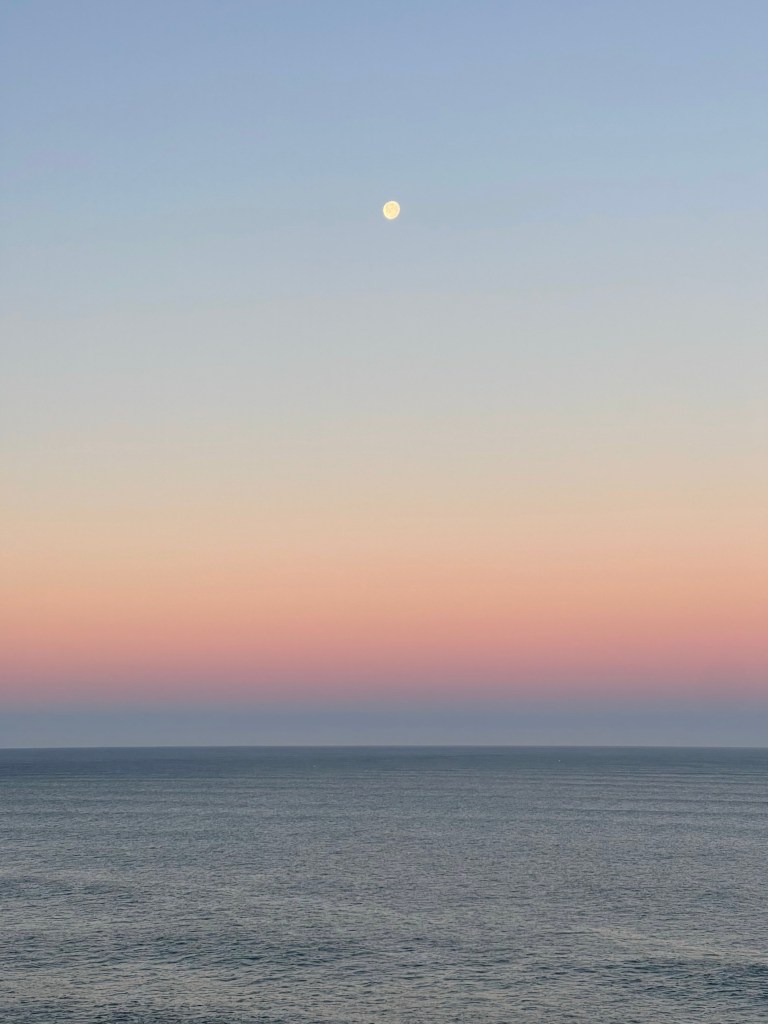
We sit on the rocks and face the direction where the sun will be rising. The sound of powerful ocean waves cascade below and all around. The chilly morning ocean breeze gently blows in my face.
We look towards the sun.
To Ingrid, James, Antonio, María, Ji Sung, Areum, Samuel, Jae, Edoardo, Gerlinde, Roman, Ethan, Diego, Guti, Alberto, and the Moon family, thank you for journeying with me.


 Jeremy Walks the Camino in Winter
Leave a reply to Geneviève Cancel reply